
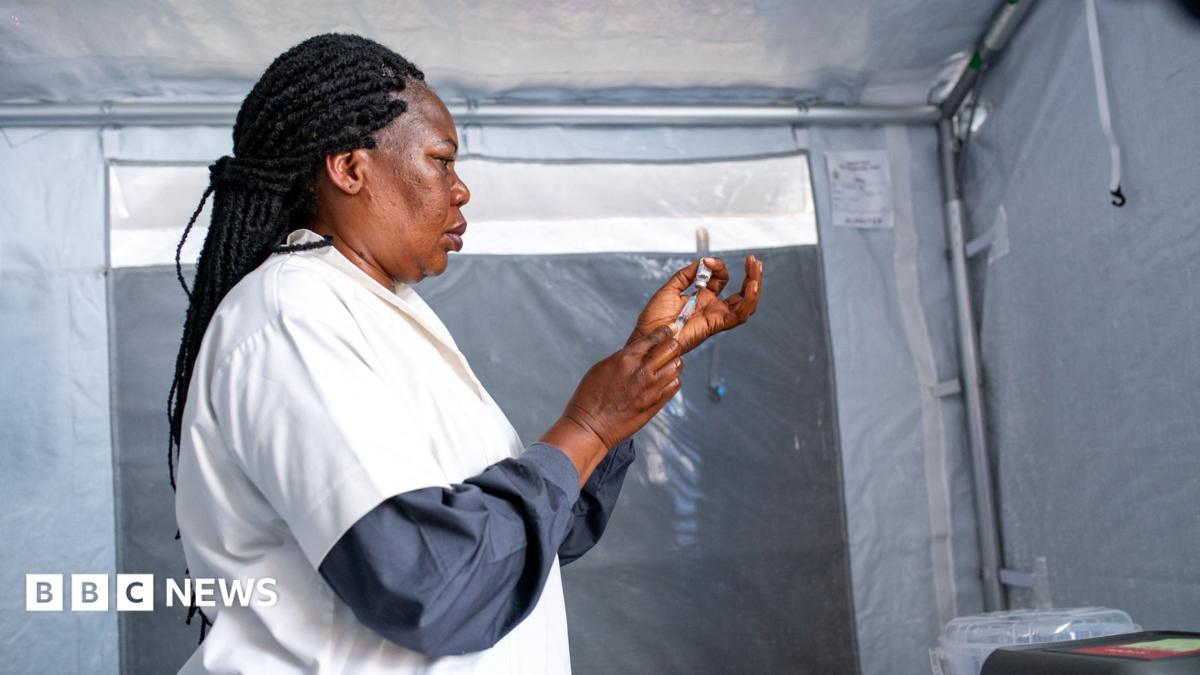
Kenya has confirmed its first fatal case of Ebola, after a Kenyan national who had been residing in the Democratic Republic of Congo for seven years died in Nairobi. The announcement was made by Health Minister Aden Duale, who said the patient had fallen ill roughly a month before his death and had received treatment at multiple hospitals in DR Congo before travelling to Kenya.
According to the minister, the man boarded a flight on Saturday and passed through routine public health screening at Nairobi's main airport without triggering any alarm. A relative then transported him from the airport to a hospital in the city, where his condition was assessed and he was eventually transferred to an isolation unit originally constructed during the Covid-19 pandemic.
The Ministry of Health identified the pathogen as the Bundibugyo species of the Ebola virus, a relatively rare strain for which no vaccines or treatments have yet been approved. Mr Duale told reporters that doctors became suspicious after the patient displayed a combination of symptoms consistent with a viral haemorrhagic fever, including fever, chills, severe fatigue and weakness, painful swallowing, muscle aches, and bleeding beneath the skin. The patient's travel history, combined with his clinical presentation, prompted medical staff to collect samples for laboratory analysis. Those samples returned a positive result for Ebola Bundibugyo virus.
The man died at 23:30 local time on Monday, and authorities have said his burial will take place later on Tuesday in accordance with strict public health safety protocols designed to prevent further transmission. Earlier reports mistakenly suggested the victim had survived the first case; however, the case proved fatal after his arrival in Kenya, marking the country's first confirmed Ebola death.
Contact tracing efforts are already under way. Health authorities have identified at least 28 close contacts, including family members and healthcare workers who came into contact with the patient, and are working to trace an additional 23 passengers and four crew members who travelled on the same flight from Uganda to Nairobi. Officials have not yet disclosed which airline operated the flight or the specific route taken, but the patient is understood to have travelled by road from DR Congo to the Ugandan capital, Kampala, before boarding a flight to Nairobi.
The wider regional picture is deeply concerning. More than 4,000 people have died from Ebola in DR Congo this year alone, making it the second-deadliest outbreak of the disease on record. The World Health Organization has recorded 4,082 deaths from 8,463 confirmed cases since the Bundibugyo species first emerged in the current outbreak, underscoring the severity of the situation. The outbreak was formally declared by DR Congo in May, and cases were subsequently reported in neighbouring Uganda, where two people died. However, the WHO declared Uganda free of the disease in August, and since then all confirmed cases have been confined to DR Congo.
The Bundibugyo strain is one of the less common Ebola species, which complicates the public health response. Unlike the Zaire strain, which has been the target of several effective vaccine candidates, Bundibugyo has no licensed vaccine or treatment. Some experimental therapies and vaccine candidates have been trialled, but none have yet received regulatory approval, leaving health authorities to rely primarily on supportive care, isolation, and aggressive contact tracing to contain the virus. The strain is known to be highly infectious, and case fatality rates in past outbreaks have been significant.
The fact that the patient passed through standard airport screening without being flagged has raised questions about the effectiveness of entry-point surveillance for Ebola. Ebola's incubation period can stretch up to 21 days, and infected individuals may not show symptoms—and therefore may not transmit the virus—during the early stages. Fever screening at airports has long been criticised by public health experts as a limited tool, since travellers may take fever-reducing medication or simply not yet be febrile when they pass through thermal scanners. The patient in this case fell ill a month before his death, indicating a prolonged and complicated clinical course that spanned two countries.
Kenyan health officials have moved quickly to reassure the public, stressing that isolation facilities and infection prevention measures are in place. The isolation unit where the patient was treated was originally built to handle Covid-19 cases, and staff there are trained in the management of highly infectious diseases. Nevertheless, the identification of healthcare workers among the contacts is a reminder of the risks frontline medical personnel face when a haemorrhagic fever case is not immediately recognised.
The death also highlights the broader challenge of cross-border disease surveillance in East Africa, a region characterised by heavy movement of people and goods. DR Congo shares porous borders with Uganda, Rwanda, and Burundi, and trade and family ties mean that individuals frequently travel between these countries. The road journey from eastern DR Congo to Kampala is a well-established route used by traders and travellers, and the fact that the patient was able to move from a high-risk outbreak zone to a regional transport hub before flying onward illustrates the difficulty of containing pathogens in an interconnected region.
Global health agencies are expected to monitor the situation closely in the coming days. The WHO has not yet indicated whether it will declare the Kenyan case a public health emergency of international concern, but the emergence of the virus in a new country—particularly one with a major international airport—will intensify scrutiny of preparedness measures. Kenya has experience responding to previous Ebola scares, including suspected cases that ultimately tested negative, but this marks the first confirmed infection and death on its soil.
For now, the immediate priority is containment. Kenyan health teams are monitoring the identified contacts for symptoms over the coming weeks, and the burial of the deceased will be conducted under the supervision of public health officials. The Ministry of Health has urged citizens to remain calm, report any suspicious symptoms, and cooperate with contact tracers. Whether Kenya can prevent further transmission will depend on how quickly and thoroughly these measures are implemented, and on whether the virus has already spread beyond the known contacts.
This breaking news story continues to develop, and further details are expected to be published as authorities release more information about the case, the flight involved, and the outcome of contact tracing efforts.




(0)