
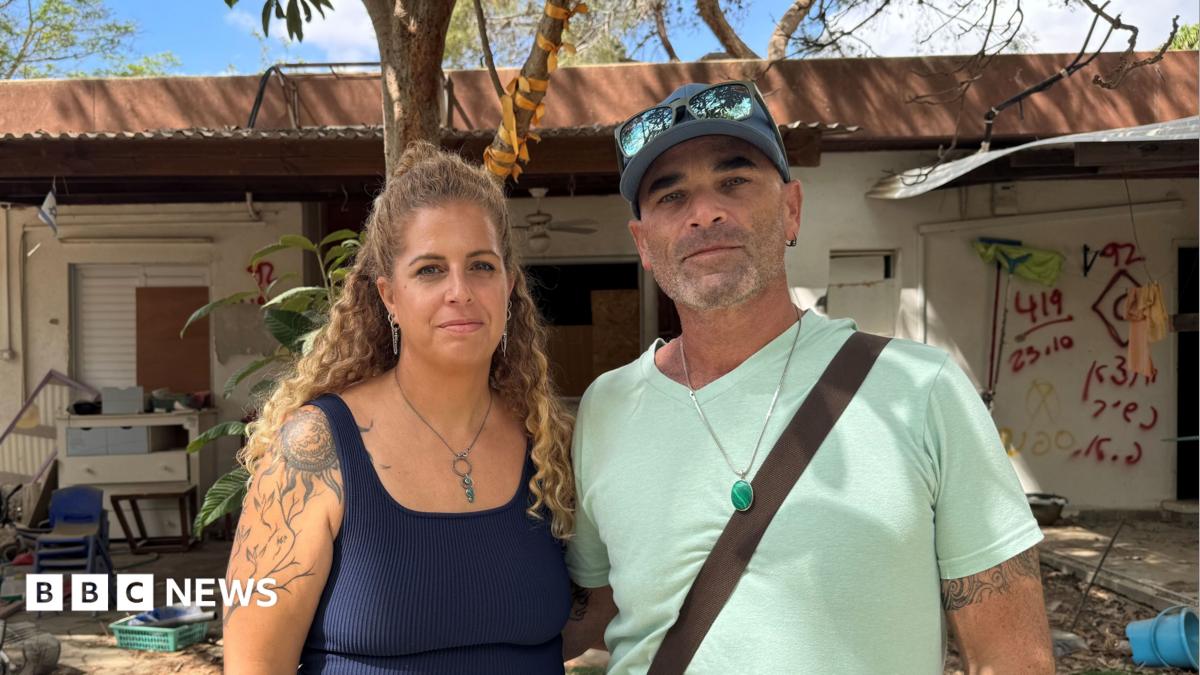
Three years after the Hamas-led assault that shattered Kibbutz Nir Oz, the deserted communal dining hall tells its own story. Birds now nest among the ceiling tiles of what was once the lively centre of a tight-knit Israeli community of about 400 people. The silence is broken only by birdsong and the cries of stray cats left behind.
Dalit Ram Aharon, who survived the attack with her husband Achi and their three children, guides visitors through the ruins of the place she has called home all her life. Standing by glass doors pockmarked with bullet holes, she points to a row of postboxes that have become an unlikely memorial. Stickers placed there after the attacks mark the fate of each household: red for those killed, black for those taken hostage. Roughly one in four residents was either murdered or kidnapped, she explains, including children and babies.
The kibbutz, located barely a mile from the Gaza border, was among the hardest-hit communities on 7 October 2023. As Israel marks the third anniversary of the deadliest day in its history, residents are once again confronting their losses while wrestling with an uncertain future.
The scale of the tragedy is difficult to absorb. According to the article, around 500 Palestinians took part in the assault on Nir Oz, led by Hamas's elite Nukhba fighters but also including civilian looters, some of them children. Forty-one kibbutz residents and foreign workers were killed, along with six people who had fled to Nir Oz from a nearby party. Seventy-six people from the community were abducted into Gaza, among them nine bodies. Fourteen hostages were taken alive and later killed in captivity. The last living hostages from Nir Oz were returned to Israel on 13 October 2025, and the remains of the final deceased hostage, Amiram Cooper, were brought back two weeks later.
Time appears frozen at the burnt-out home of the Siman Tov family, where a wind chime still hangs by the door. A photograph shows Tamar and Yonatan with their three children: five-year-old twins Shahar and Arbel, and two-year-old Omer. The parents were shot through the door of their bomb shelter, a structure designed to shield them from rockets launched from Gaza, not from gunfire.
Dalit recalls the final messages Tamar sent to a neighbourhood women's group that morning. At first, Tamar asked whether everyone was alright. Later, she wrote that they were being shot at. Finally, in a message filled with errors, she said the family was badly injured. From what residents understand, the house was set alight and the children died of suffocation. The entire family was killed.
Walking through the greenery of the kibbutz, Achi and Dalit point out the sites of other atrocities. They show where Maya Goren, a teacher, was killed inside the kindergarten, and where makeshift memorials stand for three of the seven members of the kibbutz security team who died battling the gunmen.
The findings of the Israeli military's investigation into the events at Nir Oz highlighted a devastating failure. The army, thrown into disarray by the unprecedented simultaneous assault on more than 20 communities and multiple military posts, never came to the rescue. The first soldiers reached the kibbutz roughly 40 minutes after the last attackers had left. Nearly every household experienced killing, violence including sexual assaults and rape, looting and kidnapping.
Dalit pauses beside a tree planted long ago by her parents, who helped found the kibbutz, a place known for its farming and its peace activism. They survived the attack physically unharmed but died only months later.
Next door stands the small home of Shiri Bibas, mother of the ginger-haired boys Ariel, four, and nine-month-old Kfir. The three became symbols of the Gaza hostage crisis after being snatched from their home. Dalit describes Shiri as a very close friend, almost like a sister. The two were pregnant at the same time, and their children became best friends. They used to joke that the pair would one day marry. Shiri, she says, was funny and happy, a mother who lived a simple life and never harmed anyone. While Shiri's husband Yarden was released alive by Hamas under a Gaza ceasefire deal in February 2025, she and the two boys were killed after being taken hostage.
For the residents who remain, the question of rebuilding is inseparable from the question of memory. The Aharons support leaving some of the damaged homes untouched as evidence of what occurred. In their view, people should be able to see the destruction and confront what they describe as the pure hatred that was unleashed here.
Dozens of fire-damaged homes, simple one-storey buildings, have already been demolished. All that remains in many cases are rows of the reinforced concrete safe rooms that failed to protect their occupants. The physical landscape of Nir Oz is thus being erased even as its survivors struggle to preserve its story.
Dalit and Achi say they intend to return to Nir Oz and rebuild their lives there, in the memory of the friends they lost. Their decision reflects a broader dilemma facing the community: how to create a future in a place so saturated with grief, and how to ensure that the world remembers what happened on the ground where they once ate together, celebrated holidays and raised their children.





(0)