
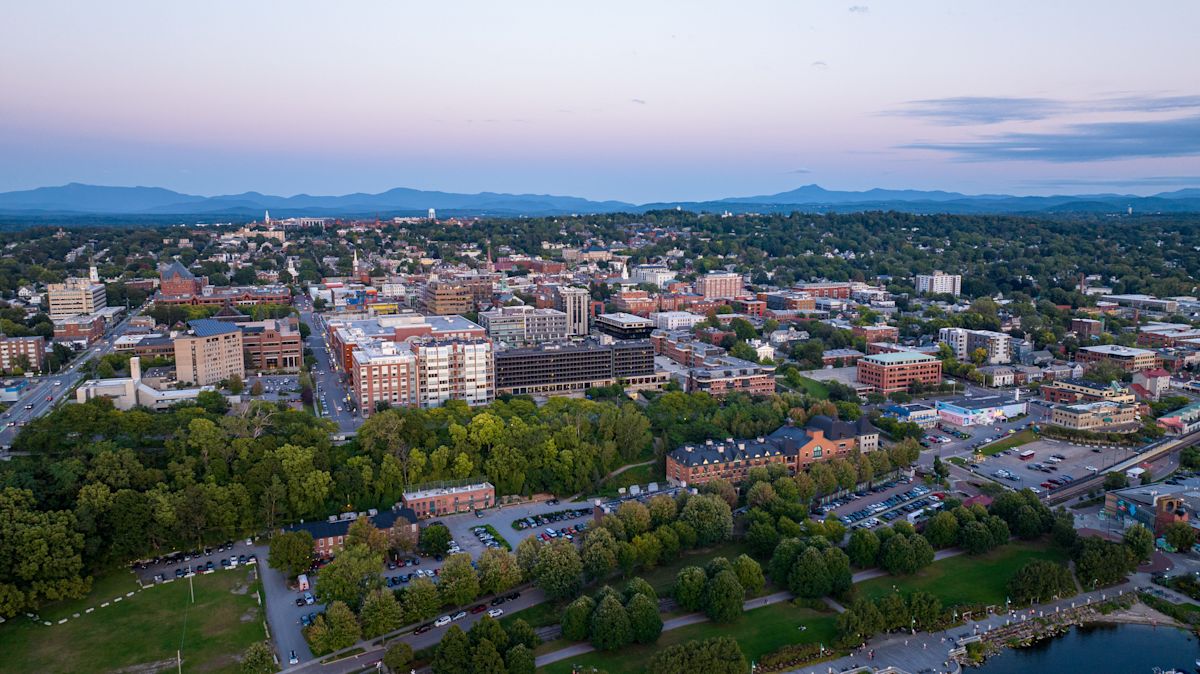
Vermont has demonstrated measurable progress in nationwide well-being evaluations, advancing to the 22nd position in WalletHub’s newly released 2026 Happiest States in America report. Despite demonstrating notable strengths across several key community, safety, and workplace indicators, the Green Mountain State ultimately fell short of securing a place within the country's top ten happiest states.
The 22nd-place ranking marks a seven-spot climb for Vermont compared to the previous year’s findings. In WalletHub’s 2025 assessment, the state had finished in 29th place. In the latest national evaluation, Vermont landed in the upper half of the 50 states, finishing directly behind 21st-ranked Florida and immediately ahead of Kansas, which secured the 23rd spot.
The release of the annual study comes as many residents across the country continue to experience economic uncertainty. Drawing on research from Gallup, the WalletHub report highlighted that only 44% of Americans currently identify as being "very satisfied" with their lives. The analysis pointed out that overall contentment is shaped by an interconnected range of everyday factors, including physical and mental health, steady employment, strong personal relationships, and enduring financial stability.
To establish the comprehensive rankings across all 50 states, WalletHub evaluated dozens of key metrics tied to overall quality of life. The study grouped its analysis into primary dimensions, focusing on emotional and physical well-being, work environments, financial security, and community life. The research also incorporated evaluations of local safety, social connections, healthcare access, and the availability of leisure time.
At the very top of the 2026 happiness list, Hawaii captured the No. 1 overall ranking in the nation. The islands were followed in the leading five by New Jersey in second place, Utah in third place, Idaho in fourth place, and Maryland in fifth place.
The remainder of the top ten comprised Nebraska at No. 6, Connecticut at No. 7, Minnesota at No. 8, and California at No. 9. Rounding out the nation's ten happiest states was Vermont’s northern New England neighbor, New Hampshire, which took the No. 10 position.
States across the broader upper and middle tiers of the ranking saw varied placements throughout the country. New York placed 11th, North Dakota took 12th, Massachusetts followed in 13th, North Carolina earned 14th, South Carolina ranked 15th, and Virginia placed 16th. Further down the list, Arizona took 17th, Georgia placed 18th, Washington earned 19th, and Iowa finished in 20th just ahead of Florida and Vermont.
Vermont's 22nd overall placement was driven by sharply contrasting results across WalletHub's main evaluation subcategories. The state performed particularly well in community and environment, where it achieved 7th place nationwide, and in its work environment, where it ranked 9th. However, Vermont’s ranking was weighed down by its score in emotional and physical well-being, where the state placed 31st among all 50 states.
Despite its lower position in overall physical and emotional health, Vermont led the nation across several specific daily lifestyle benchmarks. The state finished first in the entire country for its adequate-sleep rate and also captured the No. 1 spot for sports participation rate, indicating that residents consistently engage in athletic activities and secure adequate rest.
Vermont also earned standout marks for its public safety and balanced working conditions. According to the study's data, Vermont ranked No. 1 in the nation for safety and took second place nationally for having the fewest mean work hours, meaning local employees spend fewer average hours on the job compared to workers in nearly every other state.
In terms of labor market durability, the Green Mountain State demonstrated strong resilience against prolonged joblessness. The WalletHub analysis found that Vermont tied with South Dakota, Hawaii, and Montana for the nation’s second-lowest long-term unemployment rate, helping reinforce its high standing for workplace conditions.
Demographic and regional data compiled by the U.S. Census Bureau provide additional context regarding the state, which is home to communities including Burlington, the state capital of Montpelier, and the resort town of Stowe. As of July 2025, Vermont had an estimated population of 644,600 residents distributed across roughly 273,400 households, with an average household size of 2.28 persons.
On the financial front, Census Bureau statistics revealed that the medium household income across Vermont between 2020 and 2024 stood at $81,203. This income level serves as an important benchmark for how residents support themselves and meet the demands of their daily living expenses.
Discussing the broader takeaways of the rankings, WalletHub analyst Chip Lupo explained that the happiest states are those that provide well-rounded quality of life across diverse categories. In a statement, Lupo noted that top-ranking jurisdictions generally combine robust state economies and excellent physical and mental healthcare systems with sufficient leisure time and good weather.
Lupo also addressed the delicate connection between personal wealth and happiness, noting that while the old adage that money cannot buy happiness holds significant truth, having adequate resources to live comfortably remains fundamentally essential. He added that financial resources beyond that comfortable threshold do not boost happiness as much as cultivating fulfilling hobbies, nurturing relationships, and pursuing opportunities for personal growth.
At the lowest end of the national evaluation, several states faced substantial hurdles across health, economic, and social well-being measures. West Virginia placed last overall at No. 50, preceded in the bottom tier by Louisiana at No. 49, Arkansas at No. 48, Alaska at No. 47, and Kentucky at No. 46.









(0)