
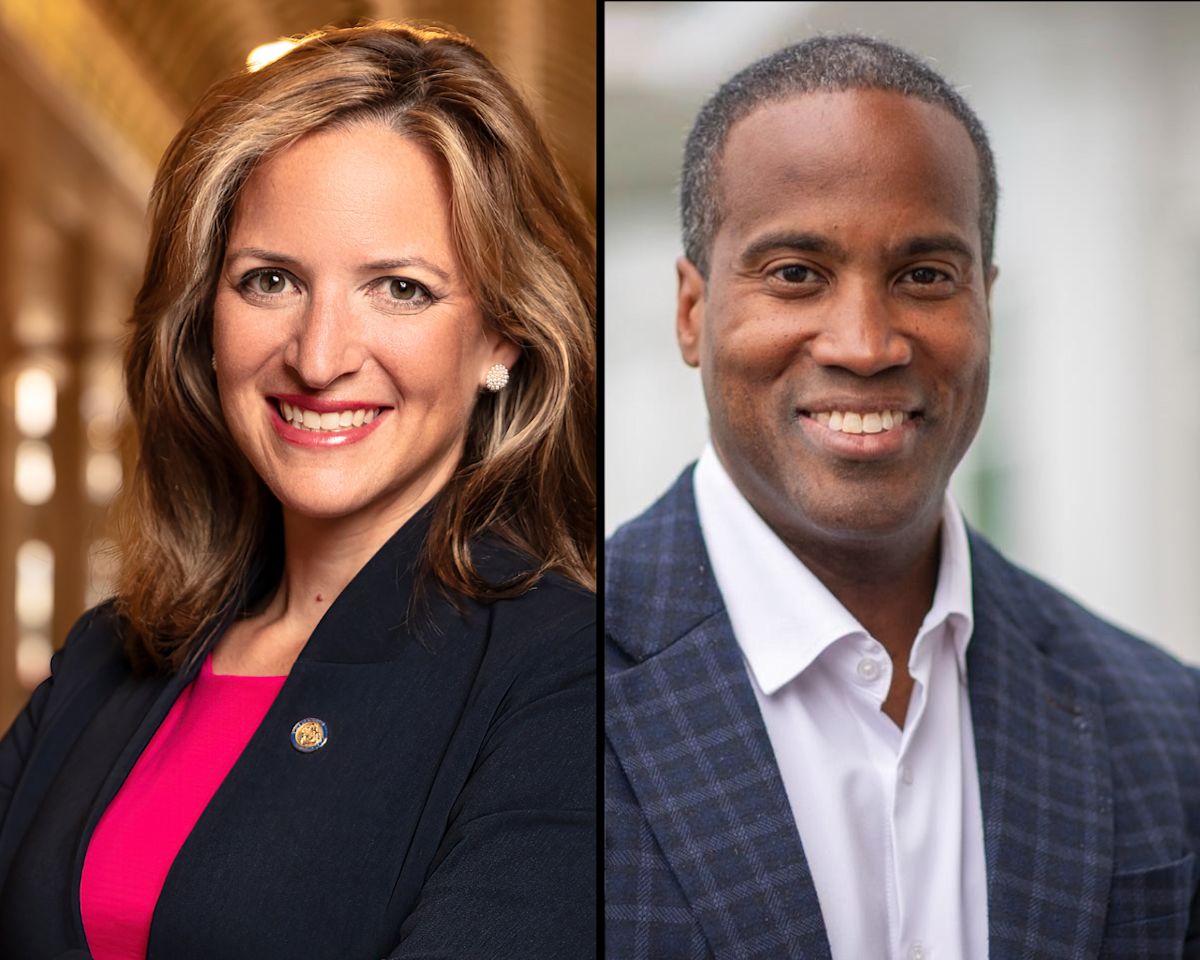
The race to determine the next governor of Michigan reached a pivotal juncture on Wednesday as the two major-party contenders prepared to outline their competing economic and governance visions before an audience of regional business leaders and civic influencers. Democratic nominee Jocelyn Benson and Republican nominee John James took the stage for separate appearances at a high-profile forum hosted by the Detroit Economic Club.
Scheduled for noon at the MotorCity Casino Hotel in Detroit, the event arrived at an increasingly critical phase of the campaign calendar. With the state preparing to choose a successor to lead the executive branch, both candidates sought to utilize the club's prestigious platform to pitch their respective roadmaps for Michigan’s future economic growth, workforce development, and institutional governance.
The structure of Wednesday’s session placed the candidates in individual spotlights rather than a direct, head-to-head debate. Under the forum's guidelines, Secretary of State Benson and U.S. Representative James were slated to speak separately to the assembled crowd, fielding targeted questions from veteran WDIV-TV anchor and reporter Jason Colthorp.
While Benson attended the gathering in person inside the Detroit venue, James was forced to adjust his travel logistics and participate remotely from Washington, D.C. The Republican lawmaker’s virtual appearance was arranged after unexpected scheduling changes arose on Capitol Hill regarding congressional voting duties, according to Detroit Economic Club spokesperson Matt Friedman.
Despite the logistical divergence in how the candidates joined the proceedings, the event preserved a long-standing tradition for the Detroit Economic Club. The organization has historically served as a premier arena for major political candidates seeking statewide and federal office to articulate their policy priorities directly to Michigan’s influential commercial and civic sectors.
The stakes surrounding this year’s forum are especially pronounced due to an impending transition of power in the governor's mansion in Lansing. Current Governor Gretchen Whitmer is barred from seeking reelection due to constitutional term limits, bringing her eight-year administration to an impending conclusion and leaving an open executive seat that both political parties are fiercely contesting.
For Representative James, a Shelby Township Republican, the race represents an opportunity to urge Michigan voters toward a fundamental political course correction. Throughout his campaign, James has consistently maintained that the state requires a decisive pivot away from Democratic leadership after eight consecutive years of the Whitmer administration managing state agencies and policy priorities.
James has centered much of his platform on critical state challenges, particularly focusing on reviving Michigan's economic competitiveness and overhauling the public education system. His campaign message frames the upcoming election as a vital referendum on the current administration's record, asserting that new leadership is necessary to stimulate business growth, attract enterprise, and elevate academic outcomes for students across the state.
Conversely, Benson, who currently serves as Michigan’s Secretary of State, has centered her gubernatorial bid on delivering stability, safeguarding essential services, and mitigating kitchen-table economic pressures. Benson’s campaign has placed consumer affordability at the forefront of its platform, pledging concrete measures to alleviate the widespread cost-of-living burdens currently squeezing working families and households.
On the political front, Benson has worked vigorously to tie James to the broader national agenda of President Donald Trump. The Democratic nominee has repeatedly contended that the economic and governance policies championed by Trump and backed by congressional Republicans have contributed directly to elevated expenses for everyday Michiganders, seeking to draw a stark contrast between James's federal alignments and the practical economic needs of the state.
The sharp contrast between the two nominees reflects a broader ideological divide over how Michigan should position itself in the coming decade. While James points to his federal legislative experience in Shelby Township and calls for structural shifts away from Lansing's prevailing policies, Benson leverages her statewide executive tenure overseeing state elections and branch operations to argue for focused, kitchen-table problem solving.
By addressing the Detroit Economic Club, both candidates aimed to sway a vital demographic of commercial leaders, policy analysts, and undecided voters who prioritize fiscal stability and job creation. Forum moderator Colthorp pressed the candidates on how their contrasting philosophies would translate into tangible policy outcomes for Michigan workers, urban centers, and rural communities alike.
As the candidates concluded their addresses and laid out their final economic appeals to the Detroit audience, the timeline to make an impression on the broader electorate continues to narrow. The campaign enters its home stretch with both sides ramping up voter contact, digital messaging, and statewide travel to build momentum in the final weeks of the race.
Michiganders will officially render their verdict on the state's leadership when voters head to the polls on Tuesday, November 3, concluding an intense contest that will shape the trajectory of Michigan's governance and economic policy for the next four years.









(0)