
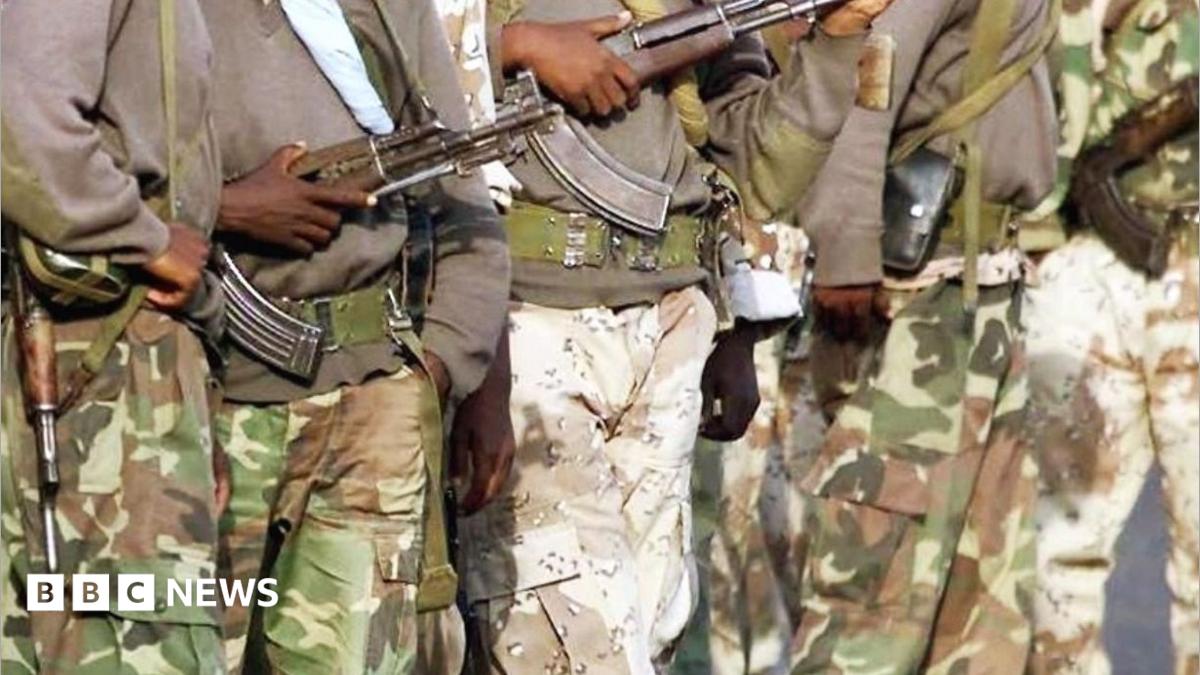
Eritrean soldiers have entered northern Ethiopia and are advancing toward the heart of the Tigray region, residents of the town of Adigrat told the BBC, in a development that has raised fresh alarm about a conflict that could spread well beyond Ethiopia's borders. The reported troop movements come two weeks after fighting erupted between the Ethiopian national army and regional forces, and just days after Ethiopia and Eritrea severed diplomatic ties amid mutual recrimination.
According to several accounts gathered by the BBC, Eritrean units have moved south from the border settlement of Zalambessa toward central Tigray, with convoys passing through Adigrat and reportedly continuing toward Edaga Hamus, a town situated between Adigrat and the regional capital, Mekelle. One Adigrat resident, who spoke on condition of anonymity because of security concerns, recounted seeing roughly 40 trucks packed with soldiers rolling southward. A second resident described an earlier, more covert phase of the movement, saying vehicles bearing Eritrean registration plates had been passing through the city at night before larger daytime columns appeared.
That second witness said that on the morning of the interview, some 20 to 30 large trucks were spotted heading for Edaga Hamus. Acquaintances travelling along the same route, the resident added, had seen additional vehicles hauling heavy weapons, including anti-aircraft guns, while some soldiers were also advancing on foot. A source in Mekelle relayed what relatives in Adigrat had described as an even bigger deployment, estimating that as many as 60 trucks carrying troops were later deployed in mountainous terrain near Edaga Hamus.
Images circulating on social media appear to back up those descriptions, showing heavily laden military trucks with uniformed personnel moving toward Adigrat, Edaga Hamus and possibly Wukro, another significant town on the corridor linking Adigrat with Mekelle. The BBC has not independently verified the footage, and the corporation has said it has not been able to confirm any of the reported troop movements on its own. Meanwhile, sources in Wukro said national army soldiers and allied fighters entered the town on Wednesday following an exchange of heavy weapons about 15km to the south.
The BBC is unable to report directly from Tigray and surrounding areas, although mobile and internet connections have been restored across most districts since the military took control of Mekelle. Over the weekend, TPLF forces pulled out of that city, which lies 115km (71 miles) south of Adigrat and is now in the hands of the national army. The withdrawal marks a significant shift in the balance of control in a region that has endured years of bloodshed.
The current round of fighting began two weeks ago, after months of mounting tension between Prime Minister Abiy Ahmed's government and the party that governs Tigray, the Tigray People's Liberation Front. Each side blames the other for breaking the 2022 agreement that brought a two-year civil war to an end. That war, waged between 2020 and 2022, saw Eritrea fight alongside landlocked Ethiopia against the TPLF in one of the deadliest conflicts of the century, one that pushed Tigray to the brink of famine.
Relations between the two neighbours have deteriorated sharply since then, largely because of the Ethiopian leader's stated ambition to gain access to one of Eritrea's Red Sea ports. Ethiopia has also accused Eritrea of lending support to the TPLF, an allegation Asmara has rejected in the past. The latest unrest follows the formation in September of a new alliance of armed groups inside Ethiopia, of which the Tiplay force is a member, adding a further layer of complexity to an already volatile situation.
Senior Ethiopian government official Abraham Belay went further in a recent interview with the privately owned Fana Television, accusing Eritrea of taking a direct role in the fighting. "The Eritrean army has participated with its full capacity and logistics," he said, adding that many Eritrean soldiers had been killed and captured. He warned that retaliation would be doubled, remarks certain to deepen anxiety across a region already bracing for escalation.
For ordinary people in Tigray, the reported return of Eritrean forces carries a painful emotional weight. Residents have voiced fear, recalling atrocities allegedly committed by Eritrean troops during the recent civil war, when they fought against the TPLF. One Adigrat inhabitant said seeing those soldiers once more was deeply distressing, noting that memories remained raw and that people were saddened to see them back. A resident of Edaga Hamus, meanwhile, reported Eritrean troops moving through the town and said drone strikes had taken place nearby, with soldiers targeted.
The unrest has intensified fears of a broader regional confrontation, particularly after last week's decision by Ethiopia and Eritrea to cut diplomatic relations. Analysts and regional observers have long warned that a resumption of large-scale fighting in Tigray could draw in neighbouring states and destabilise the wider Horn of Africa, a strategically sensitive area bordering the Red Sea. The presence of foreign troops on Ethiopian soil, if confirmed, would represent a dramatic and dangerous escalation.
The BBC has urged caution over the reports, emphasising that it has not been able to verify the scale or direction of the deployments, and that images shared online remain unconfirmed. The corporation has also highlighted its own reporting restrictions in the region, which limit the flow of independent information from the ground. As communications improve, however, a clearer picture of the situation in Tigray is likely to emerge in the coming days.
What is already clear is that the fragile peace that ended the 2020-2022 war is under severe strain. With the army in control of Mekelle, Eritrean convoys reportedly pushing toward Edaga Hamus, and both governments trading accusations, the region stands at a crossroads. Whether the current crisis can be contained through dialogue or spirals into a wider war will depend on the decisions taken by Addis Ababa and Asmara in the days ahead — and on the fate of the civilians caught between them.







(0)