
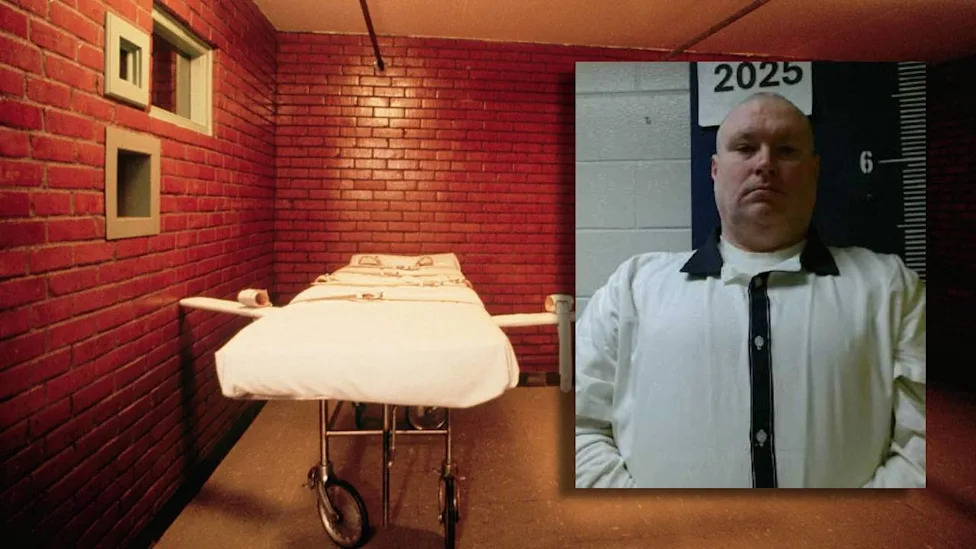
The Georgia Board of Pardons and Paroles has formally denied clemency for death row inmate Stacey Ian Humphreys, keeping his scheduled execution on track for Wednesday evening. The state panel’s decision eliminates one of the final avenues for executive relief as the condemned inmate faces lethal injection for the murders of two Cobb County real estate agents committed more than two decades ago.
Humphreys was convicted by a jury for the 2003 murders of Cynthia "Cyndi" Williams and Lori Brown, who were killed inside a model home in Powder Springs, Georgia. His execution by lethal injection is officially scheduled to take place at 7 p.m. on Wednesday, barring any last-minute judicial intervention from the courts handling his remaining legal appeals and stay requests.
The 2003 slayings of Williams and Brown sent profound shockwaves through the local community and reverberated widely across the real estate sector. The two women were targeted while carrying out their professional duties at the model home site, leaving colleagues, community members, and the broader Cobb County area deeply shaken in the aftermath of the tragedy.
In the final days leading up to his execution date, attorneys representing Humphreys mounted a comprehensive legal effort to halt the death sentence. The defense team argued that severe trauma and child abuse endured by Humphreys during his upbringing should legally qualify him for a reduced sentence, rather than the ultimate penalty of execution under Georgia law.
The state’s parole board convened for a clemency hearing on Tuesday morning to review Humphreys' case and consider the arguments presented by his legal representatives. After evaluating the petition and hearing the defense's presentations regarding his past, the board made the determination to deny clemency, upholding the capital sentence handed down by the trial jury.
Alongside the administrative clemency process, Humphreys' attorneys pursued emergency relief within the judicial system by filing a new motion in Cobb County on Monday. That filing resulted in a separate hearing being scheduled for Tuesday afternoon, providing a legal venue for the defense to present urgent arguments before a judge prior to the impending execution window.
The primary legal basis for the defense’s motion to stay the execution rests upon the Georgia Survivor Justice Act. That legislation was officially passed by state lawmakers and signed into law in 2025, creating a new statutory framework designed to provide legal recourse for certain convicted individuals who have survived domestic or childhood abuse.
Under the provisions of the 2025 Georgia Survivor Justice Act, individuals who have been convicted of criminal offenses are granted the opportunity to introduce evidence demonstrating that they are survivors of child abuse or family violence. The law allows the introduction of such evidence to show a connection between the past abuse and the crimes committed.
Humphreys’ legal representatives maintained that the newly enacted statute applies directly to his capital murder case. They contended that the court must grant a hearing to properly review whether the severe trauma he suffered as a child influenced his actions, asserting that the legislative intent of the 2025 law was specifically intended to address such circumstances in criminal sentencing.
The core legal argument presented by the defense centers on whether Humphreys' childhood abuse served as a "significant contributing factor" to the underlying malice murder charge. According to his attorneys, if the court makes such a determination under the framework of the 2025 act, the existing death sentence must legally be reduced to a lesser sentence.
To pursue this statutory remedy, the defense formally requested a stay of execution to allow sufficient time for an evidentiary hearing. In their motion filed with the court, Humphreys' attorneys wrote: "Mr. Humphreys respectfully requests that this Court stay his execution and allow a hearing at which he may have the opportunity to prove his eligibility for a reduced sentence."
Humphreys was originally convicted of malice murder following a trial in which jurors examined the circumstances surrounding the fatal shootings at the Powder Springs model home. After weighing the evidence presented by prosecutors, the jury found him guilty of the double murder and determined that the imposition of the death penalty was the appropriate sentence.
With the parole board’s clemency denial now officially on the record, the state of Georgia is preparing to carry out the lethal injection at 7 p.m. Wednesday. The correctional authorities will proceed with the execution protocol as scheduled unless a state or federal court issues an order granting a stay to hear the defense's statutory trauma claims.
The unfolding case represents an important test of how Georgia courts will interpret and apply the 2025 Georgia Survivor Justice Act in capital murder proceedings. As the scheduled execution hour rapidly approaches on Wednesday evening, Humphreys’ legal fate remains dependent on whether judicial authorities decide to halt the lethal injection to review his claims of childhood abuse.








(0)