
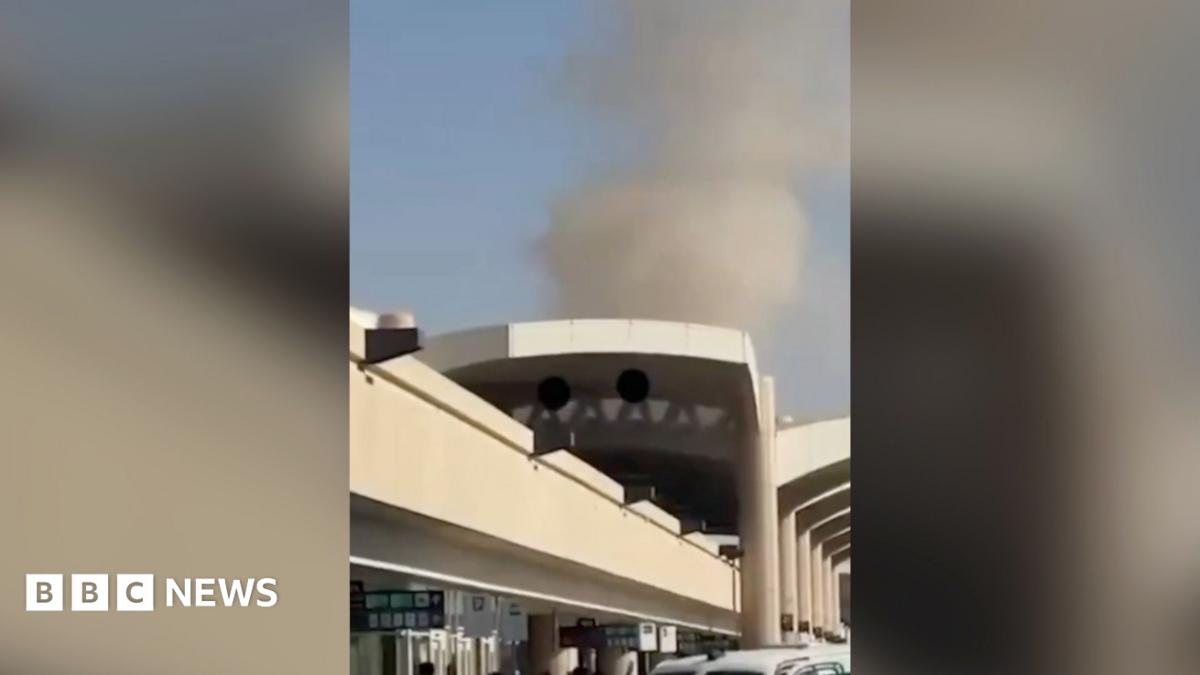
Residents of Ethiopia's capital reported hearing multiple explosions overnight, with some of the blasts occurring near the country's military headquarters in the west of the city and another in a southern district, according to accounts from local residents and diplomatic sources. The incidents have heightened anxiety in Addis Ababa just one week after fighting broke out in the north between the national army and a newly formed coalition of armed groups that includes forces from the Tigray region.
A source connected to the opposition fighters told the Reuters news agency that the group was responsible for what it described as drone strikes. That claim has not been independently verified, and no official body has confirmed who or what was behind the explosions. The allegation nonetheless marks a significant development, suggesting that a conflict that has largely been confined to northern Ethiopia may now be reaching the capital.
One resident living in a southern area of Addis Ababa, close to the base of the secret service, described the intensity of the blast to BBC Amharic. He said the explosion was powerful enough to trigger car alarms and estimated that he heard it in the Gotera neighbourhood at around 00:30 local time, which is 21:30 GMT. Another resident told the BBC that he and his friends were playing games when they were startled by an explosion. He lives in Torhayloch, a western suburb situated near the military headquarters.
The reported blasts came only hours after authorities imposed a ban on drone flights over Addis Ababa. That restriction, announced before the overnight explosions, indicates that officials were already anticipating possible aerial threats to the capital. The timing has led observers to question whether the ban was a precautionary measure or a response to specific intelligence about an impending attack.
There have been no official reports confirming the cause of the explosions, the precise locations affected, or whether the incidents resulted in any casualties or property damage. The office of Prime Minister Abiy Ahmed, the defence ministry, and both the federal and Addis Ababa police have not responded to requests for comment from the BBC. The absence of official information has left residents relying on social media and word of mouth for updates, a situation that often fuels rumour and uncertainty in moments of crisis.
The security situation in Ethiopia has deteriorated rapidly over the past week. Fighting erupted in the north between the army and a newly launched alliance of armed groups, a coalition that includes forces from Tigray. The formation of this alliance represents a notable shift in the country's conflict dynamics, bringing together previously separate armed movements under a single banner. Analysts suggest that such a coalition could pose a more coordinated and formidable challenge to federal forces than the disparate groups that have fought the government in recent years.
Tigray was the centre of a devastating two-year war that began in late 2020 and formally ended with a peace agreement in November 2022. That conflict, which pitted Tigrayan forces against the federal government and its allies, resulted in hundreds of thousands of deaths and widespread displacement. The recent outbreak of fighting has raised fears that the region could be plunging back into war, a prospect that carries enormous humanitarian and political consequences for the entire Horn of Africa.
Residents of Addis Ababa, a city of several million people and the seat of the African Union, are now confronting the possibility that the violence could reach their neighbourhoods. The explosions reported overnight, if confirmed as an attack, would represent a rare and alarming breach of the capital's security. The capital has generally been insulated from the battlefield during previous phases of the conflict, though there have been isolated incidents and periods of heightened tension.
The ban on drone flights over Addis Ababa is a measure that authorities have not publicly elaborated upon. Drones have played an increasingly prominent role in modern conflicts, used for surveillance, targeting, and delivering munitions. The restriction suggests that officials are concerned about unauthorized aerial activity over the capital, whether for reconnaissance or for offensive purposes. The fact that explosions were heard after the ban was imposed may raise questions about the effectiveness of such measures.
The claims of responsibility from a source linked to opposition fighters, if accurate, would signal a significant escalation in the capabilities and reach of the armed alliance. It would suggest that the coalition possesses the means to conduct operations deep inside government-controlled territory, potentially including the capital itself. Such a development would force a major reassessment of the security landscape by federal authorities and their international partners.
Ethiopia's government has not publicly commented on the explosions or the drone ban. The silence from official channels is consistent with past practice during moments of acute security sensitivity, when authorities have often waited before releasing information. However, the lack of official communication can also heighten public anxiety, particularly when explosions are heard in densely populated urban areas.
The international community will be watching the situation closely. Ethiopia is a key strategic partner for Western governments and regional powers, and instability there has implications for the wider region, including neighbouring Somalia, Sudan, and South Sudan. The African Union, headquartered in Addis Ababa, has a direct interest in the stability of its host city and the country as a whole.
The humanitarian dimensions of a renewed conflict are also deeply concerning. Previous fighting in Tigray and neighbouring regions displaced millions of people and left many dependent on emergency assistance. Aid agencies have warned that a return to full-scale hostilities could overwhelm already strained relief operations and cause suffering on a massive scale.
For now, residents of Addis Ababa are left to grapple with uncertainty. The explosions in the night, the drone ban, and the lack of official information have created a climate of fear and speculation. Many are questioning whether the relative calm of recent months is coming to an end and whether the conflict that began in the north will now be felt in the heart of the capital. The coming days are likely to bring further clarity, but the trajectory of events remains deeply uncertain.







(0)