
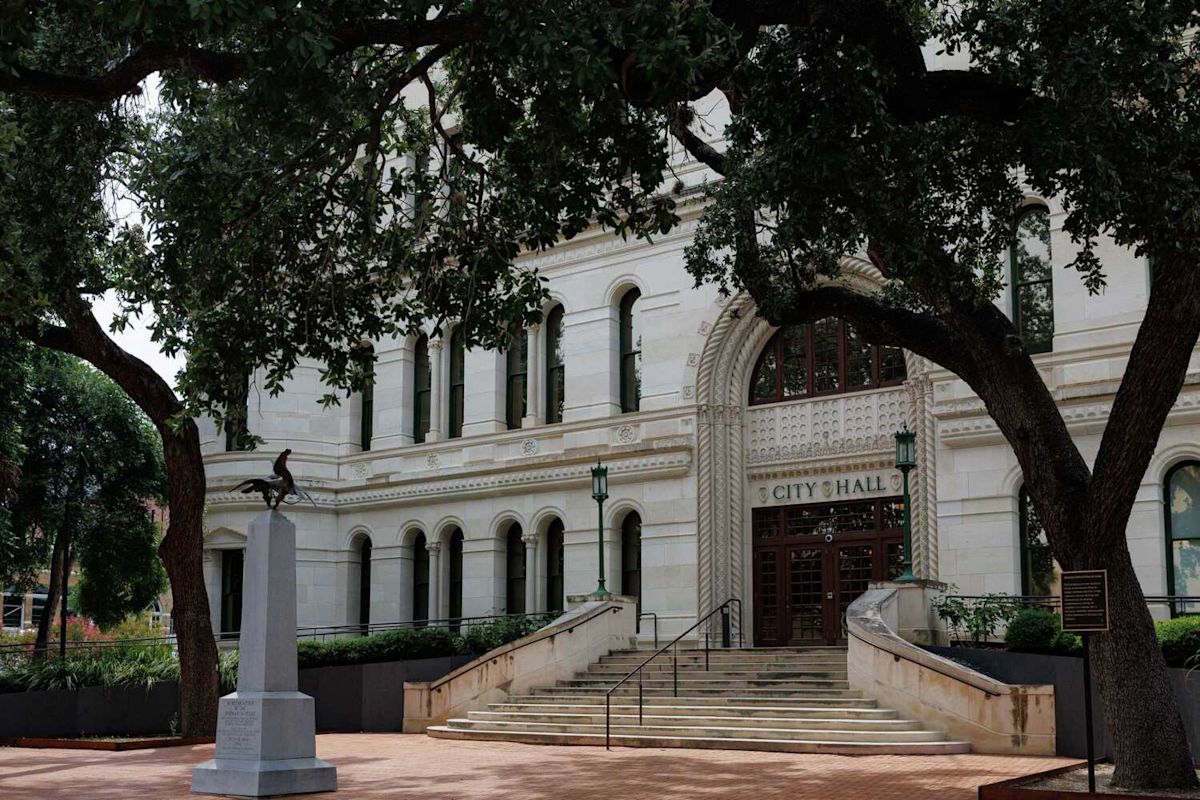
San Antonio’s municipal leadership is navigating sharp internal divisions as Mayor Gina Ortiz Jones and members of the City Council prepare to vote on next year’s $4.4 billion budget. Facing their most consequential fiscal decision in decades, local officials must decide whether to enact the city’s first property tax rate increase in thirty years or implement wide-ranging spending reductions across municipal departments.
The impending vote follows an escalating budget debate focused on bridging a projected $158 million municipal deficit over the next two fiscal years. The budget process has grown increasingly contentious, sparking public discord among elected officials. In the past week, two council members utilized social media platforms to highlight worsening friction within city leadership following an intense disagreement over land acquisitions for a proposed San Antonio Spurs arena and several related initiatives.
City Manager Erik Walsh has presented a financial plan designed to stabilize city revenues while curbing expenditures. Under Walsh’s proposal, San Antonio would raise its property tax rate by two cents, lifting the total rate to slightly above 56 cents per $100 of assessed property valuation. Alongside this revenue adjustment, the proposed budget incorporates $41 million in spending cuts for the upcoming fiscal year to maintain fiscal balance.
According to municipal projections, the proposed two-cent tax rate adjustment would translate to an estimated $35 annual property tax increase for the typical homeowner holding a standard homestead exemption. To further rein in costs, Walsh’s baseline proposal eliminates 101 city positions, dissolves the former office of diversity, equity, and inclusion, scales back grant funding distributed to local nonprofit organizations, and places tighter constraints on departmental overtime expenses.
Elected officials face strict statutory deadlines as they deliberate amendments to Walsh's spending plan. Under the municipal charter, the City Council is obligated to adopt a balanced budget by September 27. The finalized financial plan will officially govern municipal operations starting on October 1, leaving council members limited time to negotiate revisions to departmental allocations and balance competing policy priorities.
The debate over municipal revenues has formed a clear divide on the council. A coalition of three council members—Marina Alderete Gavito, Misty Spears, and Marc Whyte—has firmly rejected any property tax rate increase, advocating instead for deeper operational cuts. These officials argue that local households are already contending with persistent inflation affecting groceries and fuel, as well as impending utility cost increases from the San Antonio Water System.
Under Texas state statute, a property tax rate hike of the scale recommended by Walsh requires the approval of a 60% supermajority of the City Council. Within San Antonio’s governance framework, this rule means that seven council members must vote in favor to pass the tax increase, whereas a bloc of five members can successfully defeat the measure. Whyte acknowledged earlier this week that the opposition group had not yet secured the additional two votes needed to block the proposal.
Conversely, council members Sukh Kaur, Edward Mungia, and Phyllis Viagran have voiced support for approving the proposed tax rate increase, with a majority of the remaining council members appearing ready to vote in favor. Supporters argue that sustaining municipal revenue is necessary to maintain core infrastructure and prevent damaging reductions to essential public services.
Councilwoman Viagran has stood out as one of the most vocal proponents of the tax adjustment, framing the measure as a necessary investment in the city’s continued growth and stability. Viagran previously expressed interest in exploring an even larger tax rate adjustment to prevent spending reductions and protect targeted municipal initiatives from elimination.
Should the council reject Walsh’s proposed tax increase, the property tax rate would remain unchanged, triggering substantial secondary austerity measures. In that scenario, city administrators would be forced to eliminate an additional $75 million from city spending over the next two fiscal years, including an immediate $31.2 million reduction from next year's budget.
These secondary reductions would result in the loss of an additional 138 municipal jobs and would enforce severe cuts across public services, including San Antonio’s public library network and park facilities. The prospect of these deeper reductions has amplified tensions among council members representing different areas of the city.
The debate grew particularly hostile during a briefing last month when Walsh outlined the prospective cuts required if the tax hike failed. Council representatives from the city’s East, West, and South sides criticized the anti-tax faction, contending that spending reductions would disproportionately harm lower-income neighborhoods. Alderete Gavito pushed back against these assertions, claiming that Walsh was deliberately driving wedges between council members by proposing public-facing service cuts rather than targeting administrative overhead.
Walsh has cautioned the council that if members approve the broader budget package on Thursday but reject the accompanying tax rate hike, city administration will automatically proceed with implementing the $31.2 million in secondary spending cuts without bringing the matter back to council for another vote.
In an effort to bridge the division, Councilwoman Ivalis Meza Gonzalez presented a compromise proposal that sought to enact a smaller tax increase than the one requested by Walsh. However, Meza Gonzalez’s framework would still require city staff to identify approximately $13.4 million in spending cuts during the upcoming fiscal year.
The compromise measure has struggled to gain traction among council colleagues, having received little discussion during a Tuesday briefing and being excluded from the list of budget amendments circulated by Walsh. Consequently, council members head into Thursday’s vote facing a stark choice between endorsing the administration’s two-cent tax increase or triggering tens of millions of dollars in additional municipal service and personnel cuts.






(0)