
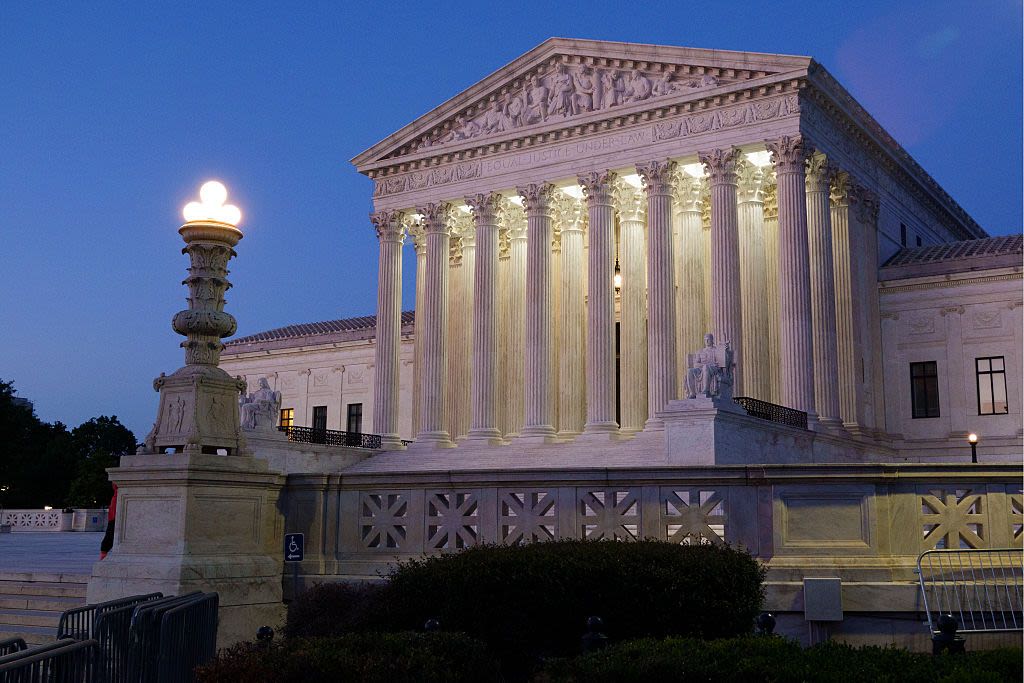
The Supreme Court has rejected an emergency bid by the Trump administration to enforce key provisions of a newly issued U.S. Postal Service rule concerning mail-in voting ahead of the upcoming November elections. In a brief and unsigned order, the justices chose to leave in place a preliminary injunction issued by a federal judge in Boston that prevents the Postal Service from carrying out several aspects of the controversial administrative regulation.
The decision represents a major legal setback for the administration's efforts to alter federal standards governing mail balloting in the final stretch of the election cycle. By denying the federal government's application, the high court ensured that election administrators across the country will not be required to rapidly adjust their operations to meet the new postal mandates while voting is already underway.
Justice Brett Kavanaugh penned a one-paragraph concurring opinion setting out his reasons for agreeing with the denial. While Kavanaugh noted that the Postal Service might legitimately possess the legal authority to issue such rules, he emphasized that the practical calendar made immediate enforcement impossible. Election officials, he explained, do not have sufficient time to reasonably implement the complex administrative requirements prior to the November vote.
Kavanaugh’s concurrence highlighted the acute logistical hurdles facing local and state election boards. In his view, attempting to force election authorities to adapt to sweeping procedural revisions on the eve of a national election would introduce unacceptable disruption, even if the underlying federal power to regulate postal balloting were eventually affirmed.
Justice Samuel Alito authored a dissenting opinion, which was joined by Justice Clarence Thomas. The dissenting justices argued that the federal government had successfully satisfied all the traditional legal standards required to obtain an emergency stay against the lower court's preliminary injunction.
In his dissent, Alito challenged the validity of the lawsuit itself, maintaining that several of the plaintiffs involved in the case lacked the necessary legal standing to bring the action in federal court. Alito further contended that the legal theories advanced by the remaining state challengers amounted to a desperate maneuver, referencing prior high court language that characterized similar claims as a "Hail Mary pass" that rarely achieves success.
The Supreme Court's ruling comes at a crucial moment, arriving less than two months before the nationwide midterm elections. The dispute reached the high court at a time when voting procedures had already commenced in multiple jurisdictions, with states such as North Carolina and Alabama having already begun distributing mail-in ballots to their voters.
The high-stakes legal clash originated from an executive order signed by President Donald Trump in March, which was framed as part of a broader administration initiative to combat alleged voter fraud and enhance election integrity. The executive action instructed multiple federal departments to take coordinated steps regarding the administration and monitoring of mail-in voting.
Among the specific provisions in the president's March directive was an instruction requiring the Department of Homeland Security to supply each state with an official list of adult U.S. citizens residing within its borders at least 60 days before any federal election. The order also directed the U.S. Attorney General to investigate and prosecute state election officials who permit individuals who are not eligible to vote to cast ballots.
The executive directive triggered immediate legal resistance from a coalition of 23 states, spearheaded by California, alongside the District of Columbia. The coalition filed a lawsuit in the U.S. District Court for the District of Massachusetts, arguing that the administration's measures exceeded federal authority and infringed upon state sovereignty.
In their complaint, the challenging states asserted that the executive order ran counter to fundamental constitutional provisions. Specifically, the plaintiffs argued that the Constitution explicitly vests the individual states with the primary authority to determine voter qualifications and to govern the times, places, and manner of holding congressional elections.
U.S. District Judge Indira Talwani initially agreed with the challenging states, issuing an order on June 25 that temporarily blocked the federal government from enforcing elements of the executive order within California, the District of Columbia, and the other participating states for the November election.
That initial order was subsequently paused by the Supreme Court on August 24. In that earlier ruling, the justices determined that the multi-state challenge had been filed prematurely because the presidential directive had not yet been executed, meaning the states had not yet suffered an actual legal injury that would justify judicial intervention.
Following that decision, the U.S. Postal Service published a formal rule to implement the president's executive order, introducing explicit requirements for the physical design of ballot-mailing envelopes and requiring states to submit voter data into a newly created USPS online portal.
Judge Talwani responded three days later, on August 27, by issuing a fresh 14-day preliminary injunction prohibiting the Trump administration from compelling states to comply with those specific USPS mandates. Government attorney Sauer quickly appealed to the Supreme Court, asking the justices to lift Talwani's injunction while criticizing her reasoning as simplistic and characterizing her findings as a baseless prejudgment of the federal rule.
By rejecting Sauer's application on Monday, the Supreme Court signaled that the administration was unlikely to succeed on the merits of its legal arguments and that the equitable balance of harms did not support granting an emergency stay. The decision leaves the postal rule blocked in the plaintiff jurisdictions, keeping existing state-level mail voting procedures intact through the midterm elections.







(0)