

US President Donald Trump has announced that he intends to hold talks with Russian President Vladimir Putin in the near future regarding the death of a laboratory worker at a plague research facility in Siberia, a case that has generated international concern and competing narratives from Moscow and Washington.
Speaking to reporters, Trump indicated that discussions between the two leaders were already underway at a significant level. "So far we are in very deep discussions," he said, adding that he expected to be able to provide an account of his conversation with Putin "probably" on Thursday. The US president's remarks suggest that the matter has been elevated to the highest levels of diplomatic engagement between the two countries, which have maintained a fraught relationship in recent years.
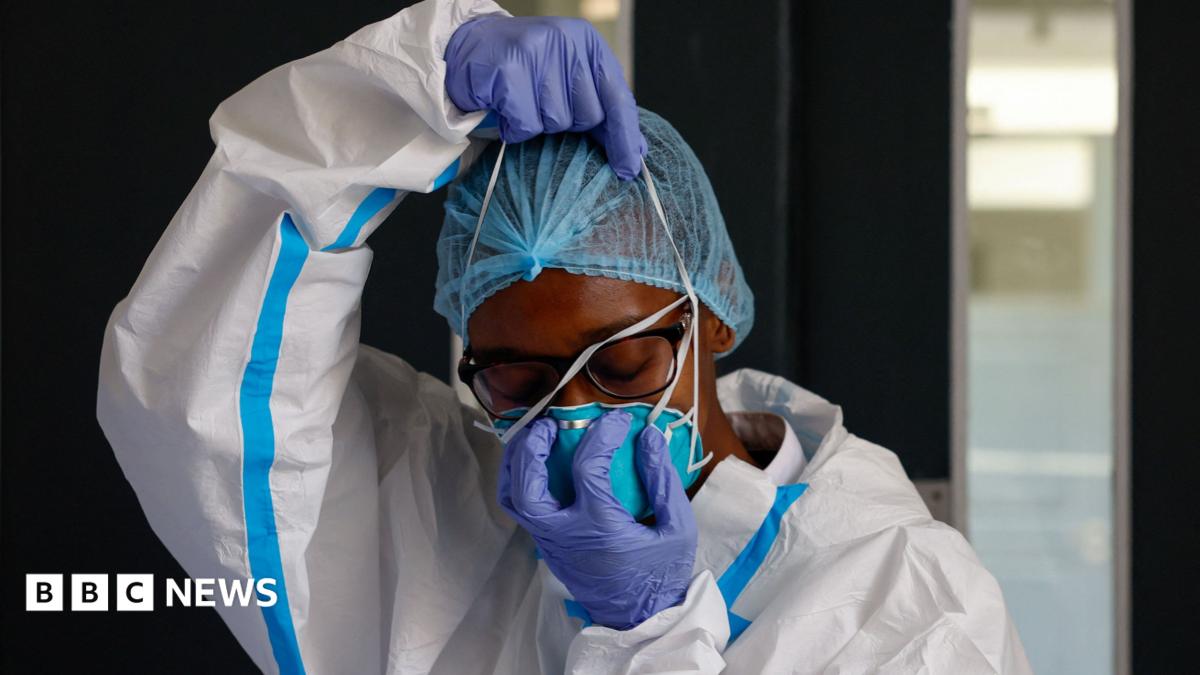
The worker, a 28-year-old woman identified in Russian media reports as Darya Shipilova, was employed at the Anti-Plague Institute of Siberia and the Far East, located in the city of Irkutsk. Russian authorities have confirmed they are investigating the circumstances surrounding her death but have not verified that the suspected illness was pneumonic plague, a severe lung infection widely regarded as the most dangerous form of the disease.
According to Russian officials, all individuals who had contact with the victim have tested negative for the disease. The country's health watchdog, Rospotrebnadzor, stated that the woman died of "pneumonia of an undetermined etiology," a classification that has done little to quiet speculation about what exactly caused her death and whether it might pose a broader public health threat.
The head of the World Health Organization, Tedros Adhanom Ghebreyesus, has publicly urged Russia to be forthcoming with information about the case. "Timely, complete and transparent information sharing under the International Health Regulations is essential to clarify conflicting reports and enable an accurate assessment of potential public health risks," he said. The statement reflects growing unease among global health officials about the lack of clarity surrounding the incident.
Pneumonic plague, according to the WHO, has an exceptionally short incubation period that can be as brief as 24 hours. If not diagnosed and treated promptly, the infection can be fatal. The disease can be transmitted to humans through bites from infected fleas, contact with bodily fluids or contaminated materials, or the inhalation of respiratory particles. Symptoms typically include shortness of breath and coughing, often accompanied by blood-tainted phlegm.
Reports about the incident first surfaced on Friday, indicating that nearly 200 people had been placed under medical observation in Siberia's Irkutsk region following the worker's death. The lab worker had reportedly become ill just a couple of days before her death, according to Russian media accounts.
Unconfirmed reports have suggested two possible explanations for how she may have contracted the illness. One account indicates she may have fallen ill after breaking a test tube containing the pathogen while working at the institute. Another suggests she could have been infected following a field trip to a region where plague occurs naturally among wild rodents. Russian officials have sought to downplay both scenarios, leaving the exact cause of her illness unresolved.
The ongoing uncertainty has sparked an exchange between Russia and the United States, with questions being raised about whether the disease could potentially spread beyond Russia's borders. US Secretary of State Marco Rubio said that Washington had "measures" available to assist Russia should the situation prove to be more serious than Russian officials have claimed. His remarks suggest that the US is monitoring the situation closely and is prepared to offer support if needed.
The bacterium responsible for plague, Yersinia pestis, is found among rodents such as marmots in the Irkutsk area. The same pathogen caused the Black Death, which killed up to half of Europe's population during the 14th Century. The Anti-Plague Institute of Siberia and the Far East was established just over a century ago in response to an outbreak in the 1920s, underscoring the region's long history of grappling with the disease.
The involvement of both the US and Russian presidents in discussions about the case highlights the potential diplomatic and public health implications of the incident. Should the death be confirmed as pneumonic plague, it could raise serious questions about biosafety protocols at one of Russia's most specialised research facilities and about the transparency of Russian health authorities in communicating with the international community.
For now, Russian officials maintain that there is no evidence of the disease spreading, pointing to the negative test results among the victim's contacts. However, the conflicting reports and the absence of a definitive diagnosis have left international health experts and governments seeking greater clarity. The upcoming conversation between Trump and Putin may provide an opportunity to address some of those outstanding questions, though it remains to be seen what information Russian officials will be willing to share.
The WHO has emphasised that cooperation and open communication are critical in situations involving potential outbreaks of infectious diseases, particularly ones as virulent as pneumonic plague. The organisation's call for transparency reflects a broader principle enshrined in the International Health Regulations, which require countries to share information promptly when events may constitute a public health emergency of international concern.
As the investigation continues, the case serves as a reminder of the persistent threat posed by infectious diseases and the importance of robust biosafety measures at research institutions. It also underscores the delicate balance between national security considerations and the global imperative to share health information openly, especially when the stakes involve a pathogen with the potential to cause widespread harm.







(0)