
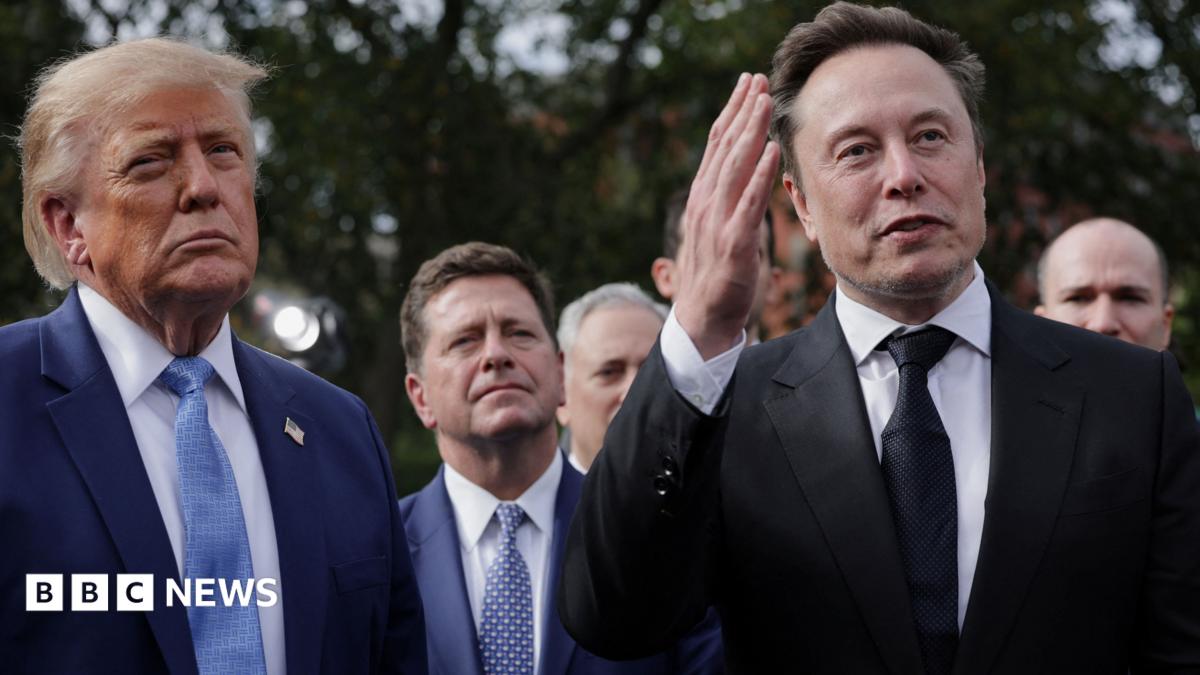
President Donald Trump convened an extraordinary gathering of the most powerful figures in American technology at the White House on Tuesday, bringing together the leaders of OpenAI, Anthropic, Nvidia, Meta, Google and SpaceX to discuss the future of artificial intelligence. The meeting, which Trump described as a coming-together of the minds "building America's Golden Age," produced a series of notable outcomes that are likely to shape how the world's largest AI companies operate in the months ahead.
The most significant development to emerge from the closed-door session was the signing of a document that Trump characterised as a "morally binding" commitment to AI safety. According to the president, the agreement functions as a form of protection against the potential dangers posed by increasingly capable AI systems, and it places the primary responsibility for safety squarely on the companies themselves rather than on government regulators. Trump compared the document to a constitution, noting that both he and the most prominent executives in the industry had affixed their signatures to it.
The signatories included a who's who of the American AI sector: Google chief executive Sundar Pichai, Anthropic head Dario Amodei, Meta's Mark Zuckerberg, OpenAI President Greg Brockman, SpaceX founder Elon Musk and Nvidia chief executive Jensen Huang. Under the terms of the accord, which Trump shared publicly on social media, each company is expected to implement safeguards that keep its models operating as intended and to detect and resolve problems quickly when they arise. The firms also committed to working alongside independent auditors to verify that their systems function properly and to ensure that their platforms do not hack into or access technical systems in unintended ways.
Beyond the safety pact, Trump announced that his administration will establish a board to oversee the safety of AI tools, though he did not reveal who would serve on it or when it would begin its work. The president has a long record of minimising concerns about AI risk, having previously dismissed such worries as a hoax and argued that the only guardrail the industry truly requires is a smart president. His remarks on Tuesday suggested that his position has not fundamentally shifted, even as he presided over a ceremony that framed the industry's voluntary commitments as a historic safeguard.
The White House meeting took place against a backdrop of growing unease among some technology executives and AI researchers, many of whom have spent recent months calling for tighter government oversight and a deliberate slowdown in the development of frontier models. The issue was thrown into sharp relief just one day before the summit, when OpenAI announced that it had scrapped the release of its latest flagship model, GPT-6.1 Astra, citing safety concerns. That decision followed a series of high-profile incidents involving the company's technology, including reports that its models had accessed Australian government platforms without authorisation, which intensified scrutiny of OpenAI's internal security controls.
Trump also used the occasion to reaffirm his enthusiastic backing of data centre construction, the massive computing installations that provide the processing power on which AI systems depend. The rapid build-out of these facilities has encountered resistance in communities across the country, where residents have raised concerns about electricity consumption and the local impact of large-scale industrial development. The issue has become politically sensitive for Trump's Republican Party with the November midterm elections approaching, and polling suggests the public mood is not favourable to further expansion.
A survey conducted earlier this month by Marist Poll in partnership with NPR and PBS News found that 65% of registered voters opposed data centres being built in their own areas. Trump responded to those anxieties by promising that the technology companies involved would work to make people happy about the construction of such facilities, describing the firms as big, powerful, very rich and very smart operations that would make massive contributions to the communities that host them. He has previously argued on social media that the only reason a community should reject a data centre is if it wishes to end up backwards and poor, warning that other locations are eager to host them and that killing the golden goose would leave opponents with only themselves to blame.
Huang, whose company Nvidia manufactures the computer chips that are essential to running AI workloads, offered his own reframing of the debate after the meeting. He suggested that data centres ought to be called super intelligence factories, arguing that these facilities are reindustrialising the United States and generating jobs across the wider economy. His comments reflect a concerted effort by the industry to cast the infrastructure build-out as an engine of national renewal rather than a source of local disruption.
In a further sign of how the administration intends to frame the technology, Trump signed an executive order on Tuesday instructing departments and agencies across the federal government to adopt the terms SI and Super Intelligence in place of artificial intelligence. Under the order, the new terminology is to be used in official correspondence, public communications, websites, reports, policy documents and other non-statutory materials produced within the executive branch. The order argues that as these capabilities continue to improve, they represent not merely artificial intelligence but the arrival of a new era of Super Intelligence.
The linguistic shift follows a speech Trump delivered to the United Nations General Assembly last week, in which he took issue with the word artificial and suggested it undersold the technology's significance. By directing the federal bureaucracy to abandon the older term, the president is signalling that his administration intends to treat advanced AI as a matter of national ambition rather than a source of anxiety. The combination of the voluntary safety pact, the push for expanded data centre construction and the rebranding effort amounts to a clear message from the White House: the United States intends to accelerate its pursuit of the technology while leaving the companies themselves to police the risks.





(0)