
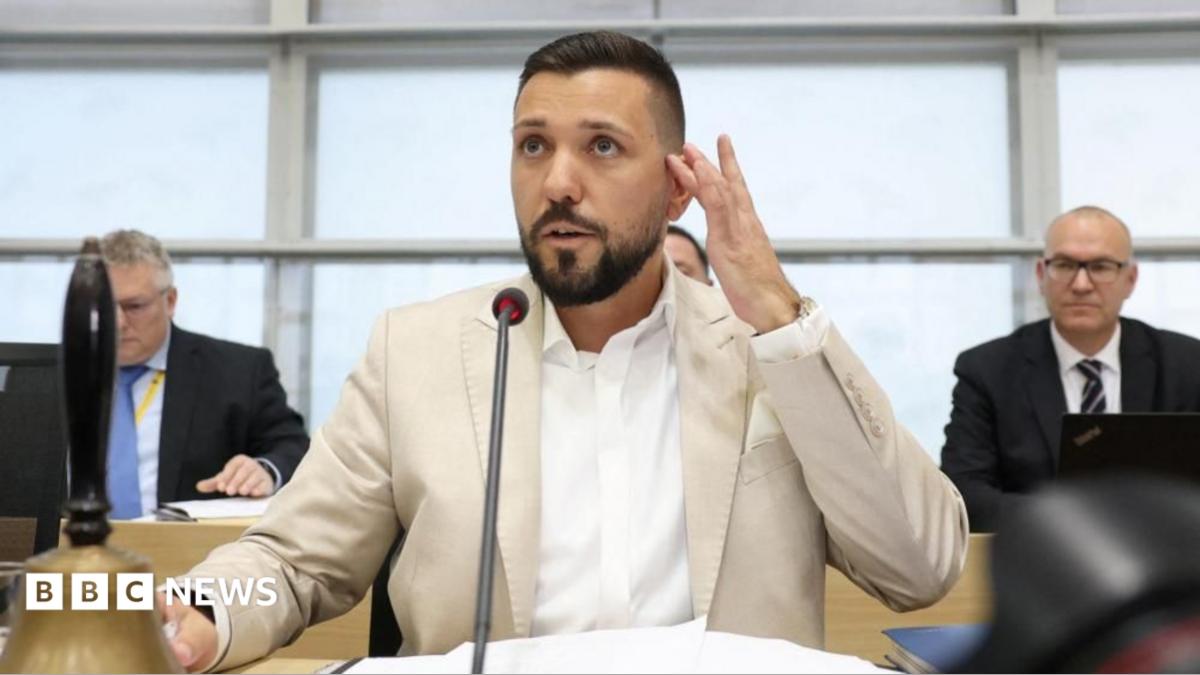
For the first time in Germany's post-war history, a far-right party has claimed the speaker's chair in a state parliament. Tobias Rausch, a 35-year-old representative of the Alternative for Germany (AfD), was elected on Tuesday to lead the legislature in the eastern state of Saxony-Anhalt, marking a symbolic but deeply significant breach of the political norms that have governed the country since 1945.
The vote took place in Magdeburg during the inaugural session of the state's newly elected parliament, exactly one month after the AfD scored a decisive victory in regional elections. Although the party fell three seats short of an outright majority in that September ballot, Rausch managed to secure the speakership comfortably, winning support from nine lawmakers outside his own parliamentary group.
In his acceptance speech, Rausch struck a defiant tone, declaring that "the days of political firewalls should be a thing of the past." His remark directly challenged the long-standing consensus in German politics—often referred to as a "firewall" or "Brandmauer"—under which mainstream parties refuse to cooperate or share power with the far right at any level of government.
The election drew immediate condemnation from political opponents and civil society. Outside the parliament building in Magdeburg, more than 300 demonstrators gathered to protest the outcome, holding banners with the slogan "Never again is now," a stark reference to the Holocaust and the atrocities committed under Nazi rule. The imagery underscored the historical weight that many Germans attach to any resurgence of far-right influence in state institutions.
Susan Sziborra-Seidlitz, the regional leader of the Greens party, described the moment as a watershed. "A line has been crossed," she said, vowing that her party would not be intimidated and would not remain silent if rights were curtailed—either within the parliament or for citizens across the state.
Rausch, a trained estate agent who has served in the state parliament for a decade, is widely viewed as a close confidant of Ulrich Siegmund, the charismatic local AfD leader who is now campaigning to become state premier in December. While the speaker's role is largely ceremonial, it carries meaningful procedural powers: Rausch will chair parliamentary debates, control access to the building, and represent the legislature at official functions.
The AfD is classified by domestic intelligence in Saxony-Anhalt as a "right-wing extremist" organization, a designation party leaders firmly reject. The party's platform includes pro-Russian foreign policy positions, staunch anti-immigrant measures, and controversial proposals such as segregating child refugees in schools. It has also drawn criticism for intolerant stances toward the LGBT community.
Until this week, AfD lawmakers had been seated on the right fringe of the state parliament. But ahead of Tuesday's inaugural session, the party successfully argued that its expanded electoral mandate entitled it to sit in the centre of the chamber—a symbolic shift that reflects its growing institutional confidence.
The vote's arithmetic has raised pointed questions about the sincerity of the "firewall." Although five MPs from the hard-left BSW party backed Rausch, the support of four other unidentified lawmakers proved decisive—and unexpected. Attention quickly focused on the conservative Christian Democratic Union (CDU) of Chancellor Friedrich Merz, which has officially ruled out any cooperation with the AfD. Of the fourteen CDU state MPs who participated in the ballot, only five abstained as planned. One unconfirmed report suggested that four may have voted for Rausch, despite all fifteen having publicly pledged before the vote not to do so.
Siegmund's own ambition to become state premier remains far from assured. Like Rausch, he would need the backing of 42 lawmakers in the 83-seat legislature. The BSW has refused to enter a coalition with the AfD, instead offering to support a non-partisan candidate for premier and to abstain in December's vote. That stance could deny Siegmund the majority he needs, even as his party's influence continues to reshape the political landscape.
The election of a far-right speaker has implications that extend beyond Saxony-Anhalt. It tests the durability of Germany's political guardrails at a time when far-right parties are gaining ground across Europe. It also raises practical questions: Will Rausch use his procedural powers to favour his own party? How will mainstream lawmakers respond if he does? And what message does the CDU's apparent internal breach of its own pledge send to voters nationally?
For now, Rausch's victory stands as a milestone—one that opponents describe as a warning and supporters hail as a democratic correction. Either way, the "firewall" that has defined German politics for nearly eight decades is showing unmistakable signs of strain in Saxony-Anhalt, and the coming December vote for state premier will reveal whether that strain holds or breaks.






(0)