
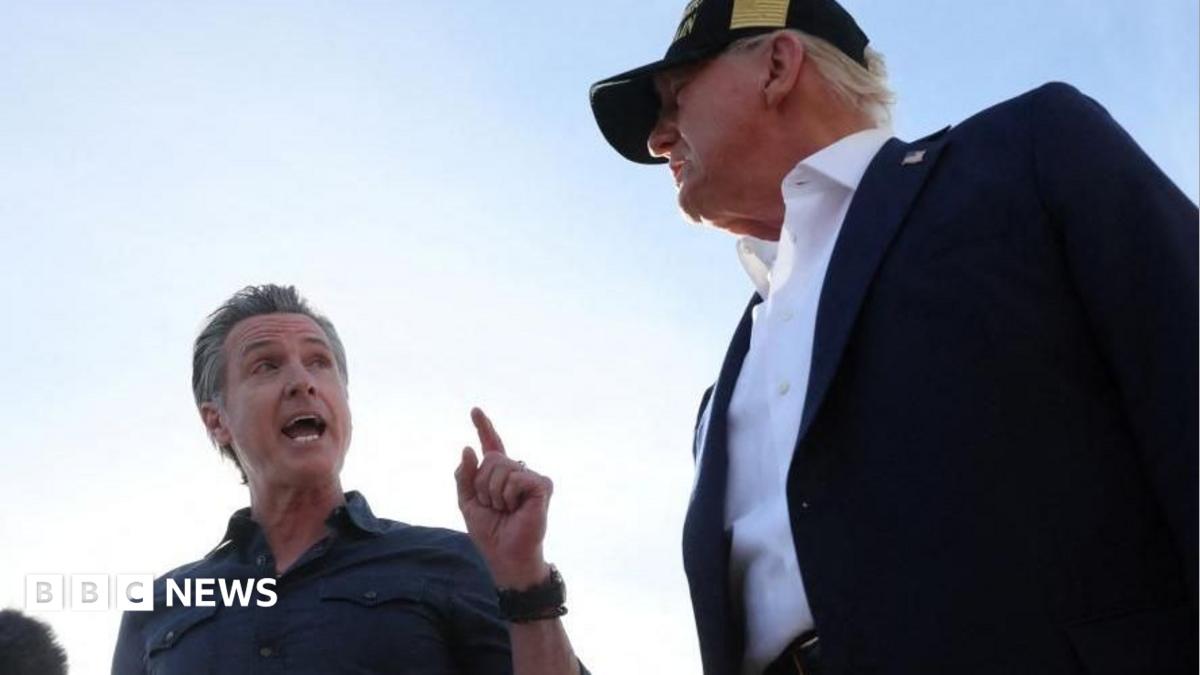
Donald Trump’s suggestion at a campaign rally that Iran could “take out” Los Angeles and San Diego has triggered a sharp political backlash in California, prompting the White House to insist that the president was warning about the consequences of failing to confront Tehran rather than inviting an attack on US cities.
The remarks were made during an election campaign rally in Nebraska, where Trump was discussing the conflict with Iran. According to the White House, he was arguing that American cities would have faced a threat from Iran had he not launched a war there earlier this year. Both Los Angeles and San Diego host major US military installations, including Navy ports and Air Force bases, making them prominent symbols in any discussion of national security.
Speaking about the Iran conflict, Trump said: “It’s a small price to pay for keeping the world safe, keeping our country safe. They can take out a city. Let them take out Los Angeles, let them take out San Diego.” The comments drew cheers from sections of the audience, according to the source account. California Governor Gavin Newsom condemned the remark as “deranged and dangerous,” while Los Angeles Mayor Karen Bass described it as a threat and an attempt to “encourage attacks on American lives.”
San Diego Mayor Todd Gloria also weighed in, writing on X that his city was not collateral damage and demanding that Trump keep it out of his “reckless war talk.” In a second post on his official governor of California account, Newsom shared an article from the Los Angeles Times about the comments, calling them “disgusting and disqualifying.” Trump has not yet responded to the statements from California’s leaders.
The White House pushed back forcefully against the criticism, with Communications Director Stephen Cheung describing the “media freakout” over Trump’s comments as “not rooted in reality.” Cheung wrote on X that Trump “was clearly stating US cities would have been threatened if a nuclear Iran hadn’t been stopped,” adding that “America is safer because of the President. Iran has no nuclear, no navy, no air force, and no money.”
A separate post from the official White House rapid response account went further, calling Los Angeles Times journalists who reported on the comments “buffoons” and rejecting the interpretation offered by Newsom and others. The account added that Trump was saying the US is fighting to stop Iran from having the ability to take out LA and San Diego with a nuclear weapon, “which they would if they had the chance.”
The exchange reflects a broader pattern of friction between Trump and California’s Democratic leadership. The president and Newsom, who may run for president in 2028, have clashed publicly before. Last year Trump described Newsom as incompetent, saying he had failed to respond adequately after some Los Angeles anti-immigration enforcement protests turned violent. Newsom, in turn, accused Trump of a “brazen abuse of power” after military personnel were deployed to secure federal buildings during those protests. Earlier this year, Trump mocked Newsom’s dyslexia, saying presidents should not have learning disabilities, drawing criticism from dyslexia charities.
The strategic significance of the two cities at the center of the dispute is considerable. San Diego, located just 17 miles from the border with Mexico, is the eighth-largest city in the United States. It is home to Naval Base San Diego, the home port of the US Navy’s Pacific Fleet, and Naval Amphibious Base Coronado, the main training center for Navy SEALs on the West Coast. Marine Corps Base Camp Pendleton, where 70,000 service members and civilians work, is also located in the area. Los Angeles, roughly 120 miles north of San Diego, is the second most populous city in the country and hosts the US Space Force’s space system command headquarters as well as Los Angeles Air Force Base.
The president and other administration officials have repeatedly claimed that disrupting Iran’s nuclear program was essential to US national security, and that any fallout from the conflict was a necessary cost. That argument is central to the White House’s defense of Trump’s rally remarks. Critics, however, say the language was reckless, particularly given the presence of major military assets and millions of civilians in the two metropolitan areas mentioned.
The episode also underscores how foreign policy and domestic politics are increasingly intertwined ahead of the midterm elections. Trump’s remarks were delivered at a campaign rally, and the reaction from California officials was swift and pointed. The White House’s rapid response operation then moved to reframe the comments as a national security warning rather than a threat, highlighting the administration’s determination to control the narrative.
For now, the dispute remains unresolved, with Trump yet to address the criticism directly. The back-and-forth has added another chapter to the long-running feud between the president and California’s leadership, while raising questions about how national security rhetoric is deployed on the campaign trail.






(0)