
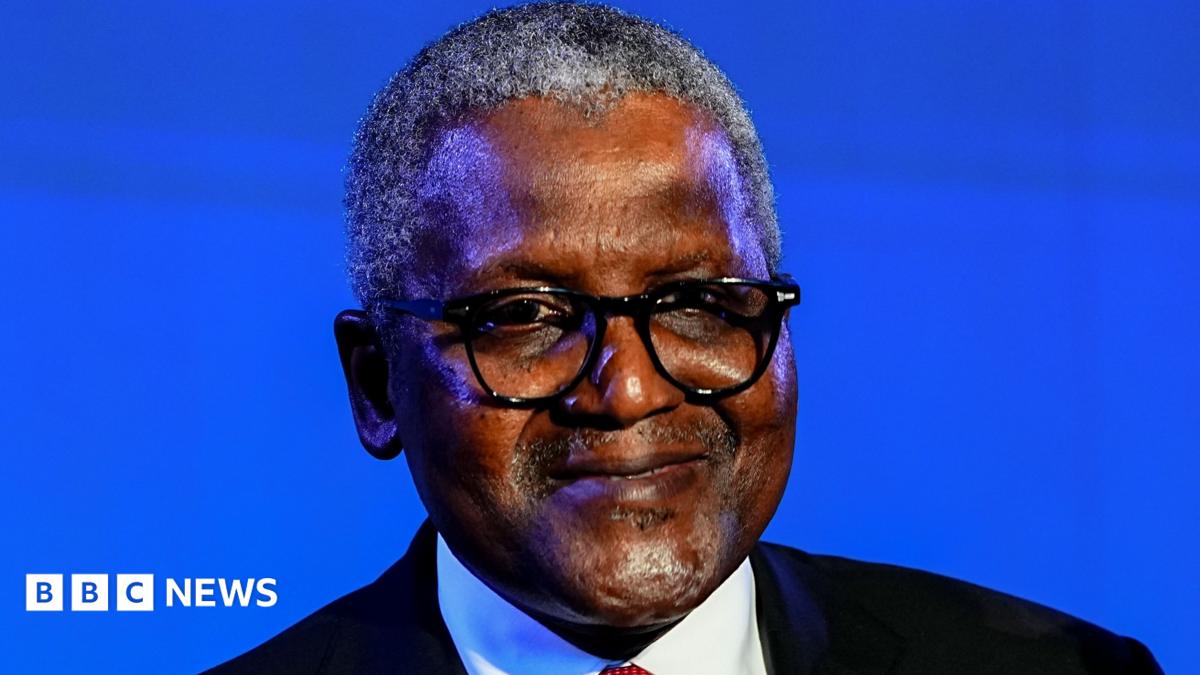
Nigerian industrialist Aliko Dangote and Kenyan President William Ruto will formally launch construction of a $16bn (£12bn) crude oil refinery in Lamu, a port town on Kenya's northern coast, even as unresolved grievances over land compensation continue to simmer among local residents.
The project, described as East Africa's largest industrial undertaking by processing capacity, is designed to handle 700,000 barrels of crude per day once operational. It dwarfs Kenya's previous flagship infrastructure achievement, the $5.1bn (£3.9bn) Standard Gauge Railway, and would become the first refinery of its kind in a region that currently possesses no crude processing facilities at all.
Ahead of the groundbreaking ceremony, some residents took to the streets to press for larger payments for the land earmarked for the development. The protests have cast a shadow over what officials present as a transformative economic moment for Kenya and the wider East African community.
In an interview with the BBC's Focus on Africa programme, Dangote rejected the demonstrators' claims, characterising the unrest as the work of local marketers and international competitors with an interest in seeing the venture fail. He insisted the project would proceed on schedule and be completed by 2030.
"To come and say some people are demonstrating, demonstrating about what? Have you ever seen people demonstrating against themselves in terms of development?" he asked, suggesting the objections had not shaken his commitment to the scheme.
Dangote also disputed assertions that his company had taken more land than required, saying it had acquired only the portion it needed from land the government had made available for the refinery. His account differs sharply from that of residents who say they have been inadequately compensated for the acreage now under development.
The scale of the promised employment has been central to the project's public appeal. At peak construction, Dangote said, the refinery will generate 60,000 jobs, with economic benefits rippling far beyond those directly employed. "Are we going to bring robots? Of course, the people will benefit," he said, brushing aside suggestions that the workforce would be largely imported or automated.
Questions have nevertheless been raised about the wisdom of situating such a massive plant in Kenya, a country that does not produce crude oil. Regional neighbours Tanzania and Uganda are both advancing toward oil exports via the East African Crude Oil Pipeline, leading some analysts to argue that a refinery would be more logically placed nearer the source of supply.
Kenya's Energy and Petroleum Minister, Opiyo Wandayi, dismissed that reasoning, telling the BBC that the refinery's location does not tie it to regional crude. "Refineries get crude oil from the market. And the market is open," he said, implying that feedstock could be sourced globally according to price and availability.
Dangote made a comparable argument, pointing to Singapore, a nation with no domestic oil production that nonetheless hosts a substantial refining industry. "Singapore doesn't produce a single drop of oil, yet they have a lot of refineries," he said, offering the city-state as proof that proximity to crude reserves is not a prerequisite for refining success.
Beyond fuel processing, the Lamu complex will incorporate a 1,000-megawatt power plant. Dangote regards dependable electricity as one of the most serious obstacles to industrial development across the continent, particularly in mineral-rich nations that continue to ship raw materials abroad instead of processing them at home.
He has roughly $50bn (£38bn) of projects in development, including a target of 10,000 megawatts of power generation capacity across Africa by 2030, with the possibility of doubling that figure should demand justify it. In Lamu, the plant is intended to serve both the refinery and other industries expected to cluster around the site. "The power is there and what you do is what we call plug and play," Dangote said.
For Kenyan consumers, who contend with comparatively high fuel prices, the refinery raises hopes that expanded domestic processing capacity could eventually ease costs at the pump. But the price of crude oil, the principal input in refined fuel, is determined by international markets, meaning local refining alone cannot guarantee cheaper petrol or diesel.
The Lamu development represents Dangote's biggest proposed investment outside his native Nigeria, with construction scheduled to commence on 1 November. His Nigerian refinery also has a nameplate capacity of 700,000 barrels per day, and he intends to double that output after floating 4.1 million ordinary shares earlier this month to raise as much as $2.1bn.
The juxtaposition of a landmark industrial gamble with grassroots anger over land reflects a familiar tension across fast-developing regions, where large infrastructure projects promise jobs and growth while displacing communities whose livelihoods depend on the acreage concerned. How Kenyan authorities and Dangote's team manage that friction in the coming months may shape the refinery's local legitimacy as much as its engineering timetable.
For now, both the company and the Kenyan government are proceeding as though the objections will not alter the plan, betting that the refinery's long-term economic payoff will outweigh the disputes accompanying its launch. Whether Lamu residents ultimately share that assessment remains an open question.







(0)