
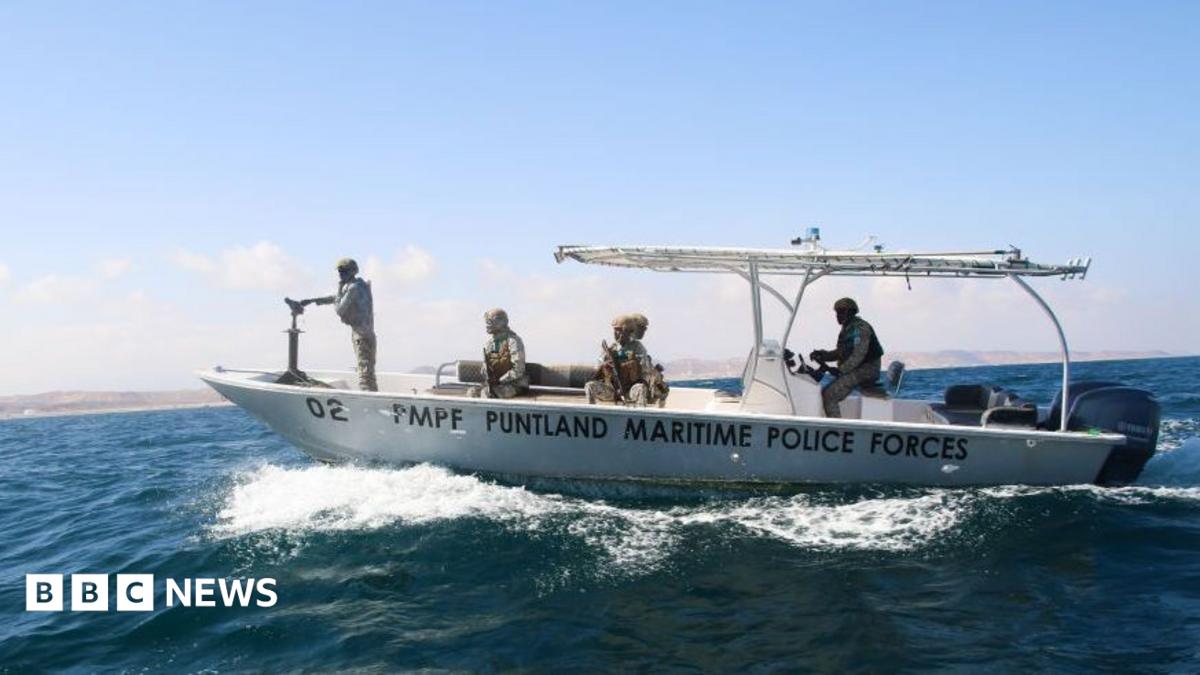
Five crew members aboard an oil tanker hijacked off the coast of Somalia were killed by their captors before regional security forces managed to storm the vessel and regain control, a senior official in the semi-autonomous Puntland region has told the BBC.
Bile Qabowsade, the deputy information minister of Puntland, said the five seafarers lost their lives at the hands of the pirates in the period before local forces boarded the MT Hoarner 25. His account provides the first detailed confirmation from an official source that hostages died during the ordeal, which began when armed men seized the ship earlier this year, reportedly in April.
According to Qabowsade, those killed comprised three Pakistani nationals, one Indian citizen and one person from Myanmar. A further four crew members were wounded in the incident, including three Pakistanis and one Indian, he added. The disclosure of the death toll has shocked shipping and diplomatic circles, given earlier statements from officials that suggested the crew was still alive when the vessel was intercepted.
The tanker was transporting roughly 18,500 barrels of oil intended for delivery to Mogadishu, Somalia's capital. It was commandeered by six armed men while underway off the Somali coast, in the latest in a string of attacks that have revived concerns about maritime security in the western Indian Ocean and the Gulf of Aden.
At the time of the hijacking, authorities said the vessel carried 17 crew members drawn from several countries: ten Pakistanis, four Indonesians, one Indian, one Sri Lankan and one Myanmar national. The composition of the crew reflects the long-standing reliance of the global shipping industry on South Asian and Southeast Asian mariners, who frequently staff tankers and bulk carriers traversing some of the world's most dangerous waterways.
Once seized, the tanker was taken to an anchorage near the Somali shoreline, positioning it between the fishing communities of Xaafun and Bander Beyla in the Puntland region. The location lies along a stretch of coast that has historically served as a launching point for pirate gangs seeking to hold vessels and crews for ransom.
Sixteen suspected pirates were arrested in connection with the operation, while a number of others managed to flee the scene and were being hunted by security personnel, officials said. Qabowsade also pushed back against claims that Puntland forces had deliberately allowed some of the attackers to slip away, calling such suggestions unfounded. He did not elaborate on exactly how the five hostages were killed, nor on the sequence of events that allowed the pirates to take command of the ship in the first place.
The limited official explanation has left key questions unanswered, including whether the deaths occurred during a confrontation with the pirates, in the chaotic moments before the rescue attempt, or under other circumstances. Maritime analysts note that in hijacking scenarios, crews are often at greatest risk during the initial boarding and during any attempted rescue, when captors may react violently under pressure.
Piracy in Somali waters declined dramatically after 2011, when a combination of international naval patrols, improved onboard security measures and prosecutions in regional courts made hijacking far less profitable and far more risky for criminal networks. For several years, the Gulf of Aden and the broader Somali basin saw relatively few successful attacks, and many in the industry believed the threat had been largely contained.
That assessment has been revised in recent years as hijackings and attempted seizures have climbed again. The resurgence has been attributed to several overlapping factors: the redeployment of some international naval assets toward other crises, the lingering economic hardship in coastal Somali communities, and the availability of ransom payments that can reach millions of dollars. The result is that shipping companies are once again weighing route changes, armed guard deployments and higher insurance premiums for vessels transiting the region.
The region's authorities, particularly in Puntland, have responded by bolstering their maritime police and coast guard capabilities, conducting more frequent patrols and attempting to intercept suspect skiffs before they can reach vulnerable ships. Those efforts have produced arrests and disrupted some operations, but officials acknowledge they lack the resources to monitor the full length of Somalia's extensive coastline.
The MT Hoarner 25 case also underscores the human cost of the renewed piracy threat, which falls disproportionately on crews from developing nations. Seafarers' organizations have long argued that the international response focuses heavily on protecting cargo and trade routes while paying insufficient attention to the welfare of the men who sail the ships, and to the trauma faced by those held captive or caught in rescue operations.
The deaths of the five sailors are likely to intensify calls for stronger protections for merchant crews, faster distress response mechanisms and clearer rules for when and how rescue missions should be launched. They may also complicate diplomatic relations with Pakistan, India and Myanmar, whose citizens were among the casualties and the injured.
For Somalia, the incident represents a setback in efforts to present its waters as safe for commerce and to attract investment in its ports and maritime sector. Puntland authorities, who have positioned themselves as a frontline force against piracy, will face scrutiny over both the manner of the rescue and the circumstances that allowed the attackers to seize the tanker in the first place.
With some suspects still at large and the official account so far offering few operational details, the full picture of how the MT Hoarner 25 was taken, how its crew members died and how the vessel was eventually recovered remains incomplete. What is clear is that piracy off Somalia is no longer a fading memory, but a live and lethal challenge that continues to claim lives far from the headlines, and that the response of regional and international actors will be judged by whether such deaths can be prevented in the future.








(0)