
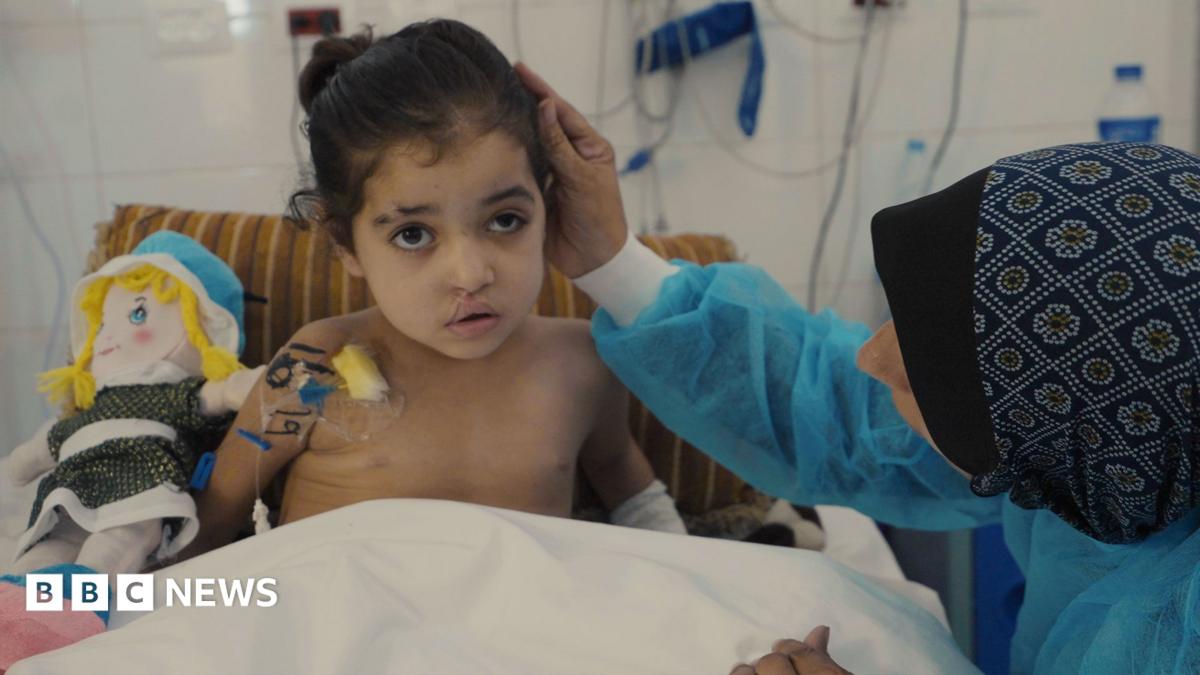
A six-year-old girl in Gaza has undergone more than 20 surgical procedures since she was injured in an Israeli air strike in late July, according to a report by BBC Eye Investigations. Raseel al-Balawi, who is now receiving treatment in a hospital in the enclave, requires repeated operations in an attempt to control persistent infections in her wounds, the BBC reported.
Witnesses say the tent in which Raseel was sheltering, in the al-Mawasi camp in southern Gaza, was struck by a missile fired from an Israeli helicopter. The encampment, a coastal area that Israel had designated as a humanitarian zone earlier in the conflict, has been crowded with hundreds of thousands of displaced Palestinians who fled fighting elsewhere in the territory. Families there have been living in makeshift tents with limited access to clean water, sanitation, and medical care.
The Israeli military told the BBC it has no record of the attack and said it "regrets any harm to civilians." The response is consistent with the position Israel's military has often taken when confronted with specific allegations of strikes on civilian sites, saying such incidents are reviewed and that its operations target militants and military infrastructure. The BBC said it could not independently verify the circumstances of the strike beyond witness accounts.
Raseel's case highlights the difficulty doctors in Gaza face in treating even survivable injuries amid the near-total collapse of the health system. Hospitals have been damaged or destroyed, generators run short of fuel, and supplies of antibiotics, anaesthetics, and sterile equipment have been severely depleted. Medics have described having to perform procedures with minimal resources, prioritising patients who are most likely to survive and improvising to manage wounds that in normal circumstances would be treated with straightforward surgery and antibiotics.
The BBC World Service filmed in Gaza across the summer to document how children are coping as the infrastructure they rely on for survival has been largely destroyed. Its reporting on Raseel follows her treatment over the course of the summer, as a fragile ceasefire faltered and bombardment resumed. The film, available on BBC iPlayer, is part of an ongoing effort by the broadcaster to show the practical consequences of the war for Gaza's youngest residents.
According to the BBC, Raseel's surgeries are not the result of a single complicated operation but a cycle of repeated interventions intended to keep infection under control. In conflict zones, contaminated wounds, delays in receiving care, and unsanitary conditions all increase the risk of serious infection. Where hospitals lack the means to carry out proper wound debridement and follow-up care, patients can require surgery again and again, prolonging recovery and increasing the chance of complications including sepsis and long-term disability.
Children are especially vulnerable in such conditions. Their bodies are smaller, their immune systems less developed than those of adults, and they are more likely to suffer lasting effects from injuries, repeated anaesthesia, and interrupted nutrition. Humanitarian organisations have repeatedly warned that Gaza's children are facing a combination of physical trauma, displacement, malnutrition, and psychological harm that will shape their lives for years.
Al-Mawasi, where Raseel was sheltering, had been repeatedly described by Israeli authorities as a safe zone for civilians. Yet the area has been struck on multiple occasions during the conflict, and displaced families have reported feeling that nowhere in Gaza is genuinely safe. The concentration of people in coastal tent camps has also created severe problems of overcrowding, with limited latrines, scarce clean water, and outbreaks of infectious disease, all of which make it harder for injured patients to avoid infection.
The aftermath of the strike on Raseel's tent reflects a broader pattern described by medical staff in Gaza, who say they are treating wounds that would ordinarily be manageable but which become life-threatening because of the conditions in which patients live and recover. Doctors have spoken of operating by phone light, reusing supplies, and discharging patients earlier than is clinically advisable because beds are needed for new casualties.
Israel's military has said it takes steps to avoid civilian harm and investigates credible allegations of wrongdoing. It has previously attributed some strikes on tent camps to errors or to the presence of militants in civilian areas, though it has also faced criticism from human rights groups and international bodies over the scale of civilian casualties. The BBC's report notes that the military's statement on Raseel's case gave no further detail about the incident.
International humanitarian law requires parties to a conflict to distinguish between combatants and civilians and to take precautions to protect non-combatants. Attacks that fail to do so can amount to violations of the laws of war. The United Nations and aid agencies have repeatedly called for the protection of hospitals, medical personnel, and civilians in Gaza, warning that the destruction of health facilities amounts to a crisis within a crisis.
For Raseel, the immediate priority remains medical: controlling the infections in her wounds and recovering as far as is possible. Her story is one of many among Gaza's children, whose experiences over the summer the BBC has sought to document as the war continues. The full film on iPlayer follows families and medical staff as they attempt to provide care in circumstances that aid workers describe as among the most difficult anywhere in the world.
The BBC's reporting comes as the ceasefire that had briefly reduced the intensity of fighting has weakened, with strikes reported again across parts of the territory. Aid organisations say the renewed violence makes it even harder to deliver medical supplies, fuel, and food, and warn that any further deterioration in the health system will cost lives that could otherwise be saved. The situation of children like Raseel, who need sustained, specialist care over months or years, depends heavily on whether hospitals can keep functioning and whether patients can reach them safely.




(0)