
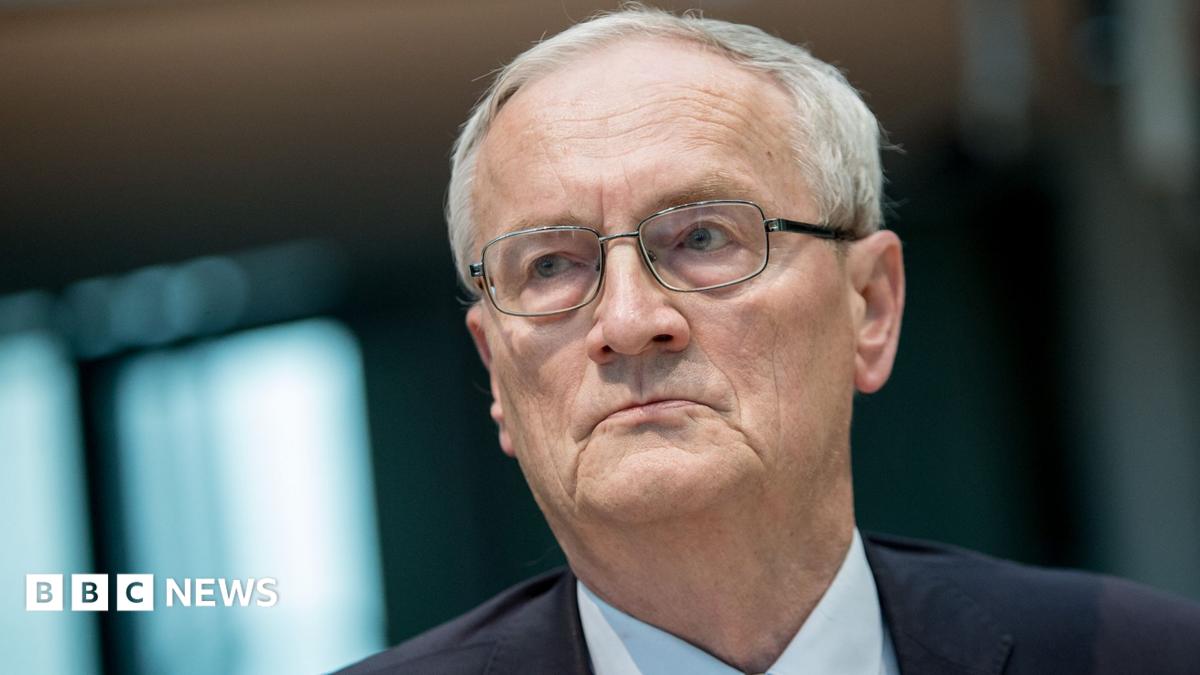
August Hanning, who led Germany's foreign intelligence service for seven years, has been taken into custody on allegations that he betrayed state secrets, committed treason, and secured classified material on behalf of a foreign power, according to the German Federal Prosecutor's Office. The arrest marks one of the most serious security scandals to hit the country's intelligence establishment in recent memory, given Hanning's former position at the very top of the BND, the Bundesnachrichtendienst.
Hanning served as president of the BND from 1998 until 2005. After stepping down from the post, he transitioned into the private sector, working as a consultant. That consulting career, prosecutors now allege, became a channel through which sensitive government material was passed to foreign intelligence operatives.
Officers detained Hanning at his residence in Nordwalde, a town near Münster in western Germany, on Tuesday. A second suspect, identified only as Manfred D under German privacy conventions, was arrested in Bavaria. Manfred D is a former BND staff member who at one point served as Hanning's bureau chief and remained employed by the agency until this year.
Prosecutors have charged Manfred D with aiding and abetting attempted treason as well as treasonous espionage. The allegation is that he exploited his position inside the agency to access highly confidential material, which he then funneled to Hanning in return for payment. The two men are expected to appear before judges separately, with Manfred D due in court on Tuesday and Hanning scheduled for Wednesday.
According to the Federal Prosecutor's Office, the accumulated evidence suggests that over an extended period Manfred D supplied Hanning with roughly 2,000 documents. Many of those documents reportedly contained classified information intended solely for the internal use of the BND. Manfred D also served as chief of staff to Hanning's successors between 2012 and 2026, a role that would have given him sustained proximity to some of the agency's most tightly guarded secrets.
The statement from prosecutors outlines two distinct lines of suspected wrongdoing involving Hanning and foreign services. In one instance, he is accused of drawing on classified intelligence to prepare an analysis for an officer of a foreign intelligence service. Investigators have acknowledged they do not know whether the material ultimately reached its intended recipient.
Separately, Hanning is alleged to have maintained close and prolonged contact with a representative of a different foreign intelligence service. Over several years, prosecutors say, he passed political information to that contact, with some of the material derived from documents Manfred D had provided. Authorities have not named the countries or agencies involved in either strand of the investigation, leaving open questions about which foreign powers may have benefited.
The circumstances that brought the alleged conduct to light are themselves unusual. Local media report that investigators first stumbled upon Hanning's purported possession of intelligence documents while working on an unrelated matter involving Christina Block, a German heiress associated with the steakhouse chain Block House. Hamburg prosecutors have accused Block of arranging the abduction of her two youngest children in 2023 amid a custody dispute. As part of that inquiry, investigators suspect Hanning was connected to an earlier attempted kidnapping of the children, an allegation he denies.
During the course of that separate investigation, state criminal police reportedly came across an electronic data storage device containing sensitive material, including recent BND documents. That discovery appears to have triggered the espionage inquiry that culminated in Tuesday's arrests.
The case has renewed uncomfortable questions about oversight and internal security at the BND, an agency that has weathered comparable controversies in the recent past. In 2023, a senior German intelligence officer was charged with treason over allegations that he passed state secrets to Russia. Prosecutors in that case claimed Carsten L shared information concerning the war in Ukraine and the Wagner mercenary group, and that he received approximately €400,000, equivalent to about $450,000 or £340,000, in exchange. That trial is still proceeding.
The parallel is striking: both cases involve accusations that trusted insiders converted access to classified material into personal gain or geopolitical advantage. The earlier case raised alarms about Russian penetration of German intelligence; the current one raises the possibility that a former agency chief himself became a conduit for sensitive information flowing outward.
For a man who once oversaw the collection and protection of Germany's foreign intelligence, the allegations carry particular weight. The BND operates under strict legal constraints designed to keep its activities within democratic oversight. When a former president of the service faces accusations of passing secrets to foreign operatives, the institutional damage extends beyond any single prosecution, touching the credibility of the agency, its vetting procedures, and the systems meant to detect internal threats.
Details about what precisely the 2,000 documents contained, which foreign services were in contact with Hanning, and whether any material was actually transferred to outside actors remain unclear. The Federal Prosecutor's Office has released only a broad outline of its findings, and the investigation is continuing.
Both suspects now face a legal process that could stretch over months or longer. The charges of treason and treasonous espionage are among the most severe in German law, reflecting the state's interest in safeguarding classified information and the integrity of its intelligence apparatus. The coming court appearances will be the first formal opportunity for the allegations to be tested, and for Hanning and Manfred D to respond.
The case also intersects with public scrutiny of how Germany handles internal security breaches. Previous incidents have prompted debate about reforming intelligence oversight and tightening personnel controls. With a former BND president at the center of the latest allegations, those debates are likely to intensify, and lawmakers may face renewed pressure to examine how the agency monitors those who have left its ranks but retain knowledge of its secrets.









(0)