
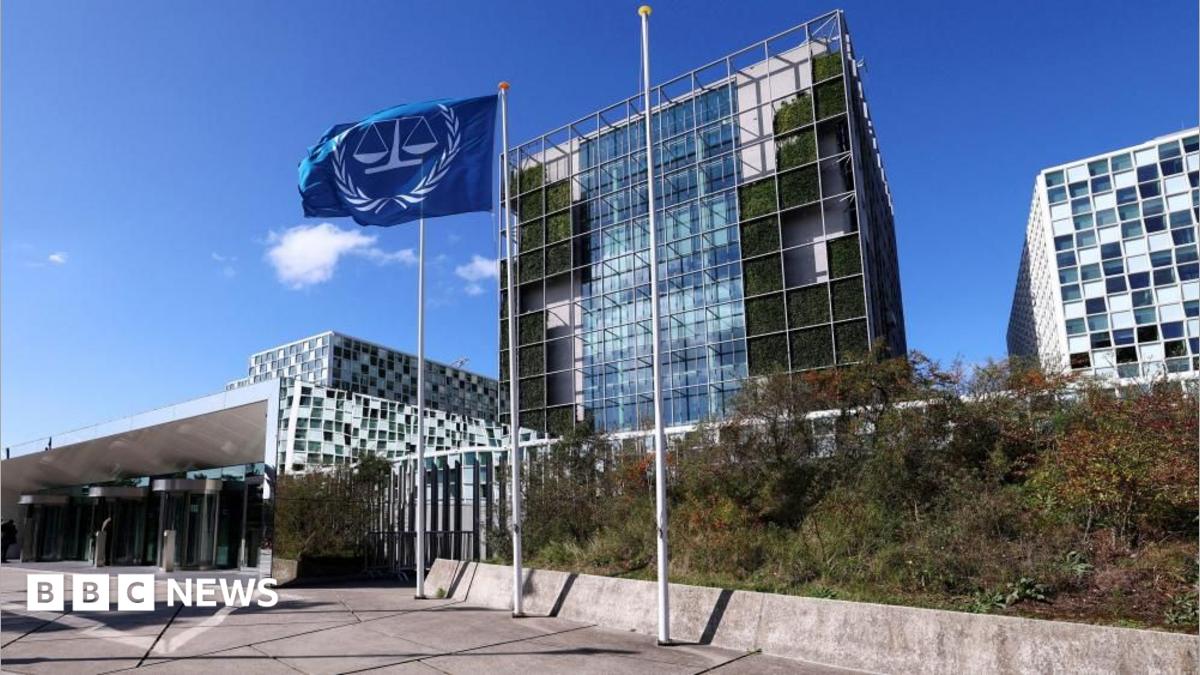
The Trump administration has announced broad sanctions against the International Criminal Court, marking a dramatic escalation in its campaign against an institution it portrays as a threat to American sovereignty. The measures, unveiled by Secretary of State Marco Rubio, include a ban on US entities conducting transactions with the court and represent the first time Washington has targeted the ICC as an institution rather than individual officials.
Rubio framed the sanctions as a defensive measure, stating they were designed to "defend US sovereignty" and accusing the tribunal of pursuing prosecutions against Americans. He issued a stark warning: "Either the ICC will end its threats, or we will end the ICC." The announcement signals a significant acceleration of what the administration describes as an effort to dismantle an institution it views as rogue.
The Hague-based court responded swiftly and forcefully, condemning the sanctions as an assault on the rule of law and the very foundations of the international legal order. ICC officials said the measures were intended to disrupt its work and intimidate those who cooperate with it, but insisted the court "will not be deterred." In a somber statement, the court added: "History will judge this moment."
The timing of the announcement proved particularly striking, coming just hours after former ICC judge Navi Pillay was awarded the 2026 Nobel Peace Prize for her efforts to promote peace and international law. The juxtaposition underscored the widening rift between Washington and the global legal community, with the US moving to cripple a court whose former judge had just received the world's most prestigious honor.
While the US has previously sanctioned 17 ICC judges and officials, this latest action targets the court itself and is calculated to undermine its financial viability. The sanctions will prevent American companies from providing goods or services to the ICC, including essential banking and software support. Such restrictions could severely hamper the court's day-to-day operations, from paying staff to managing its digital infrastructure.
In a notable concession, Washington has built in a six-month grace period before certain measures take effect, allowing member states to continue funding the court's operations. Rubio indicated the delay was intended to give countries time to negotiate a solution addressing US concerns. He said the measures had been structured specifically to permit other nations to broker a possible resolution, and he called on US allies that are ICC signatories—including the UK—to "rein in" the institution.
The response from America's traditional allies was swift and unified. The United Kingdom joined Canada, Denmark, Germany, France, Italy, Japan, and the Netherlands in reaffirming their "continued and unwavering support" for the ICC. In a joint statement, the countries expressed that they "regret and strongly disagree with" the sanctions, while praising the court's staff for their work bringing those accused of the most serious international crimes to justice and supporting victims.
United Nations Secretary General Antonio Guterres also weighed in, describing the US decision as "a serious blow to our collective pursuit of international criminal justice, of which the ICC is a key pillar." His remarks highlighted the broader implications of the sanctions, suggesting they could weaken the global framework for accountability that has been painstakingly built over decades.
The Netherlands, which hosts the court in The Hague and is a NATO ally of the United States, faces particular pressure in the wake of the announcement. Dutch Foreign Minister Tom Berendsen acknowledged that the sanctions would seriously affect the court's ability to function, reflecting the difficult position of a nation caught between its commitment to international law and its security alliance with Washington.
Israeli Prime Minister Benjamin Netanyahu, whose arrest warrant by the ICC has been a major source of US anger, welcomed the sanctions. He characterized the court as "not a court" but a political body that threatened law-abiding democracies and "the very idea of national sovereignty." His endorsement underscored the geopolitical dimensions of the dispute, which extend well beyond US concerns about potential prosecutions of American personnel.
The Trump administration's grievances with the ICC are multifaceted. Washington remains furious over a past investigation into the actions of US soldiers in Afghanistan—a probe the court has since closed—and over arrest warrants issued for Israeli officials, including Netanyahu. Notably, however, the new sanctions do not explicitly require those warrants to be withdrawn before the measures can be lifted, leaving the precise conditions for relief ambiguous.
The ICC was established in 2002 to prosecute war crimes, crimes against humanity, and genocide. It counts 125 countries as member states, though several major powers remain outside its jurisdiction, including the United States, Russia, China, India, and Israel. This absence of key global players has long complicated the court's ability to enforce its rulings and has fueled accusations that it selectively targets certain nations.
This showdown potentially marks the gravest crisis in the court's 24-year history. Rather than singling out individual judges and prosecutors, as previous US sanctions had done, Washington is now taking aim at the institution itself—a move that could fundamentally alter the ICC's capacity to operate and set a precedent for other nations hostile to international accountability mechanisms.





(0)