
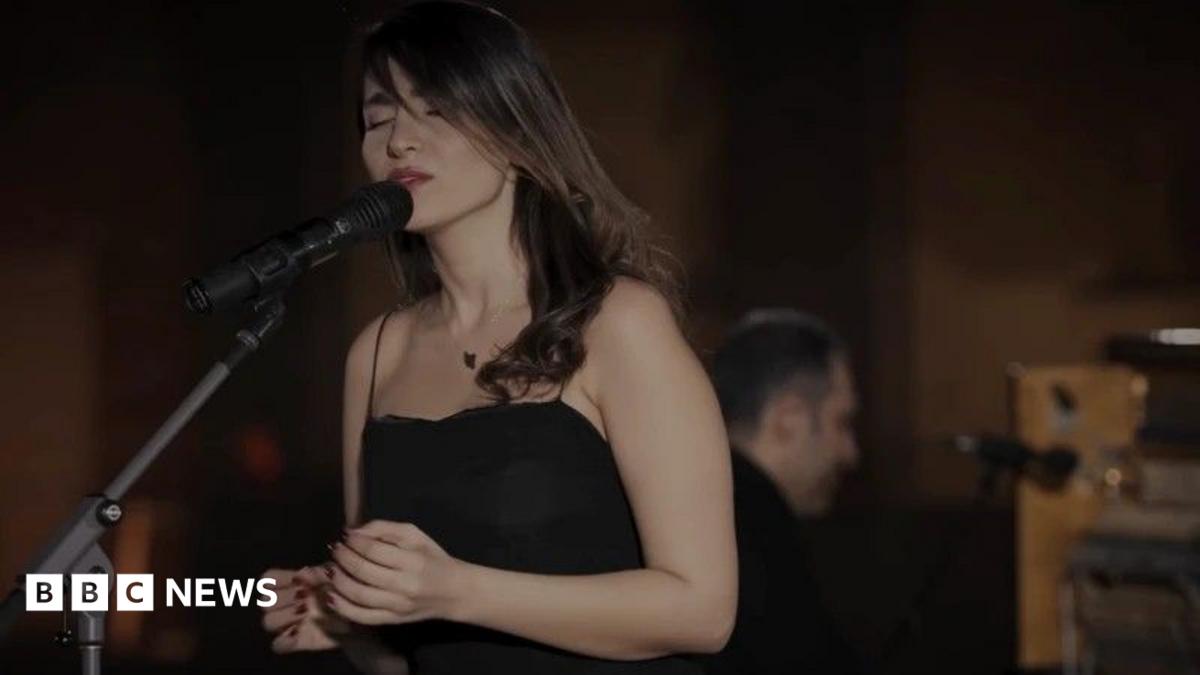
An Iranian appeals court has upheld a sentence of 74 lashes for Parastoo Ahmadi, a prominent singer who was convicted after performing in public without the mandatory hijab, according to her legal team. The ruling, confirmed on Friday, closes off one of the most closely watched cases involving Iran's strict dress and public conduct laws in recent months.
Ahmadi, 29, drew national and international attention after a concert she gave in December 2024 was livestreamed on her YouTube channel. In the video, which quickly went viral and accumulated millions of views, she sang in a sleeveless dress, without a head covering. Under Iranian law, women are barred from public performances, and all women and girls above the age of puberty are required to cover their hair with a hijab and wear long, loose-fitting clothing that conceals their figures.
Iran's judiciary opened proceedings against Ahmadi shortly after the video spread online, stating that her performance amounted to a violation of the country's legal and cultural regulations. The case was not limited to the singer. Eight members of her band and production team were also prosecuted on similar grounds.
In June, a criminal court in the city of Qom found Ahmadi and her eight colleagues guilty of offenses that included "offending public decency" through the publication of what the court described as obscene and indecent material. Alongside the 74 lashes, the court imposed a two-year ban on audiovisual activities and a two-year prohibition on leaving the country for all the defendants.
Lawyers representing the group subsequently filed an appeal. That appeal was rejected by a higher court on Friday without a hearing, meaning the original penalties will stand. "In our view, holding the concert was not a crime at all," one of the defense lawyers told the BBC. The lawyer argued that the trial court had chosen one of the harshest available punishments for the charges, despite the legal system offering alternatives such as fines and less severe penalties.
The lawyer also pointed to the appeals court's decision not to hold a hearing, calling it significant. "The Court of Appeal, despite having the option of holding a hearing, did not hold a hearing and upheld the judgment," the lawyer said. "It appears that the main reason for issuing this judgment was to deter the recurrence of similar events." The comment suggests the judiciary's priority in this case was not only punishment but the broader goal of discouraging other women from staging comparable performances.
News of the initial sentence in June provoked a wide reaction among Iranians on social media. Googoosh, the renowned singer who has lived in exile for decades, posted on Instagram expressing hope for change. "May these dark days come to an end, and may women regain the freedom to choose how they live and dress, and may artistic expression once again flourish in our precious homeland," she wrote at the time.
Another well-known musician, Hossein Alizadeh, offered a striking gesture of solidarity. He said he was "willing to take 70 lashes in Parastoo Ahmadi's place," a statement that resonated with many Iranians who viewed the punishment as disproportionate and humiliating.
Human rights organizations also condemned the ruling. Amnesty International warned that "flogging constitutes cruel, inhuman and degrading punishment, and violates the absolute prohibition on torture and other ill treatment." The London-based rights group has repeatedly criticized Iran's use of corporal punishment, which is permitted under the country's interpretation of Sharia law.
The case echoes a similar episode in January 2024, when Kurdish-Iranian activist Roya Heshmati was flogged 74 times after being convicted of "violating public morals." Her offense was a photograph posted on social media showing her without the hijab. According to the Kurdish rights group Hengaw, Heshmati said a female officer forcibly placed a scarf on her head at a prosecutor's office in Tehran before a male officer whipped her shoulders, back, hips and legs. The parallels between the two cases have intensified criticism of the judiciary's approach to enforcement of the dress code.
The hijab requirement has been one of the most contentious issues in Iran since the 2022 death of Mahsa Amini, a 22-year-old Kurdish woman who was detained by morality police in Tehran in September of that year for allegedly wearing her hijab improperly. She died in custody, triggering nationwide protests that swept across the Islamic Republic. During those demonstrations, women burned their headscarves or waved them in the air as symbols of defiance against the clerical establishment. Hundreds of people were killed as security forces cracked down on the unrest.
In the years since, many women and girls have stopped covering their hair in public altogether, openly defying the dress code. Authorities have responded with periodic waves of arrests, warnings, business closures and other enforcement measures, though the effectiveness of those campaigns has been questioned given the scale of noncompliance.
The political context has added another layer of complexity. Earlier this month, conservative politician Gholamali Haddad-Adel, a member of the Expediency Council and the father-in-law of Supreme Leader Mojtaba Khamenei, addressed the issue of hijab enforcement. He said that Iran's war with the United States and Israel meant authorities "cannot engage on this front as much as we should for the time being."
That war began at the end of February, only weeks after Iranian security forces had violently repressed another wave of mass protests sparked by the country's economic crisis, killing thousands of people. The combination of external conflict and domestic unrest has placed additional strain on the authorities, potentially distracting from the aggressive enforcement of social laws that had been a priority in previous years.
For Ahmadi, the appeals court's decision means the sentence is now final. She faces the immediate prospect of corporal punishment, along with the restrictions on her professional work and international travel. The case has become a focal point for debates inside and outside Iran about women's rights, artistic freedom and the state's use of harsh penalties to enforce social conformity. Her legal team maintains that no crime was committed, while the judiciary has signaled through its rulings that it intends to make an example of those who defy the country's dress and performance regulations.







(0)