
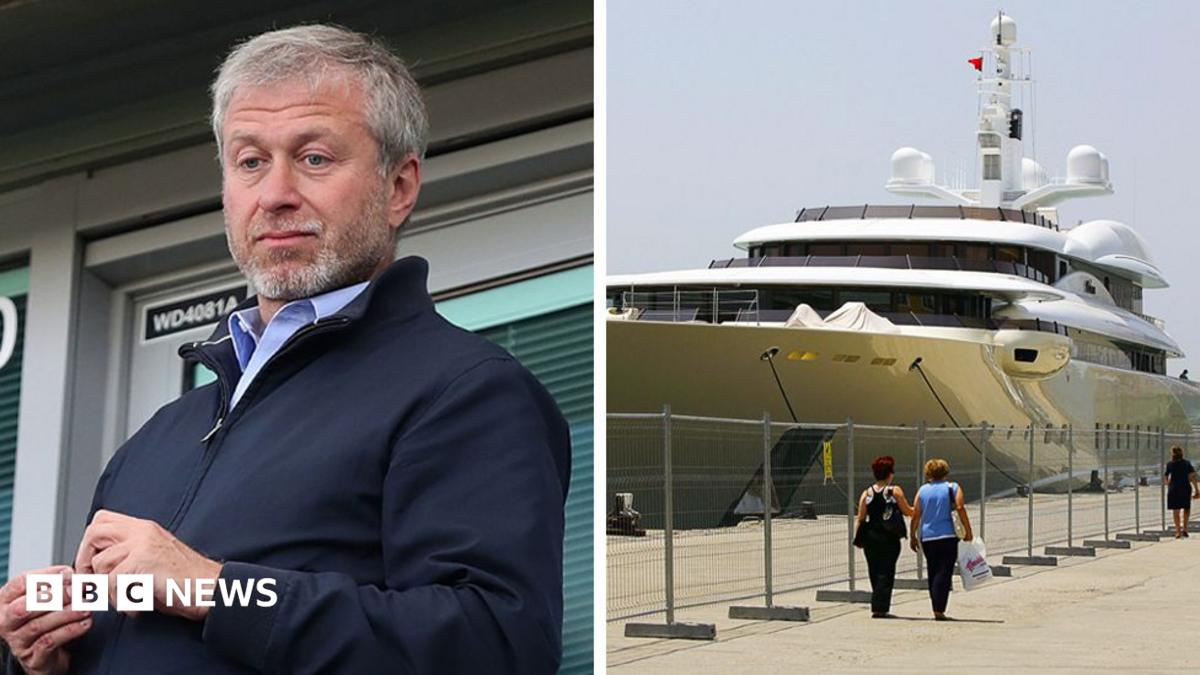
A joint investigation by BBC Panorama and the Bureau of Investigative Journalism has uncovered evidence that Deloitte, the world's largest accountancy firm, was involved in falsifying documents designed to conceal Roman Abramovich's vast personal wealth and help the Russian oligarch evade tax.
According to the findings, published on 12 October, accounts signed off by Deloitte in Cyprus caused assets including superyachts, mansions and private jets worth a combined $672m (£508m) to disappear from Abramovich's company records. The investigation also indicates that Deloitte appears to have advised on a scheme to dodge a substantial tax bill through the deliberate falsification of paperwork.
The leaked evidence was drawn from thousands of documents relating to Abramovich's finances and an offshore company network administered from Cyprus, a former tax haven popular with wealthy Russians. The files span the years 1995 to 2022 and have been examined by the BBC alongside partners including the Guardian, Paper Trail Media, the Organised Crime and Corruption Reporting Project and the Cyprus Investigative Reporting Network, as part of the International Consortium of Investigative Journalists' Cyprus Confidential project.
At the centre of the arrangements was MeritServus, a corporate services firm based in Limassol, Cyprus's second-largest city, which managed a web of offshore companies holding the proceeds of Abramovich's oil deals in Russia. Deloitte owned MeritServus until 2005, and after the two entities separated they continued to cooperate closely with Abramovich's associates in overseeing his global fortune.
The investigation's first illustration of backdated paperwork dates to 2006, when a new Cypriot transparency law required company accounts to be made public. That legal change threatened to expose the secrets of Abramovich's wealth. Deloitte Cyprus had prepared draft accounts for 2003 for his Cypriot company Amiscan Investments but had not finalised them. Those drafts detailed $672m of luxury property, including a mansion in West Sussex, a flat in London and an estate in the south of France, alongside helicopters, private jets and a fleet of boats that Abramovich owned at the time, among them the $147.5m superyacht Pelorus.
The falsified documents meant these assets simply vanished from the company's official accounts, thereby keeping them beyond the reach of the new disclosure requirements and reducing the tax exposure attached to them. The BBC reported that barrister Andrew Mitchell KC, an expert in financial services law, described the scheme as "straightforward" tax evasion and said the evidence showed it "couldn't be more blatant".
Abramovich's legal representatives denied any wrongdoing. They said he rejects the allegation that he evaded tax or concealed his fortune, and they stressed that Panorama had supplied no evidence that he knew about, authorised or directed the falsification of any document. They added that it was legitimate for him to rely on advice from professional advisers. Deloitte Cyprus, for its part, said it "acts in compliance with applicable laws".
The disclosures add another chapter to the long and controversial story of Abramovich's relationship with Britain. For nearly two decades he was the most prominent Russian oligarch in the UK, welcomed in London after buying Chelsea Football Club in 2003 and bankrolling the club's most successful era. That position changed abruptly after Russia's full-scale invasion of Ukraine in 2022, when the UK government sanctioned him as an associate of President Vladimir Putin and forced him to sell Chelsea. He has since been reported to be living in Turkey, which did not apply sanctions and has served as a safe haven for him.
In the Channel Island of Jersey, £5.4bn of his assets remain frozen while a criminal investigation has continued for four years. Abramovich's lawyers told the BBC that he denies the allegations under investigation there and maintains the inquiry was "undertaken for political purposes". The new evidence raises serious questions about the integrity of some of the professional advisers who worked with his business empire as well as about how that empire was run.
Panorama previously reported in 2022 on how Abramovich amassed his fortune through a corrupt arrangement to acquire a Russian state-owned oil company in the 1990s and then sell it back to the government a decade later at a profit of billions. He has consistently rejected allegations of corruption in that deal.
The latest findings will be broadcast in the Panorama documentary "Roman Abramovich: How He Hid His Fortune" on BBC One at 20:00 BST on Monday 12 October and will also be available on BBC iPlayer. The programme examines the documents that investigators say were falsified to conceal the oligarch's wealth and to evade tax on it.
The involvement of a Big Four accountancy firm is likely to intensify scrutiny of the professional services industry's role in enabling wealthy clients to shield assets offshore. It also highlights how Cyprus's shift towards greater corporate transparency after 2006 placed pressure on structures that had long operated in secrecy, and how some advisers allegedly responded by altering records rather than disclosing the true scale of the holdings they managed.
For UK authorities, the case underscores the difficulty of pursuing sanctioned individuals whose wealth is dispersed across complex offshore networks and multiple jurisdictions. Although Abramovich's assets in Jersey are frozen, the question of whether taxes were properly paid on the $672m in property, aircraft and vessels described in the leaked files remains unresolved, and the denial issued on his behalf leaves the central factual dispute to be tested by further investigation.





(0)