
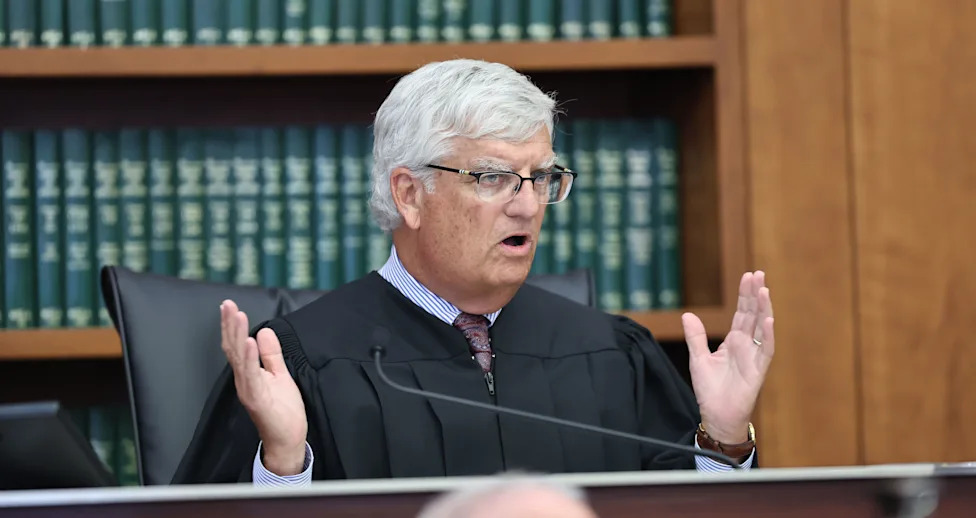
A Massachusetts judge has taken decisive action to protect the citizens who evaluated the murder case against Lindsay Clancy, ordering that the identities of all jurors remain sealed indefinitely. Plymouth Superior Court Judge William Sullivan issued the directive in response to escalating concerns regarding harassment, doxing, and public hostility directed at those tasked with deciding the contentious legal proceeding.
The formal order, issued on September 14, 2026, ensures that the identities and personal details of both deliberating and alternate jurors remain impounded until further notice. In his ruling, Judge Sullivan underscored that the intense public fascination and volatile discourse surrounding the trial have created an environment that threatens the personal safety and well-being of the panelists.
The decision follows closely on the heels of the trial's unresolved conclusion. On Friday, September 4, 2026, Judge Sullivan declared a mistrial after the jury informed the bench that they were hopelessly deadlocked and incapable of arriving at a unanimous verdict on the criminal charges against Clancy.
Clancy, a mother from Duxbury, Massachusetts, has been the focus of intense scrutiny since being charged in connection with the January 2023 deaths of her three young children. The emotionally charged nature of the allegations transformed the courtroom into a focal point of intense community grief, public debate, and media interest.
Throughout the proceedings, the courtroom activities were livestreamed across digital platforms, generating continuous commentary, debate, and polarizing speculation across social media. Judge Sullivan specifically cited this ongoing and divisive attention across Massachusetts and beyond as a core reason why standard public disclosure rules could not be applied safely in this instance.
While judicial records and juror rosters are conventionally classified as open public records under state legal standards, the court found compelling "good cause" to withhold the information from public view. Sullivan observed that the trial's widespread visibility had catalyzed a hostile climate, exposing participants to extraordinary levels of outside scrutiny.
The impoundment ruling outlined troubling incidents that unfolded both during the active trial and immediately following the declaration of a mistrial. Court records detailed instances where jurors faced doxing threats and unauthorized disclosures of their private personal details, which were circulated across external online platforms without their consent.
Furthermore, the judge pointed to serious security breaches at the courthouse itself, including an incident that led to the criminal arrest of an individual accused of secretly videotaping jurors as they exited the Plymouth facility. Such conduct raised significant alarm regarding physical stalking and intimidation targeting the panel.
In addressing the ongoing climate of intimidation, Sullivan highlighted that at least one juror directly petitioned the court to keep the protective impoundment order active indefinitely. This personal request emphasized the pervasive anxiety felt by members of the panel regarding potential retaliation or unwanted public confrontation.
The judge determined that the risks facing the jurors were neither speculative nor trivial, characterizing the danger of harm as a "real and present" threat. Sullivan warned that leaving the panel members exposed would undermine the very integrity of jury service, which relies on citizens being able to discharge their civic duty without fear of reprisal.
Ultimately, the court concluded that releasing the official list containing the identities and personal data of the jurors could trigger "immediate and irreparable injury." As a consequence, the impoundment order will remain active and binding until the court explicitly determines otherwise.
The judicial mandate does not impose a total gag order on the panelists themselves. As clarified in the ruling, the impoundment is designed to prevent court officials from disseminating the roster to the public, while leaving individual jurors entirely free to voluntarily reveal their own identities or speak publicly about their service if they choose to do so.
In the days following the mistrial, public reactions among the jurors have diverged. While a small number of panelists opted to speak out about their deliberations and personal experiences, the vast majority of both deliberating jurors and alternates have affirmatively turned down media interview requests, electing to preserve their privacy.
The legal battle surrounding Clancy is poised to move into its next phase, with the defendant expected to appear back in court later in the month. Defense attorneys have already indicated plans to pursue an acquittal on the basis of legally insufficient evidence, while prosecutors continue to evaluate their strategy for potential retrial proceedings.
As the Plymouth County District Attorney's office and defense counsel prepare for the upcoming litigation, the court's protective order serves as a bulwark for the community members drawn into the epicenter of the tragic and polarizing case, ensuring their identities remain shielded amidst ongoing legal turmoil.









(0)