
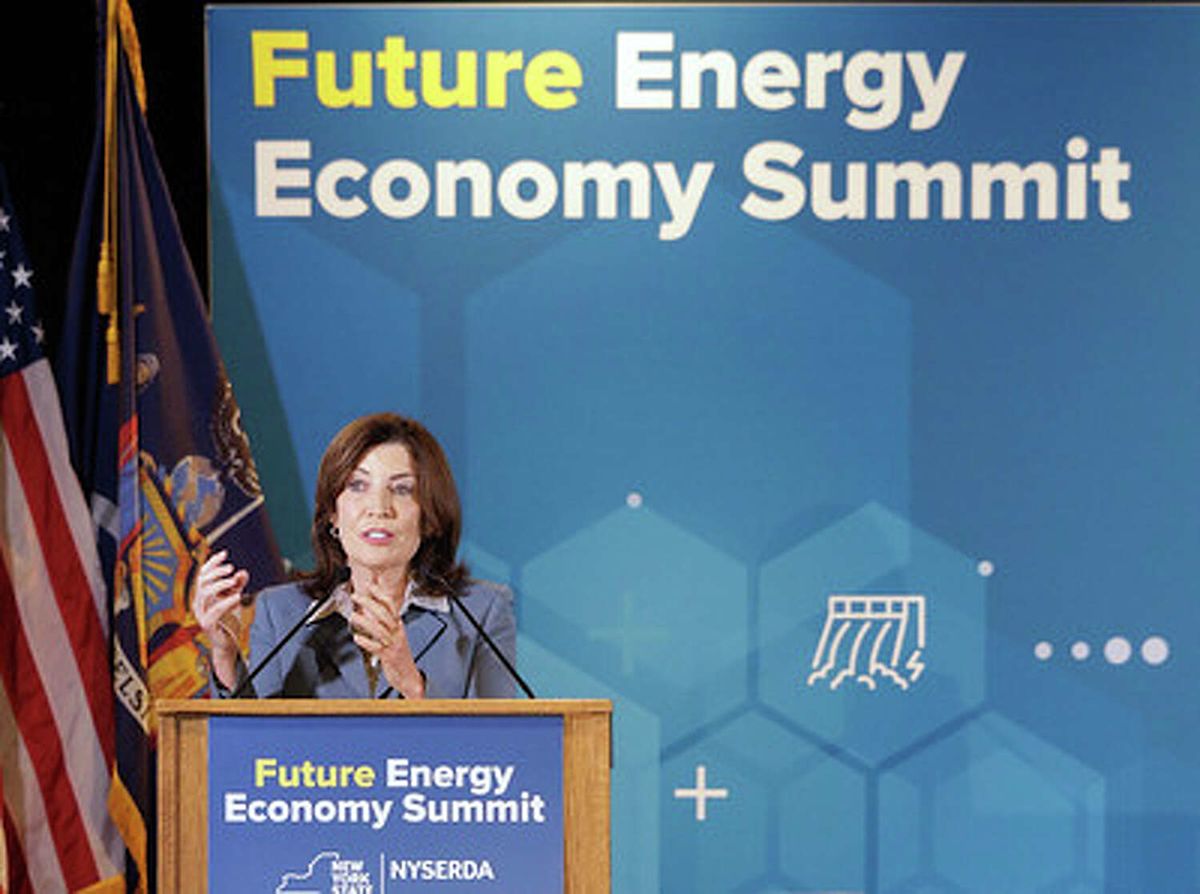
More than 8.2 million New York households are scheduled to receive state-issued energy rebate checks of up to $200 beginning later this month. The initiative marks the second consecutive year that Gov. Kathy Hochul’s administration has distributed direct taxpayer funds to residents within specific income brackets ahead of a general election.
The direct financial relief program is backed by an authorized $1 billion allocation established in the enacted state budget. Officials confirmed that the New York State Department of Taxation and Finance will oversee the disbursements, which will be mailed out automatically starting September 21 and will continue to be sent to eligible residents through December.
The rebate tiers are determined by income reported on state tax filings. Married couples filing jointly with an annual income below $150,000 will receive the maximum payment of $200, while joint filers earning between $150,000 and $300,000 are eligible for $150. Single tax filers reporting an annual income under $150,000 are slated to receive a $100 rebate check.
To qualify for the upcoming payment, individuals and joint filers must have submitted their 2024 New York State income tax returns on time, maintained full-time state residency during that tax year, met the designated income ceilings, and not have been claimed as a dependent on another individual's return. Because eligibility is calculated directly from 2024 tax records, recipients are not required to complete a separate application process.
State leaders have framed the rebate program as a critical pillar of an ongoing affordability agenda aimed at shielding consumers from escalating living expenses. Gov. Kathy Hochul highlighted the severe strain rising bills place on household budgets, attributing wider national economic pressures and increasing utility and grocery expenses to Washington Republicans while emphasizing her administration's commitment to delivering direct relief.
The distribution of funds comes amid significant public concern regarding New York’s high cost of power. According to findings published by the Albany-based, non-partisan Empire Center for Public Policy, residential electricity rates across the state run approximately 70 percent higher than the national average.
Using data compiled by the federal Energy Information Administration, the Empire Center reported in April that residential power in New York averaged roughly 29.99 cents per kilowatt hour. This compares to a nationwide baseline average of 17.6 cents per kilowatt hour. The report further noted that New York consumers pay about 50 percent more for electricity than residents in neighboring Pennsylvania, and nearly twice the rates paid by households in Florida or Texas.
Beyond electricity rates, state officials noted that broader energy markets have added substantial financial pressure on commuters and families. The governor’s office pointed out that retail gasoline prices have hovered near $4.35 per gallon, representing a 45 percent increase that state officials tied directly to the international fallout and supply disruptions stemming from the war in Iran.
State Department of Taxation and Finance Commissioner Amanda Hiller described the incoming disbursements as practical and meaningful support designed to help residents navigate difficult economic conditions. The administration reported that, including this latest $1 billion disbursement, New York has provided an aggregate of $7.6 billion in direct utility bill assistance to participating households since 2021.
The rollout follows a similar measure enacted last year, when Hochul and the state Legislature authorized "inflation refund checks" of up to $400 for taxpayers in identical income tiers during the months leading up to the previous general election.
The timing and structure of the checks have drawn sharp scrutiny from political opponents and critics who view the payments as politically motivated. State Republican leaders have argued that issuing one-time checks right before an election functions primarily to generate constituent goodwill rather than offering structural solutions to high taxes, inflation, or underlying energy market problems.
Assembly Minority Leader Ed Ra criticized the administration for distributing the funds less than two months before the election, calling the move a political maneuver that came too late. Ra noted that while New Yorkers need fiscal assistance, a $200 payment will do little to offset utility expenses that remain well above national norms, asserting that the state has not presented a viable strategy to lower energy costs or improve electric grid reliability.
Despite their criticisms of the administration's broader energy policies, several Republican lawmakers in the Legislature did back the rebate distribution framework this year as an element of their own legislative proposals to address high electricity expenses. However, they continue to argue that the Democratic-led government has failed to tackle root causes.
Critiques of one-off cash disbursements have also surfaced from within the Democratic executive branch. Lieutenant Governor Antonio Delgado, who suspended a primary gubernatorial challenge against Hochul in February, previously characterized the prior year's inflation checks as political theater. Delgado asserted that temporary payouts fail to solve systemic challenges, advocating instead for targeted, long-term capital investments in core family needs such as healthcare, housing, and childcare.
Defending the state's approach, the governor’s office asserted that the enacted fiscal year 2027 budget reshapes state priorities to protect working households against major energy corporations. Officials maintain that pairing broad consumer rebates with long-term zero-emission planning remains central to balancing affordability with the state's transition toward its environmental mandates.




(0)