
Nigerian police say they have pinpointed the location of a camp in the south-eastern part of the country where 19 prospective National Youth Service Corps members are being held by armed captors, but officers are unable to move in because they believe the site has been rigged with homemade explosives. Police Commissioner Audu Bosso told journalists that surveillance drones had helped establish exactly where the group is being kept, following their abduction last week in Imo state. However, he said the intelligence gathered also indicated that the camp had been mined with improvised explosive devices, leaving security forces unable to launch an immediate assault without risking the lives of the hostages.
According to Bosso, bulldozers and armoured vehicles are being deployed to the area as police prepare for a possible rescue operation. The exact location of the camp has not been made public, and police have so far not identified the individuals or group responsible for the kidnapping. The disclosure that police know where the captives are being held but cannot reach them has added to the anguish of families who have now spent days waiting for news.
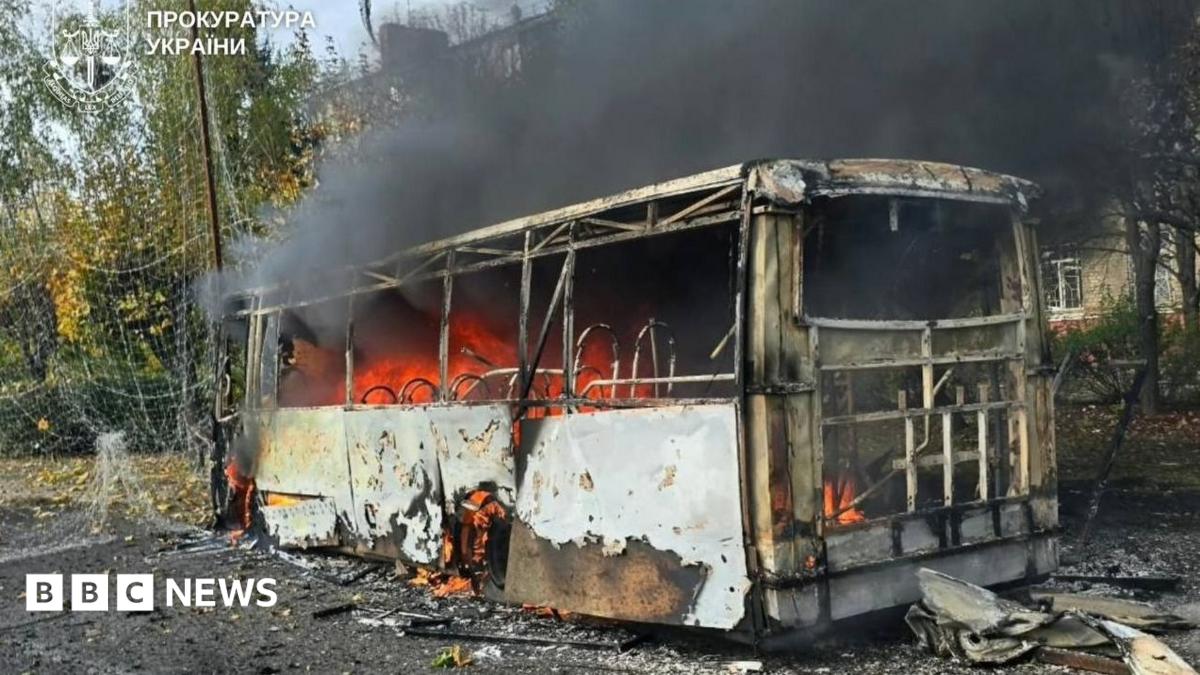
The abductions took place on Thursday, when gunmen attacked buses carrying the recruits as they travelled from Ibadan in the south-west of Nigeria towards NYSC orientation camps in Abia and Akwa Ibom states. The attack occurred near Umunoha in Imo state. The victims were among thousands of young graduates who travel across the country each year to take part in the mandatory one-year national service programme.
One father, Omotosho Adewale, whose child is among those taken, told the BBC that the kidnappers had demanded a ransom of 50 million naira, equivalent to about $37,680 or £28,440. He said he had no way of raising such a sum. Speaking through tears, he described his distress at being unable to help his child. "There's no peace of mind. I've not eaten in three days," he said, appealing to the government to intervene.
His account reflects the broader dilemma faced by families of kidnap victims across Nigeria, where criminal gangs and armed groups frequently seize people for ransom. Although paying ransoms is illegal under Nigerian law and authorities have repeatedly warned families against negotiating with abductors, relatives often come under intense pressure to raise money to secure the release of loved ones. Many families feel they have little choice but to comply, particularly when the state appears unable to guarantee a safe rescue.
The NYSC is a compulsory programme for most graduates of Nigerian universities and polytechnics. Participants, known as corps members, are posted to different parts of the country to work and take part in community service, with the stated aim of fostering national unity and exposing young people to life outside their home regions. The scheme is a rite of passage for many Nigerian graduates, but the latest abduction has highlighted the risks involved in moving young people across a country grappling with widespread insecurity.
The NYSC has previously said it would not deploy members to areas considered high-risk because of violence or the threat of abduction. Most parts of south-eastern Nigeria had not previously been classified as high-risk areas, which made the attack in Imo state particularly alarming. The incident has renewed calls for reforms to the programme and for a review of how recruits are transported and protected during their journeys to orientation camps.
Kidnapping for ransom is one of Nigeria's most persistent security challenges, involving both criminal gangs operating for profit and armed groups with political or separatist agendas. Mass abductions are more commonly reported in parts of northern Nigeria, where armed groups have carried out high-profile school kidnappings in recent years. The attack in Imo state has therefore caused widespread concern, as large-scale kidnappings have been less frequent in the south.
In the south-east, some previous abductions have been linked to separatist groups, including the Indigenous People of Biafra, known as Ipob. However, authorities have not connected the current abduction to any organisation, and no group has publicly claimed responsibility. The uncertainty over who is holding the recruits has complicated efforts to open channels of communication or negotiation.
The case also raises difficult questions about the balance between rescue operations and the safety of hostages. Security analysts note that when captors booby-trap a site with improvised explosives, a military-style assault can quickly turn into a mass-casualty event. That appears to be the calculation police are making as they weigh whether to attempt a forced entry or continue pursuing a more patient approach.
For the families, the wait is agonising. Adewale's plea to the government reflects a broader sense of helplessness among relatives who say they have received little information beyond what has appeared in the media. With the camp's location kept secret and no identified suspects, parents and siblings are left to hope that police can find a way to reach the captives safely.
The abduction has also renewed scrutiny of the security arrangements surrounding the NYSC, whose participants often travel long distances by road in large groups. Critics argue that more should be done to protect corps members, including better coordination with security agencies and clearer risk assessments before deployment. The programme's leadership has yet to comment in detail on the latest incident.
As police prepare to deploy heavy equipment to the site, the coming hours will be critical for the 19 recruits and their families. Authorities have not announced a timeline for any rescue attempt, and it remains unclear whether negotiators are in contact with the captors. For now, the focus remains on locating a safe way to free the hostages without triggering the explosives that police believe surround them.





(0)