
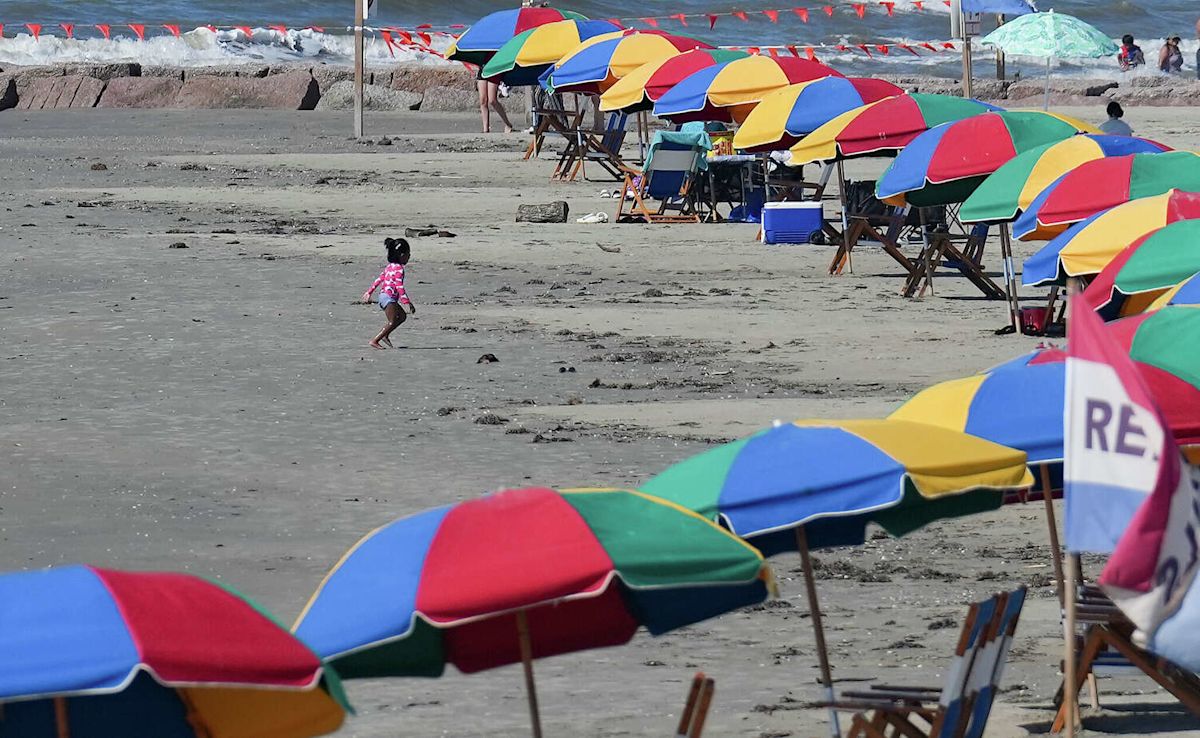
Beachgoers heading toward the upper Texas coast are being warned of potential respiratory hazards and environmental disruptions following the detection of a toxic algal bloom. Coastal authorities have officially confirmed the presence of red tide in waters near Galveston and adjacent shoreline areas, prompting health advisories for visitors enjoying the beach over the weekend and into the coming week.
The alert was formally raised by the National Centers for Coastal Ocean Science (NCCOS) after scientific testing identified concentrations of the microscopic organism *Karenia brevis*. Researchers collected water samples across several locations in the Gulf of Mexico between Sept. 7 and Sept. 11, confirming that the harmful algae is actively circulating near populated coastal recreation spots.
According to mapping data from the federal agency's Gulf Coast Red Tide Respiratory Forecast, the highest risk of respiratory irritation is currently concentrated along Seawall Boulevard directly in the center of Galveston. Significant risk zones also encompass the Bolivar Peninsula, with specific alerts designated for Crystal Beach, where conditions range from moderate to high severity.
Environmental scientists report that these moderate-to-high risk levels are projected to remain in effect through at least Tuesday. Beach visitors throughout the impacted areas are being advised to remain aware of air quality conditions, particularly when winds are blowing from the water toward the shore.
Red tide is the common name used to describe the rapid proliferation and dense accumulation of *Karenia brevis*. When conditions support their growth, these microscopic algae multiply into massive blooms that can physically discolor surrounding ocean water, often giving the surf a reddish appearance.
Beyond altering the aesthetic of the marine environment, the organisms generate powerful toxins that pose a severe danger to wildlife. The biological compounds released by *Karenia brevis* can paralyze fish, inhibiting their normal bodily functions and leading to widespread mortality across local marine populations.
Evidence of this lethal effect has already manifested along the Texas coastline. Over the course of the past several days, beachgoers and observers have reported seeing dead fish washing up along the sand in affected areas, underscoring the immediate ecological impact of the ongoing bloom.
For humans, the primary health concern associated with red tide is respiratory irritation. Stiff winds sweeping across the Gulf of Mexico can carry the aerosolized toxins out of the breaking waves and push them onto coastal beaches, creating an invisible atmospheric hazard for anyone spending time near the water.
Individuals exposed to these airborne toxins may experience a variety of respiratory issues, including coughing, scratchy throats, and irritation of the nasal passages. Coastal visitors planning to spend extended periods on the sand in Galveston, the Bolivar Peninsula, or Crystal Beach are urged to monitor themselves for these symptoms.
In response to the biological hazard, the Texas Parks and Wildlife Department (TPWD) has outlined detailed public safety guidance regarding seafood consumption. The department is cautioning members of the public against eating recreationally harvested shellfish, such as oysters, gathered from impacted coastal waters.
Because bivalves and other shellfish are filter feeders, they can ingest and concentrate high amounts of the *Karenia brevis* algae within their bodies. To avoid potential foodborne illness, state wildlife experts recommend that people bypass self-caught shellfish entirely and choose commercially sourced offerings from restaurants instead.
At the same time, TPWD has clarified that the toxins generated during a red tide event typically do not accumulate within the fleshy muscle tissue of other common seafood species. As a result, fish, crabs, and shrimp remain safe for human consumption, provided that they are caught alive and processed properly.
Anglers and foragers must still exercise caution, however. State officials strongly emphasize that anyone fishing in the region should never collect, prepare, or eat any fish that is found already dead or exhibiting clear signs of distress and sickness in the water.
This current environmental advisory marks a notable milestone for local coastal management, as it represents the first red tide alert issued along the Texas coast in three years. The organism has historically caused periodic disruptions, but local waters had been free of documented alerts in recent seasons.
During the previous outbreak three years ago, the harmful algae bloom maintained a lingering presence throughout the Galveston Bay area for approximately one month. Monitoring teams will continue tracking water samples and atmospheric conditions to evaluate whether the current bloom will follow a similar duration.
As the red tide advisory remains active across Galveston and the Bolivar Peninsula, local authorities and federal agencies continue to recommend that visitors stay informed about coastal forecasts and take appropriate precautions to protect their respiratory health.






(0)