
In a high-stakes emergency ruling, the Supreme Court has blocked the United States Postal Service from enforcing a contentious new directive that would have curtailed mail-in voting across the country. The 7-2 decision effectively halts the Trump administration’s eleventh-hour attempt to overhaul ballot delivery protocols just weeks before the upcoming midterm elections, preserving standard mail voting procedures for millions of Americans.
The contested postal rule, promulgated only last month, sought to require state election authorities to comply with brand-new, rapidly assembled registration mechanisms for ballots. Under the administration's plan, postal personnel would have been instructed to withhold delivery of mail-in ballots unless they were processed through these untested tracking systems. The administration argued the measures were necessary to boost the tracking of federal election mail and combat potential voter fraud, despite a well-documented lack of evidence indicating widespread fraud in domestic elections.
The ruling averts widespread disruption in an electoral system where remote voting has become a standard method of participation. Approximately one in three American voters cast their ballots through the mail during the 2024 election cycle. Furthermore, several states operate their elections almost entirely by mail, making reliable, unfettered postal delivery fundamental to their democratic operations.
State and municipal election administrators from across the nation had issued urgent warnings about the severe consequences of the proposed postal mandate. Officials pointed out that the vast majority of jurisdictions had already finalized and printed their ballots and return envelopes for the midterms. Scrapping these materials to accommodate an impromptu federal system was logistically impossible due to strict statutory deadlines and limited administrative resources.
Had the rule taken effect, election experts warned that it could have triggered widespread confusion and the mass disenfranchisement of voters whose ballots might have been arbitrarily delayed or rejected. Critics and state officials emphasized that the measure represented an unprecedented federal intrusion into state-administered voting infrastructure, effectively granting a federal agency unprecedented oversight over state election mechanics for the first time in the nation's history.
The Supreme Court’s resolution arrived in a remarkably concise, unsigned three-sentence order. Dispensing with extensive commentary or legal citations, the majority succinctly stated that the federal government had failed to establish a likelihood of success on the merits in its appeal against a lower court’s preliminary injunction. The justices also concluded that the standard equitable criteria required for emergency relief did not justify granting a stay.
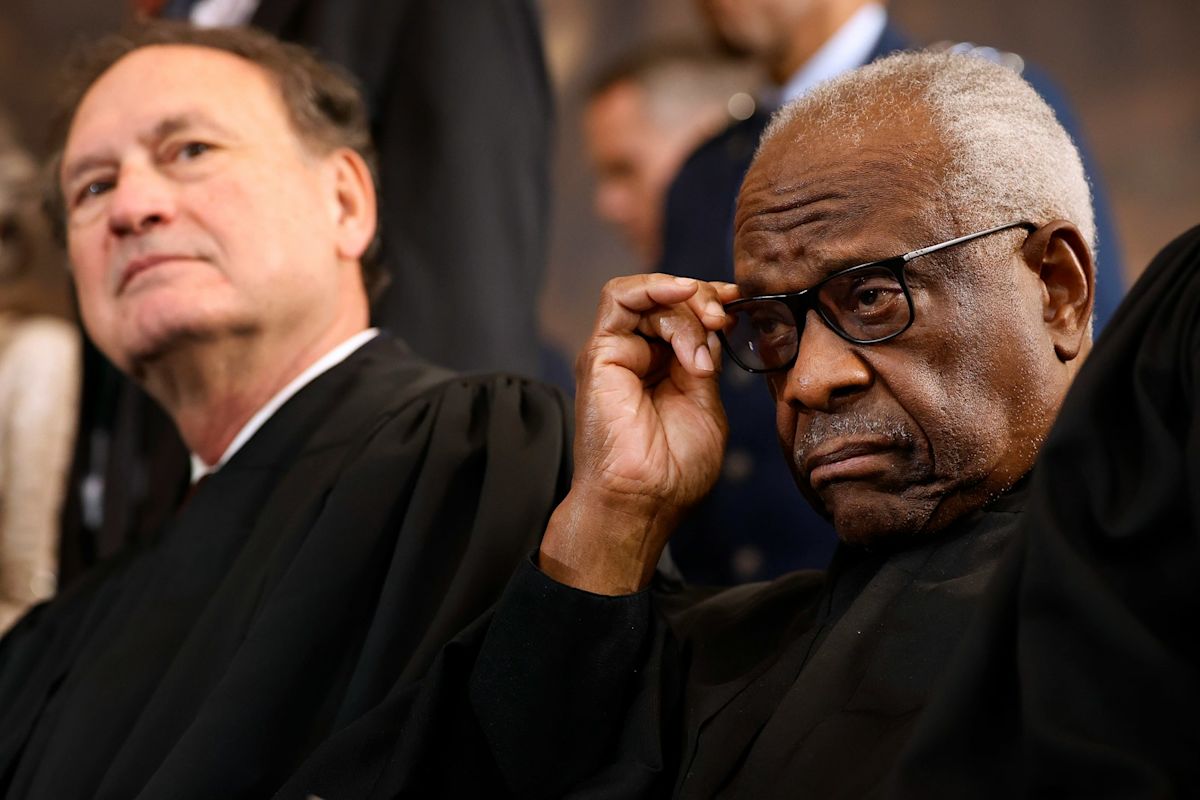
The ruling revealed clear divisions within the conservative supermajority, with seven justices voting to uphold the injunction while Justices Clarence Thomas and Samuel Alito dissented. The two dissenting justices supported the administration’s position, favoring the implementation of the postal restrictions despite the operational hazards highlighted by election directors.
While the majority rejected the immediate rollout of the policy, Justice Brett Kavanaugh penned a concurring opinion that signaled a degree of openness to the underlying framework. His concurrence suggested that the postal service’s registration mandates might pass legal muster in future electoral cycles if introduced with sufficient lead time, rather than on the eve of a national vote.
The stark brevity of the court's latest order stands in contrast to its actions just a month earlier, when the justices evaluated a preliminary challenge to the executive actions. In that previous instance, the court issued a detailed, ten-page unsigned ruling that rebuffed state challengers on procedural grounds, suggesting that legal challenges to internal executive branch deliberations were premature.
That earlier procedural skepticism had drawn scrutiny from legal observers, particularly given President Donald Trump’s transparent public statements. The president had repeatedly and openly declared on his personal social media platform his goal to eliminate mail-in voting, contradicting the government's legal defense that the postal rules were merely routine administrative updates.
Recognizing the court's judicial leanings, California and a coalition of allied states adapted their arguments to appeal directly to the conservative majority's jurisprudence. In their legal briefs, the states explicitly invoked the major-questions doctrine—a legal standard recently applied by the court to invalidate major regulatory actions by Democratic administrations.
The plaintiff states argued that the postal service lacked explicit statutory permission from Congress to enact such sweeping changes to the electoral system. They pointed to previous rulings where the court invalidated student-debt cancellation, federal workplace pandemic testing mandates, and comprehensive power-plant emissions standards, arguing that an electoral overhaul carried even greater political and constitutional significance.
Furthermore, state attorneys emphasized that federal statutes explicitly delineate the narrow categories of mail that postal authorities are legally permitted to refuse. Because Congress never included election ballots among these restricted materials, the states contended that the postal service lacked the legal authority to withhold delivery of official election mail.
In evaluating emergency applications, the high court is required to balance the equities by assessing which party would suffer more substantial harm in the absence of judicial intervention. The majority concluded that the concrete threat of disenfranchising voters and upending settled state procedures far outweighed the government's interest in enforcing an unproven regulatory mechanism.
While the Supreme Court's ruling guarantees that mail-in voting will proceed without postal disruption in the upcoming midterms, the presence of dissenting votes and concurrences leaves the door open for future federal efforts to regulate election mail. For now, election administrators nationwide can continue distributing and collecting ballots under established state frameworks without the risk of federal postal interference.









(0)