
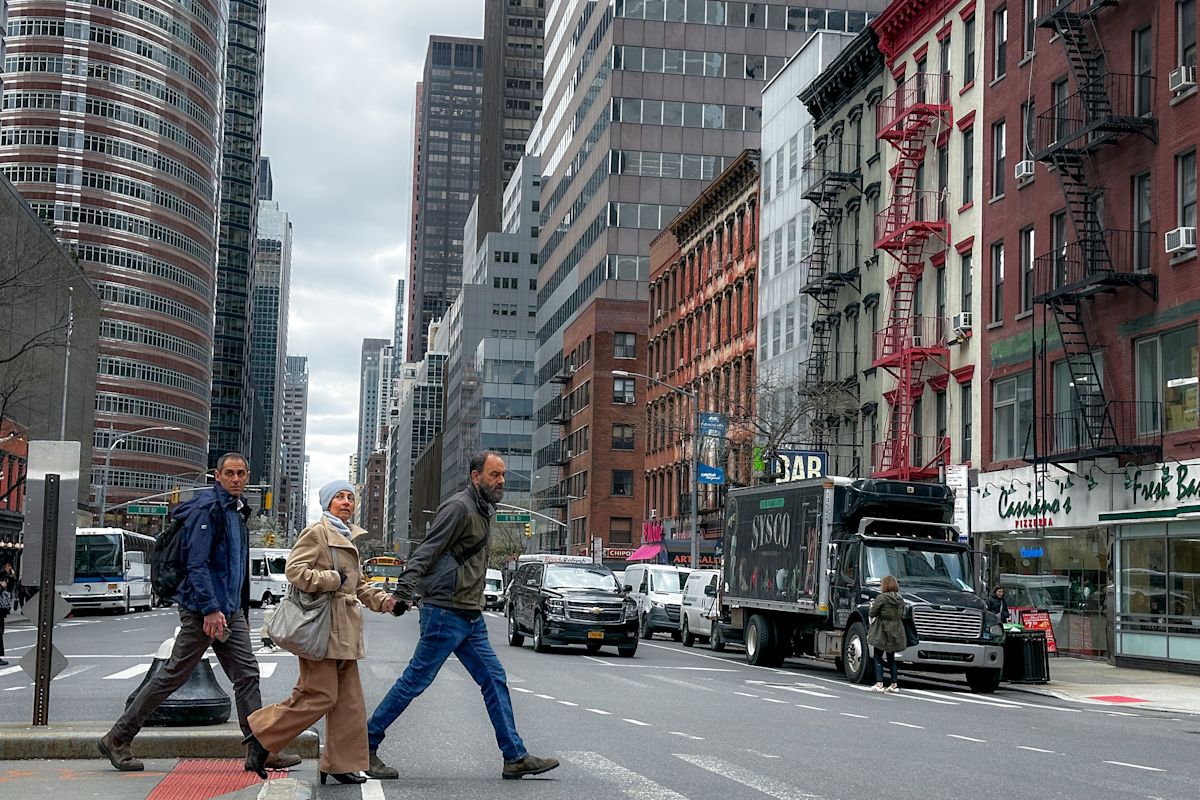
New York City municipal leaders have presented a comprehensive ten-year roadmap designed to modernize street safety across the five boroughs. Dubbed "Vision Zero Reimagined," the wide-ranging initiative announced by Mayor Zohran Mamdani introduces 100 specific policy objectives to drastically curb traffic fatalities and protect all road users over the coming decade.
The announcement unfolded during an emotional Tuesday afternoon press conference, where the mayor stood alongside grieving family members holding framed photographs of loved ones killed in vehicle collisions. The visible presence of these bereaved families served as a stark reminder of the human cost behind traffic statistics, highlighting the administration's stated mission to transition from reactive measures to proactive safety interventions.
Mayor Mamdani underscored the necessity of rapid, structural change during his remarks, insisting that municipal authorities must not wait for fatal incidents before taking decisive action on dangerous streets. He emphasized that the newly unveiled program delivers both bold long-term strategies and straightforward physical upgrades to make preventable vehicular tragedies an obsolete element of daily urban life.
Central to the multi-pronged initiative is a renewed focus on school-zone protections. The city intends to lower speed limits to 15 miles per hour surrounding hundreds of additional school campuses throughout the metropolitan area, ensuring that young pedestrians and caregivers are shielded from fast-moving vehicular traffic during vulnerable morning and afternoon travel hours.
Physical roadway transformations form another cornerstone of the ten-year agenda, with the administration committing to overhaul 1,000 intersections each year. Under the blueprint, city workers will install upgraded barriers and physical infrastructure improvements at these crossing points to physically slow vehicle turning movements and create protected buffers for people crossing the street.
Beyond public roadways, the municipality is pledging to lead by example through safety upgrades applied to thousands of vehicles in its own municipal fleet. Under the plan, city-owned vehicles will be retrofitted with advanced safety systems, including enhanced automatic emergency braking features alongside loud, audible warning alerts on large trucks to notify pedestrians and cyclists when heavy vehicles are nearby.
The framework also includes targeted deterrents for dangerous and unlawful driving practices. Motorists who accumulate repeated speeding violations inside designated school zones face the prospect of having mandatory speed-capping hardware installed on their vehicles. Furthermore, city agencies will intensify dedicated enforcement operations to seize and remove automobiles operating with illegal, obscured, or fraudulent "ghost plates" used to evade cameras and law enforcement.
To tackle the growing prevalence of massive automobiles on city streets, the plan proposes charging higher tolls on oversized passenger vehicles. Concurrently, the administration seeks to repurpose street asphalt by expanding dedicated pedestrian-only plazas and car-free corridors, prioritizing foot traffic over private automobile movement in densely populated neighborhoods.
Recognizing that safe mobility intersects with socioeconomic fairness, the blueprint incorporates dedicated financial assistance for low-income New Yorkers. The proposal includes targeted funding streams to help disadvantaged residents offset the costs of using public mass transit and the Citi Bike micro-mobility network, broadening affordable and green travel options across the city.
City officials explained that this overhaul is urgently required to meet the demands of an increasingly multifaceted streetscape. In recent years, New York's roadways have evolved rapidly beyond traditional cars and standard pedal bicycles, seeing an influx of electric bicycles, e-scooters, and other diverse mobility devices competing for limited curb and lane capacity.
The modern blueprint builds upon the original Vision Zero framework launched in 2014, an ambitious program that city representatives credit with steering traffic fatalities down to record historic lows. That earlier initiative established the modern municipal playbook by combining street redesigns, targeted traffic policing, and public education campaigns, laying the groundwork that this new decade-long update seeks to advance.
However, recent collision data underscores the critical challenges still facing urban transit planners. According to reports from the advocacy organization Transportation Alternatives, 99 people lost their lives in city traffic crashes during the first six months of the year. This figure represents an increase of eight fatalities compared to the identical timeframe from the preceding year, with cyclists suffering a particularly heavy share of the casualties.
While specific municipal rollout schedules for every street alteration remain to be finalized, advocacy groups have already highlighted the areas in most dire need of intervention. Transportation Alternatives cataloged the city's 50 most hazardous corridors, pinpointing perilous roadways that span from Eastern Parkway in Brooklyn all the way to Jerome Avenue in the Bronx as prime candidates for urgent redesigns.
Executing the broad 100-goal framework will require navigating complex jurisdictional boundaries. While a substantial portion of the initiatives can be enacted directly through administrative rulemaking and city agency execution, several of the more stringent measures and toll adjustments will require formal statutory authorization from state lawmakers in Albany.
In closing his announcement, Mayor Mamdani reiterated that safe travel is not a luxury, framing roadway protection as an essential civic entitlement. He affirmed that every New Yorker possesses a fundamental right to safe streets, regardless of their chosen method of transportation, their daily destination, or the specific borough and neighborhood they call home.





(0)