
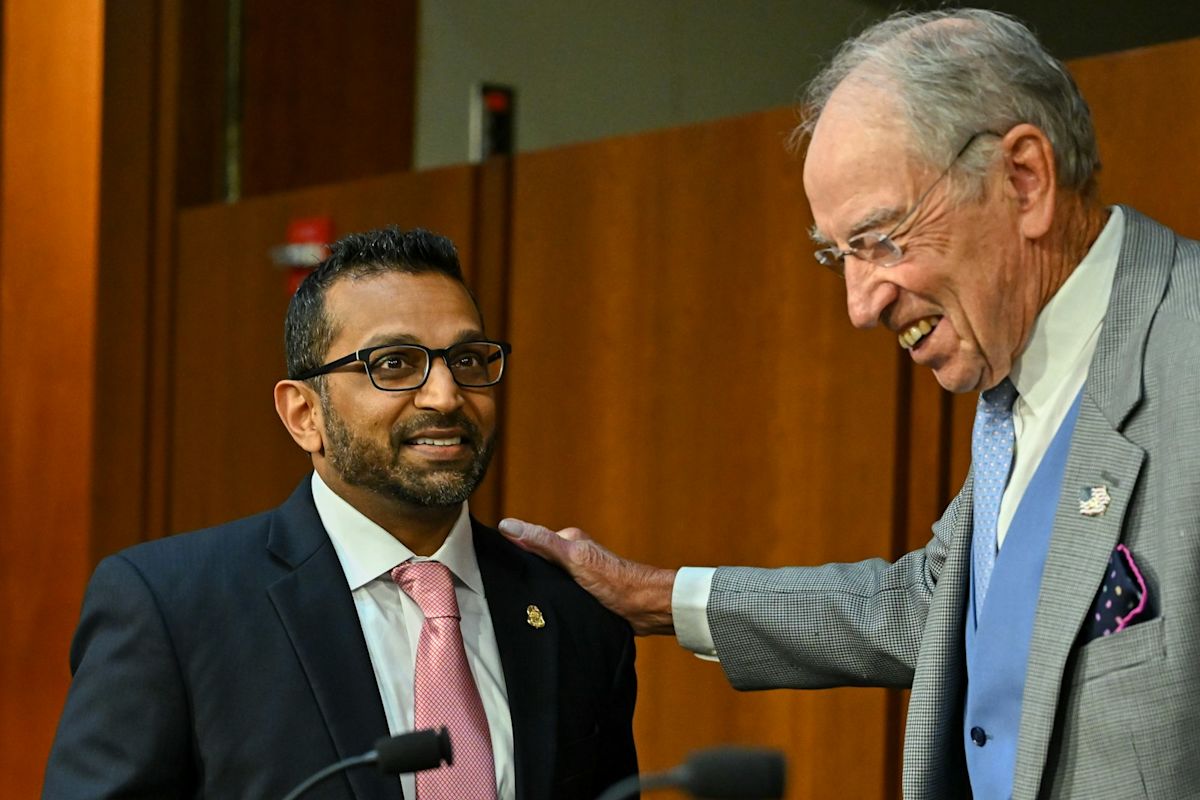
A high-stakes Senate Judiciary Committee hearing descended into raw partisan acrimony when Chairman Chuck Grassley had an explosive verbal altercation with Senator Cory Booker. The clash erupted during an oversight session focused on the Federal Bureau of Investigation, where lawmakers convened to examine the leadership and operational conduct of FBI Director Kash Patel.
The hearing reached a boiling point after Democratic lawmakers repeatedly pressed Patel on an array of controversial decisions, culminating in a fierce confrontation between the committee's top Republican and the New Jersey Democrat. The tension escalated until Grassley loudly admonished Booker, shouting across the dais to demand whether his colleague was finally prepared to stop speaking and relinquish the floor.
At the heart of the contentious proceeding was a rigorous round of questioning by Booker, who focused on Patel’s administrative actions, institutional stewardship, and relationship with the press. Booker sought direct answers concerning Patel's fitness for office and the allocation of federal law enforcement resources, setting off a chain of tense exchanges with the witness and committee leadership.
A primary flashpoint during the interrogation centered on Elizabeth Williamson, a prominent investigative reporter for *The New York Times*. Williamson had previously authored an exposé revealing that Patel had authorized an FBI SWAT unit to function as a personal security detail for his 26-year-old girlfriend. Booker aggressively questioned the director regarding retaliatory investigations aimed at the reporter following the publication of her story.
During the exchange, Booker accused Patel of misleading a federal grand jury by previously asserting that no members of the press were under active investigation. The senator maintained that scrutinizing these decisions fell squarely within the committee's constitutional oversight responsibilities, demanding straightforward yes-or-no responses from the FBI director regarding the bureau's actions against journalists.
Grassley stepped in to shield Patel from the line of inquiry, dismissing Booker's questions as personal grievances rather than standard oversight. The Iowa Republican stated that he would typically allow members broad leeway but argued that the topic of Patel's personal life and security decisions appeared to be driven by personal motives, prompting immediate pushback from Booker.
The scrutiny extended into Patel's broader interactions with the news media, with Booker highlighting a pattern of institutional aggression toward journalists. The discussion touched upon the issuance of grand jury subpoenas to reporters at major national publications, ongoing defamation litigation against media outlets, and what critics characterized as systematic efforts to silence investigative reporting.
Booker also challenged the FBI director over commitments to investigate a crude birthday greeting that Donald Trump had allegedly sent to the late convicted sex offender Jeffrey Epstein. When Patel attempted to redirect the narrative toward pursuing unauthorized leakers of classified government documents, Grassley granted the director additional speaking time, subsequently ruling that Booker’s questioning window had concluded.
As Booker attempted to deliver his closing observations, Grassley repeatedly cut in and hammered his gavel in an effort to regain order. Booker expressed deep frustration with the chair's handling of the session, claiming that standard procedural fairness was being cast aside to protect the witness from legitimate accountability.
Refusing to yield, Booker delivered a scathing rebuke of Patel's performance and credentials, characterizing him as entirely unsuitable for the post. The senator declared that Patel behaved less like a professional law enforcement leader and more like an incompetent political loyalist, drawing a vivid comparison to a young college student engaging in fraternity antics rather than managing the nation's premier domestic intelligence agency.
Booker further asserted that Patel lacked the foundational qualifications necessary to serve as an ordinary field agent, calling his ongoing tenure a profound embarrassment to the bureau. He argued that the director's actions were systematically eroding public confidence in federal law enforcement and compromising the agency's integrity.
Beyond his critique of Patel, Booker leveled sharp accusations against Senate Republicans on the panel, asserting that they had abandoned their duty to provide objective checks and balances. He warned that providing political cover to executive branch officials without insisting on transparency established a dangerous precedent for congressional oversight.
Grassley responded forcefully, accusing Booker of displaying blatant disrespect toward committee leadership and claiming that the Democrat was demanding special procedural privileges by speaking several minutes beyond his allotted time. The Republican chairman maintained that order and decorum had to be preserved during formal committee proceedings.
Booker countered by expressing long-standing personal admiration and respect for Grassley, arguing that the chairman's defensive stance on behalf of Patel conflicted with his historical reputation for demanding government accountability. Booker emphasized that Patel had consistently treated Democratic members with hostility, specifically citing disrespectful interactions with Vermont Senator Peter Welch.
The friction in the hearing room intensified further when an audience protester staged a sudden demonstration just as Grassley attempted to transition questioning to Senator Darline Graham. The brief disruption provided an opening for Booker and Patel to trade another round of pointed remarks across the hearing room.
Visibly enraged by the continued interruptions, Grassley issued a stern final reprimand to Booker, asking whether he intended to interfere with Graham's questioning before shouting, "Are you ready to shut up?!" The dramatic scene underscored the profound partisan fractures dividing the Senate Judiciary Committee over the oversight and future direction of the FBI.




(0)