
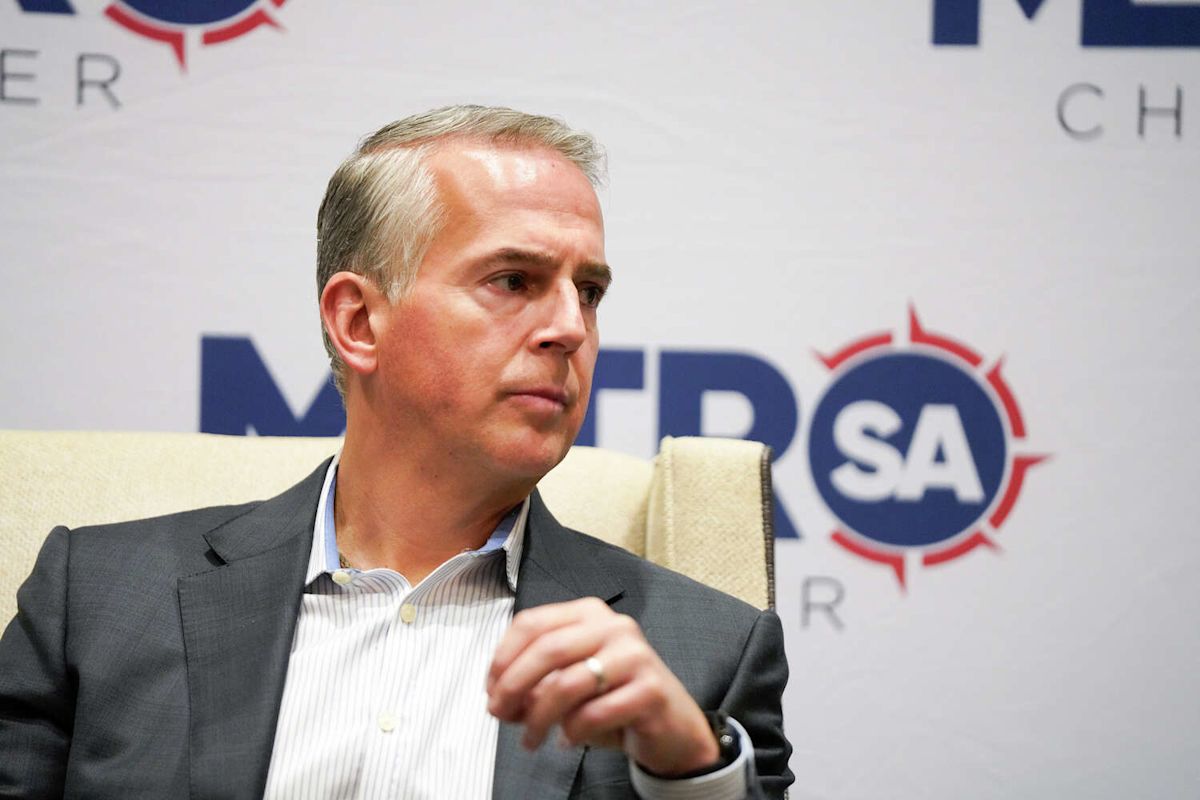
The Electric Reliability Council of Texas has halted a proposed multimillion-dollar contract renewal for its top executive just hours after the board initially voted in favor of the deal. The abrupt decision to pause the extension for President and Chief Executive Officer Pablo Vegas came directly in response to public condemnation from Texas Lieutenant Governor Dan Patrick.
The governing board of the state’s primary power grid operator had voted on Tuesday to approve the new employment package. However, despite the preliminary approval passing without public objection during the open meeting, board leaders confirmed after an executive session that the agreement would not be finalized at this time.
The political intervention unfolded rapidly after Patrick took to social media to voice strong opposition to the proposed executive compensation package. Writing on X, the lieutenant governor argued that approving a substantial salary increase for ERCOT’s leadership was inappropriate at a time when Texas consumers are facing increasing utility expenses. He labeled the proposed compensation shocking and asserted that state lawmakers would share his outrage over ratepayer funds being used for such an increase.
Patrick further detailed his communications with regulatory leaders, stating that he instructed ERCOT Chairman Bill Flores and Public Utility Commission Chairman Thomas Gleeson to reverse course immediately. According to Patrick, leadership needed to halt the process prior to the conclusion of the board meeting so that members of the Texas Legislature could evaluate the matter when the regular legislative session convenes in January.
The proposed agreement was structured as a six-year deal that would effectively prolong Vegas's tenure by five years beyond his current contract, which is slated to expire at the end of 2027. Under the framework of the new terms, Vegas's baseline annual salary would rise to $1.16 million, representing a 7% increase from his current base earnings of $1.09 million.
When factoring in performance bonuses, retirement savings plans, and related benefits, the total potential value of the executive's annual compensation package could reach as high as $6.47 million in 2027. This top-line figure drew swift scrutiny from political leaders, though the payout mechanisms are designed around multi-year performance milestones.
The agreement incorporated several variable compensation components, including a short-term incentive target valued at $1.16 million alongside a long-term incentive grant of $2.09 million. Both incentive tiers remain contingent upon Vegas satisfying specific organizational and performance criteria, with payments structured across several years rather than distributed as a single lump sum.
ERCOT officials clarified that while the theoretical maximum for 2027 was calculated near $6.5 million, Vegas would not actually receive that full sum in that single calendar year. The organization’s financial calculations indicated that estimated actual disbursements for 2027 would total approximately $4.13 million, a figure that includes a $1.39 million make-whole provision carried over from his original employment agreement.
According to a spokesperson for the grid operator, the broader $6.47 million figure is heavily influenced by the long-term incentive component, which is established at 180% of the executive's base salary and is not scheduled to mature for distribution until 2030.
In addition to base pay and standard incentives, the newly drafted contract introduced a $587,000 contribution under a Section 457(f) deferred-compensation plan. This specific deferred-benefit structure was not part of the executive’s previous employment terms.
For context, Vegas's current compensation arrangement allows him to earn approximately $4 million this year. That total encompasses his $1.09 million base salary, a possible $1.06 million short-term incentive payment, roughly $420,000 in long-term incentive distributions, and standard organizational benefits.
Board Chairman Bill Flores defended the rationale behind the proposed contract during the initial vote, pointing to Vegas's leadership over the past four years. Flores emphasized that the executive team had navigated the grid through significant operational challenges and maintained that the compensation package reflected both past achievements and the complex reliability demands facing the organization in the coming years.
To justify the proposed compensation structure, ERCOT relied on an analysis conducted by Mercer, an independent compensation consulting firm. Mercer’s assessment concluded that the overall compensation package fell between the 50th and 75th percentiles when measured against peer chief executives and leaders of comparable independent grid operating organizations across the country.
The pause highlights an ongoing tension regarding the governance and oversight of the state's power network. Under the Texas Administrative Code, formal regulatory authority over ERCOT executive compensation rests with the Public Utility Commission, which must officially review and approve the CEO's appointment and salary terms. The administrative rules do not grant the state Legislature a direct statutory role in setting or approving administrative pay.
When Vegas was originally hired to lead the grid operator in 2022, ERCOT completed the selection process and the Public Utility Commission unanimously endorsed both his hiring and his financial compensation terms. However, with ERCOT pausing the finalization of the contract following Patrick's objections, the future of the CEO's compensation package now remains uncertain heading into the upcoming legislative session.






(0)