
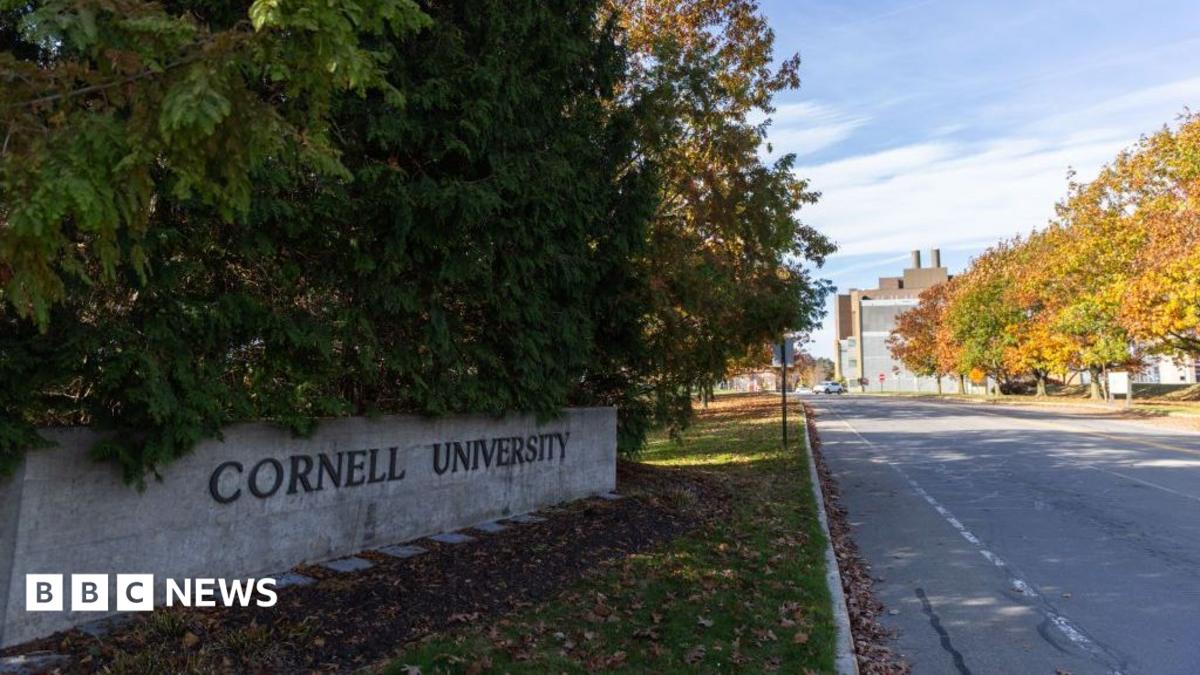
New York state prosecutors have confirmed they will reopen a criminal inquiry into allegations that a woman was raped at Cornell University, a decision that revives a case previously closed for lack of sufficient evidence and thrusts the prestigious Ivy League campus back into a national debate over how universities and law enforcement handle sexual violence.
Tompkins County District Attorney Matthew Van Houten said on Monday that his office intends to present the matter to a grand jury, the body that weighs evidence and testimony before deciding whether criminal charges are warranted. He pledged that once appropriate charges are determined, the case will be pursued "in the most objective and impartial means possible."
The announcement follows a civil lawsuit filed on 16 September by the woman, identified in court documents as Jane Doe, who alleges she was drugged and sexually assaulted by multiple people at a fraternity house associated with Cornell's Chi Phi chapter. According to the lawsuit, the alleged attack took place on the night of 19 October 2024. She claims seven men from the chapter assaulted her in an incident involving alcohol and the drug ketamine, and that she was too intoxicated to give consent.
The lawsuit states that Jane Doe reported the matter to Cornell University Police on 8 November 2024. It also includes what is purported to be an image from a Snapchat group chat used by fraternity members, in which one participant alerted others in crude language to the prospect of a sexual encounter with her. The suit further alleges that word of the incident spread rapidly across the campus.
Van Houten's decision to revisit the case marks a significant reversal. He said his office had concluded in the immediate aftermath of the allegation that the evidence contained in Jane Doe's initial statement did not meet the legal threshold required to bring charges. He explained that he had since reached out to Jane Doe and her legal team seeking additional information as he prepared to convene a grand jury.
In a statement, Van Houten also provided a summary of what Jane Doe told campus police in 2024, noting that her account at the time differed from the claims later laid out in her civil complaint. He said her sworn statement that November did not allege she had been drugged against her will or subjected to gang rape. Rather, he said, it described her participation in drug use and sexual conduct as voluntary, conscious and consensual. He added that her lawyers had never contacted him to suggest the original statement was inaccurate or to ask him to reconsider his earlier decision.
At the same time, Van Houten acknowledged the difficulty many survivors face in coming to terms with what happened to them, saying it can take years of therapy and healing before victims fully process and understand their experiences. That remark appeared to address the gap between Jane Doe's initial account and the far more serious allegations detailed in her lawsuit.
Thomas Giuffra, an attorney for Jane Doe, disputed any suggestion that his client's earlier statement undercuts her credibility. In comments provided to CBS, the BBC's US partner, he said that in the days following the assault she was traumatised, numb and unable to function or accept the horror of what had happened, describing her as being in "self-preservation mode." He noted that she spoke to no one other than the officer who took her initial complaint, and argued that a serious investigation would ordinarily have involved multiple interviews and the collection of evidence. He criticised what he characterised as a defensive posture in the district attorney's statements, saying it suggested prosecutors recognised failures in the original investigation and were attempting to excuse them.
Cornell University has also pushed back against claims that it failed to act. While the institution said it supported the matter being taken before a grand jury, it rejected "any suggestion that the university did not impose consequential punishments for those involved" as false. The university said the allegations had been referred to a panel of trained faculty and staff, which issued a range of sanctions including expulsions and suspensions from Cornell. It specifically denied that any of the individuals charged were offered the chance to write essays as their sole consequence, responding to an allegation in the lawsuit that the men were allowed to mitigate their conduct that way.
The lawsuit accuses Cornell of failing to protect Jane Doe and of inadequately punishing those involved. It claims she suffered severe emotional and psychological distress and physical injury both from the incident and from the university's handling of it. In November 2024, Cornell issued a public statement about what it called serious and deeply disturbing allegations of drug abuse and sexual violence at the Chi Phi fraternity house, confirming that campus police were investigating and that the local chapter had been suspended, along with a number of students. The university also opened an internal investigation and a civil rights inquiry under Title IX, the federal law barring sex discrimination at schools that receive government funding.
Attorneys for the men named in the lawsuit have denied wrongdoing. Jeremy Saland, representing one of the accused, acknowledged that his client responded to and posted an immature comment on Snapchat but said he did nothing else. Saland denied that his client took part in any sexual activity, touched the plaintiff in any way, or ingested ketamine.
The case has drawn national attention following the filing of the civil suit and the news that prosecutors would reopen their inquiry. Several public figures, including actress Florence Pugh, have spoken out about the allegations. The renewed scrutiny places pressure on both Cornell and the district attorney's office to explain how the case was handled initially and what happens next, with the grand jury now set to determine whether criminal charges will follow.







(0)