
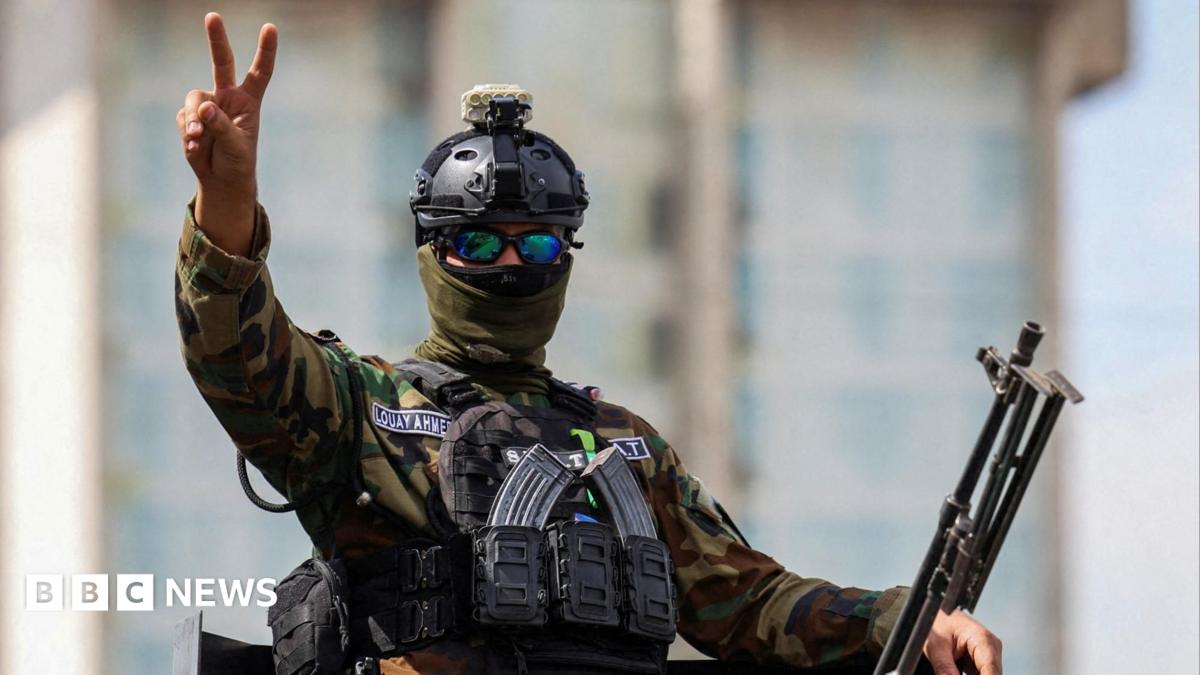
The last remaining British and American military personnel have departed Iraq, bringing to a close a coalition presence that spanned more than ten years and fundamentally shaped the country's post-2014 security landscape. Approximately 100 UK troops left their base in Irbil, located in the northern Kurdistan region, in an operation coordinated over recent weeks with US forces who also completed their withdrawal on Wednesday. The departure follows a bilateral agreement signed two years ago between Washington and Baghdad that committed foreign troops to leave Iraqi territory by the end of this month, a deadline now fulfilled.
British and American forces first returned to Iraq in 2014 as the core of an international coalition assembled to counter the rapid territorial expansion of the Islamic State group, also known as ISIS or Daesh. That mission, formally designated Operation Inherent Resolve, has now officially concluded, marking a significant milestone in Iraq's long and turbulent relationship with foreign military intervention. The coalition's air campaign and ground support proved decisive in rolling back the extremist group's control over large swaths of Iraqi territory, culminating in the government's declaration of military victory in 2017.
Iraqi Prime Minister Ali al-Zaidi characterized the end of the coalition's mission as a pivotal moment for his nation, describing it as "Iraq's transition to a phase in which it assumes full responsibility for its security and stability." His government has announced plans to observe four "Sovereignty Days" as a national holiday to commemorate the withdrawal, a gesture clearly intended to frame the departure as a restoration of national dignity and self-determination. Zaidi, who assumed office in May, has positioned himself as a leader determined to assert Iraqi control over security matters long dominated by external actors.
The UK Ministry of Defence issued a statement praising the outcome of the coalition's efforts, noting that "following more than a decade of operations, training and capacity building, Iraqi Security Forces and the Kurdish Peshmerga have secured the enduring territorial defeat of Daesh in Iraq." The ministry emphasized that Iraqi forces are now "well placed to take primary responsibility for the country's security," adding that Iraq and its international partners can "begin a new chapter focused on enduring security co-operation under Iraqi leadership." During the mission, UK personnel provided training and assistance to more than 111,000 members of the Iraqi Security Forces, including over 21,000 Peshmerga fighters in the semi-autonomous Kurdistan region. The Royal Air Force conducted thousands of sorties and struck more than 2,300 Islamic State targets over the course of the campaign.
From the Pentagon, spokesman Sean Parnell described the coalition's exit from Irbil as "the successful conclusion of the military mission that defeated ISIS in Iraq." He was careful to note, however, that significant challenges remain. "The primary responsibility for addressing Iraq's remaining security challenges, including ISIS remnants and Iran-aligned militias that undermine Iraqi sovereignty and regional stability, now rests with the government of Iraq," Parnell said. His statement underscored the delicate balance Washington faces as it steps back from direct military engagement while seeking to preserve its strategic interests in the region.
The threat posed by Islamic State has diminished considerably but has not disappeared entirely. A recent United Nations report estimated that sustained counter-terrorism operations by Iraqi security forces have reduced the group's fighting strength to several hundred individuals who are "able to carry out unsophisticated operations only." The UN further assessed that up to 3,000 IS fighters remain active in neighboring Syria, where US forces will continue their own mission against the group. The RAF is likewise expected to maintain flight operations over Syria to prevent IS remnants from regrouping or establishing new footholds.
A more immediate concern for Baghdad may be the presence of Iranian-backed militias operating within Iraq. Prime Minister Zaidi has publicly committed to disarming these groups and bringing all weapons under state control following the coalition's departure. However, several powerful factions have resisted his plans, and analysts suggest their influence could expand now that American forces are no longer present to serve as a counterweight. The militias have demonstrated their capability and willingness to project force, particularly during the recent conflict between the US, Israel, and Iran earlier this year, when they repeatedly targeted the Irbil air base where coalition forces were stationed.
The final months of the coalition's presence were marked by heightened danger. Hundreds of NATO troops stationed in Baghdad were withdrawn in March as regional tensions escalated. When a BBC team visited the coalition base in Irbil in April, they were forced to circle in an RAF transport aircraft while drones were being launched nearby. At the peak of the US bombing campaign against Iran, the base was coming under attack by as many as 28 drones and missiles in a single day. RAF Regiment Gunners stationed there shot down more than 100 drones during the first six weeks of the conflict, with many of the attacking aircraft launched by Iranian-backed militias operating inside Iraq.
While the US military presence in Iraq has ended, American officials indicated that Washington will continue to provide "targeted training and intelligence support" to Iraqi partners. US Central Command confirmed that the coalition's joint taskforce remains operational and has relocated to Jordan, from which it will continue coordinating regional security efforts. The Pentagon's willingness to maintain this support structure suggests that the United States intends to preserve its ability to influence events in Iraq without maintaining a permanent boots-on-the-ground presence.
This withdrawal marks the third time that US and UK forces have departed Iraq. The first came after the 1991 Gulf War, when tens of thousands of troops were deployed following Saddam Hussein's invasion of Kuwait. They returned in 2003 when US President George W. Bush ordered Operation Iraqi Freedom, aimed at removing Saddam from power and eliminating weapons of mass destruction that ultimately proved not to exist. The subsequent sectarian insurgency and years of violence cost tens of thousands of lives, leaving deep scars that continue to shape Iraqi politics and society. Each withdrawal has raised questions about whether Iraq can maintain stability without external military support, and the coming months will test whether the country's security forces are truly prepared to meet the challenges ahead.




(0)