
Across the state of Iowa, an innovative transformation is taking shape as aging architectural landmarks find a vital second life. Rather than facing demolition or remaining dormant in prolonged disuse, a diverse collection of historic properties is being strategically revitalized to address one of the state's most pressing contemporary needs: the creation of accessible, affordable housing options for local residents.
The spectrum of structures undergoing these extensive conversions spans more than a century of regional history and diverse public service. In Waterloo, a 102-year-old Catholic church and associated parochial school building, which once served generations of students and parishioners, is among the historic sites being adapted to accommodate modern residential living spaces.
In Des Moines, developers have focused their revitalization efforts on an even older piece of heritage: a nearly 130-year-old former United States Army post. With its foundational roots reaching back to the late nineteenth century, this expansive former military installation is now being thoughtfully reconfigured to serve residential civilian needs rather than national defense operations.
Further demonstrating the geographic and structural variety of these projects, a 69-year-old Lutheran church situated only a few blocks from the Iowa State Capitol is also undergoing a substantial adaptive overhaul. Together, these distinct properties illustrate the remarkable architectural diversity present in Iowa's legacy building stock, encompassing religious sanctuaries, academic halls, and military installations alike.
While these structures originally served vastly different civic, educational, and spiritual purposes, they are now bound together by a shared modern mission. Each site is actively contributing to the expansion of Iowa's affordable housing inventory, demonstrating how historic preservation principles can align directly with modern community development goals.
This growing preference for adaptive reuse is closely tied to the state's distinct demographic profile and built environment. According to research and data provided by the Iowa Finance Authority, Iowa currently holds the distinction of having the eighth-oldest housing stock in the United States, underscoring the long-standing nature of its physical infrastructure.
The state housing agency's findings identify 1957 as the median construction year across Iowa's residential framework. This mid-century benchmark highlights the fact that a substantial majority of the state's built landscape was erected decades ago, resulting in a rich inventory of vintage architecture that continues to define cities and towns across the region.
Alongside its aging residential properties, Iowa maintains a substantial volume of historic, underutilized, and vacant non-residential buildings. For housing advocates and regional planners, these surplus properties offer significant structural potential, serving as ready-made footprints embedded within existing neighborhood centers rather than requiring expansion into undeveloped land.
Confronted with the escalating challenges and financial realities of ground-up development, builders across the state are turning to creative problem-solving. By prioritizing the rehabilitation and structural reconfiguration of standing buildings over entirely new construction, developers are identifying sustainable pathways to deliver essential housing units.
A notable example of this adaptive strategy in action is the "Stay" development located in Des Moines. This project represents an ambitious youth housing and education initiative spearheaded by the community organization Starts Right Here, founded and guided by community leader Will Keeps.
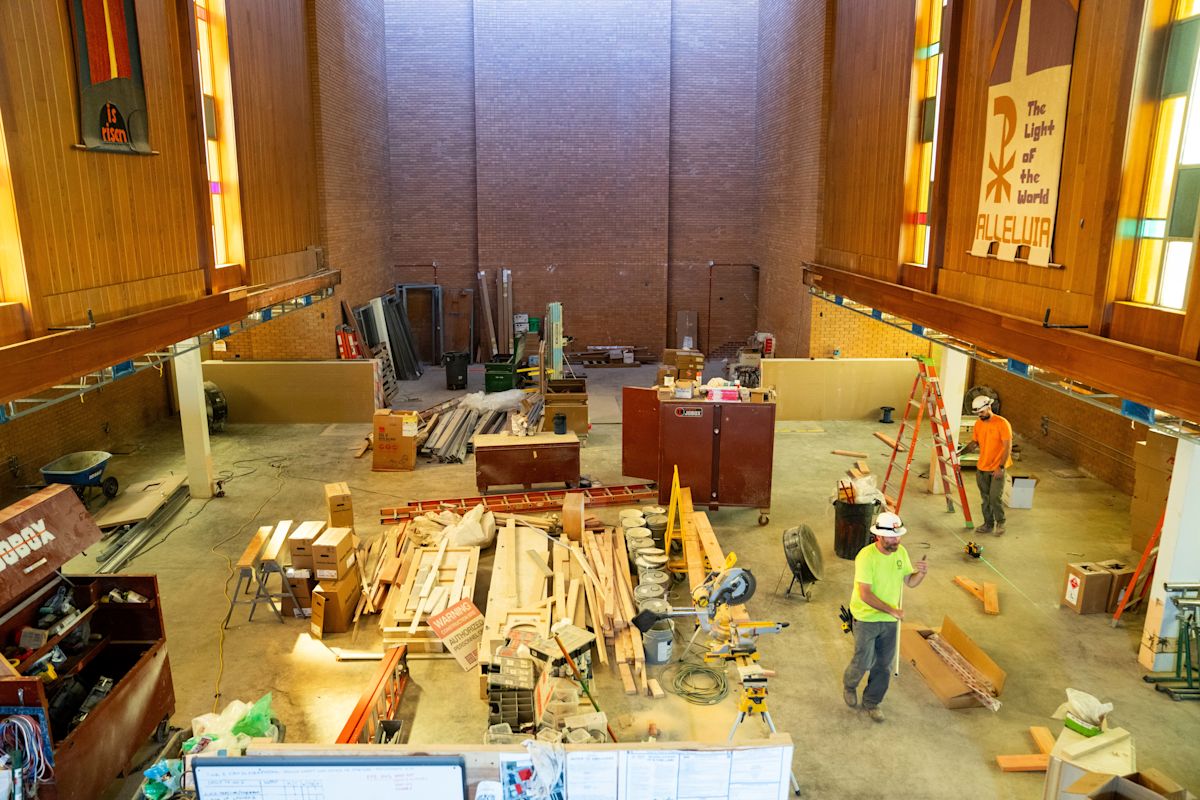
The Starts Right Here initiative is centered on converting the former property of the Elim Christian Fellowship church into a supportive living community. The repurposed religious facility is being specifically tailored to offer an accessible and secure housing option for vulnerable and at-risk youth who face potential housing instability.
Beyond providing dependable shelter, the "Stay" initiative integrates residential spaces with on-site educational resources and guidance. This comprehensive framework is designed to empower young occupants by offering stability alongside personal and academic development within a single, dedicated environment.
Active construction at the Des Moines church site highlights the practical mechanics of adaptive reuse, turning former gathering areas, fellowship halls, and administrative offices into functional, self-contained residential units designed to meet modern living standards.
By preserving these landmark structures, developers and community organizations are able to safeguard Iowa's architectural heritage while directly expanding the social safety net. The process allows historic facades and neighborhood character to endure, even as their internal functions evolve to meet urgent local realities.
As adaptive reuse initiatives continue to progress in communities from Waterloo to Des Moines, the model of converting vintage schools, century-old military barracks, and mid-century chapels into affordable residences is establishing a sustainable template for community revival and housing development across Iowa.






(0)