
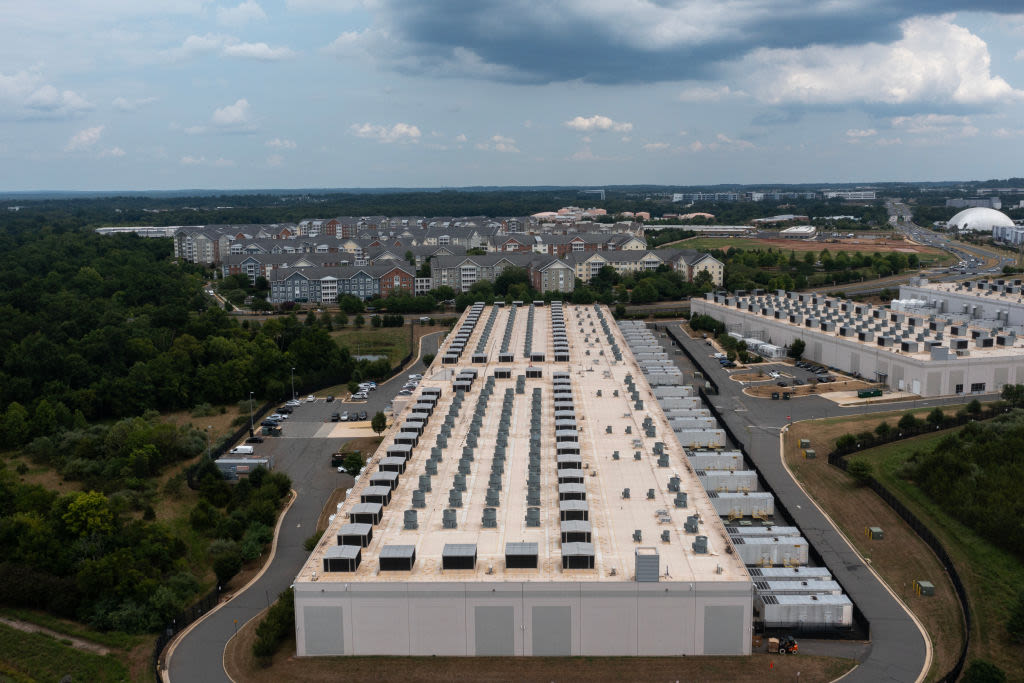
Voters across 18 separate municipalities and townships in Ohio are preparing to determine the future of data center expansion within their jurisdictions this coming Election Day. As technological infrastructure rapidly grows across the state, grassroots citizen groups have organized to place various regulatory limits and outright bans directly on the ballot.
The push comes after the official September 4 deadline passed for submitting charter amendment petitions to city councils in order to qualify for the November 3 general election. Under Ohio law, registered electors in charter cities maintain the ability to file amendment petitions at any time throughout the calendar year. However, state election rules dictate that if an upcoming regular election falls within less than 60 days or more than 120 days from filing, the initiatives must instead be resolved through a special election.
Among the measures scheduled for the upcoming vote, nine individual communities are considering charter amendments that would prohibit any data centers requiring more than 25 megawatts of energy per month. The jurisdictions reviewing this specific power limitation include Conneaut, Defiance, Granville, Oregon, Pataskala, Piqua, Sunbury, Trenton, and Upper Sandusky.
These local efforts closely mirror an overarching initiative led by the advocacy organization Conserve Ohio, which is pursuing a statewide constitutional amendment. Although the organization was unable to secure a spot on this year's ballot after missing a signature submission deadline in July, organizers have indicated they are now targeting the 2027 statewide ballot to establish a broader prohibition on high-energy facilities.
Representatives for Conserve Ohio explained that the organization is actively collaborating with numerous localities to institute municipal restrictions while working to establish administrative structures governed directly by residents. The group emphasizes grassroots mobilization as a crucial mechanism for communities seeking to assert local control over their power grids and industrial development.
In Piqua, civic pushback against large-scale industrial projects gained significant momentum following prior controversies over municipal developments. Resident Alisha Lange became actively engaged in local governance in 2023 after a city-approved battery facility reportedly caused chronic health problems for nearby homeowners. Subsequent attempts by affected residents to seek assistance from elected officials, including U.S. Representative Mike Carey, produced minimal results.
Community resistance in Piqua escalated further when tech company Meta unveiled plans to establish a massive data center complex in the area. The proposed technological development is estimated to require approximately 1,400 megawatts of electricity, a substantial draw that prompted Lange to coordinate a successful petition drive seeking the recall of Piqua's mayor along with two city commissioners.
Local organizers in Piqua followed up with additional filings on Monday, submitting two distinct petitions to municipal authorities. One measure seeks to align the city’s recall signature thresholds with standard state regulations, while the second initiative aims to invalidate an existing municipal contract arranged with AES to supply electrical power to the planned Meta installation.
Lange noted that collecting petition signatures has created a unified sense of community among residents who feel excluded from local governmental decisions. She observed that although the prospect of data center construction has created regional friction, the collective petitioning campaigns have fostered solidarity among neighbors who share concerns about public health, utility impacts, and municipal accountability.
The widespread local resistance unfolds against the backdrop of Ohio’s emergence as a premier hub for digital infrastructure. According to an April analysis published by the Pew Research Center, the state holds the fourth-largest concentration of operational data centers in the United States, with developers and prominent technology corporations actively seeking to construct dozens of additional facilities.
The imminent ballot questions directly intersect with real-time development proposals across the state. Out of the 18 communities that received petition filings for the November ballot, 14 have already received formal applications or development plans from commercial data center developers.
While nine communities focus on the 25-megawatt cap, other municipalities are considering distinct regulatory frameworks tailored to their local circumstances. In Urbana, electors will cast ballots on a proposed charter amendment that introduces an even stricter limit by barring data centers that consume more than 7.5 megawatts of electrical power.
In Hubbard, the electorate is preparing to vote on a total ban on all new data center facilities, making it the only city in the state featuring an exhaustive prohibition on the November ballot. Elsewhere, such as in Piqua, demand for absolute bans has led to independent petitions that have gathered sufficient signatures to trigger separate special elections.
Regional concerns extend beyond pure power metrics to encompass broader industrial zoning. In Pleasant Township, resident Jen Belt lives within two miles of a proposed Grove City data center site known as Project Maple. Belt helped spearhead a local petition campaign designed to require voter approval for all prospective heavy industrial projects in Grove City rather than focusing exclusively on data centers.
Across these diverse Ohio communities, resident opposition remains fueled by apprehensions over potential spikes in local utility rates, strain on regional power systems, environmental disruptions, and the rapid unchecked expansion of artificial intelligence infrastructure. The upcoming November vote represents a pivotal moment in how local municipalities balance high-tech industrial growth with community consent.









(0)