
A protracted legal battle over public records has forced the Chicago Transit Authority to release hundreds of documents detailing passenger grievances and operational failures regarding its private canine security contractor. The disclosures follow persistent accusations that the operator of the nation’s second-largest public transportation network broke state law by concealing records and ignoring transparency mandates.
The controversy centers on Action K9 Security, a private contractor whose armed handlers and dogs patrol rail platforms across the city under an $89.6 million taxpayer-funded contract. While the agency has increasingly relied on private security to address commuter concerns and bolster its public image, the newly released files reveal an array of rider complaints concerning aggressive animals, guard misconduct, and a lack of accountability.
The push for transparency was initiated by Chicago attorney Conley Wouters, who sought records after witnessing what he viewed as the potential mistreatment of a working security dog on a transit platform. Seeking to evaluate the contractor's performance and oversight, Wouters submitted requests under the Illinois Freedom of Information Act seeking copies of the agency's contract with Action K9 Security alongside all documented complaints regarding the company.
Rather than providing the records within the statutory timeframe, the transit agency withheld the files for months. The continued stonewalling prompted Wouters to submit an appeal to the Illinois Attorney General’s Public Access Counselor, a state body established to adjudicate open records disputes when public entities improperly deny or ignore requests.
Upon completing a formal review of the matter, the Public Access Counselor ruled that the transit authority had violated state law and officially directed the agency to surrender the requested documentation to Wouters. Despite that formal finding, the agency initially turned over only a fraction of the files before resuming its silence, leaving significant portions of the request unfulfilled.
Faced with ongoing noncompliance, Wouters escalated the matter to court and filed a lawsuit against the transit authority to compel full disclosure. It ultimately took nearly an entire year from the initial records request for the agency to release the complete documentation, which included 133 formal customer complaints registered against Action K9 Security dating back to 2022.
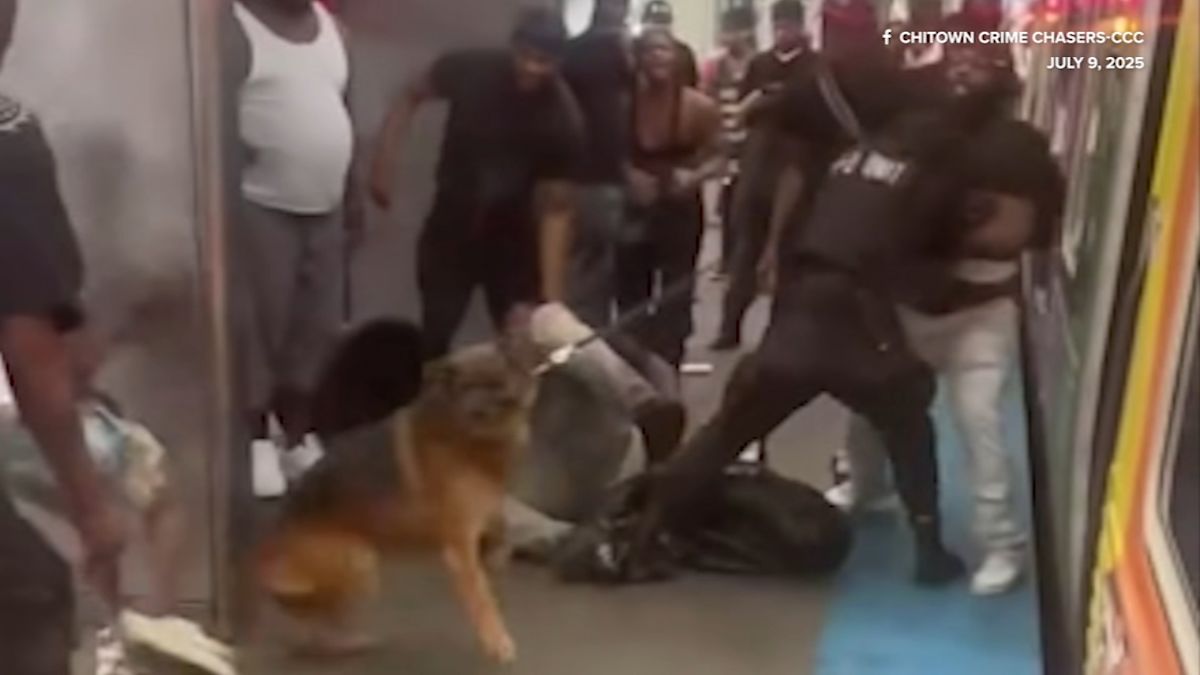
The released materials shed light on several high-profile security incidents on CTA property, including a chaotic physical brawl that unfolded on July 9, 2025, at the Red Line’s 69th Street station. The confrontation involved four men and contracted canine handlers and quickly spread across social media after being published by the Facebook page Chitown Crime Chasers.
Video footage of the 69th Street altercation captured a violent melee in which punches and trash cans were thrown in close proximity to the tracks. During the chaos, an uncommanded German Shepherd bit both assailants and its own security handlers, while one guard fell directly onto the train tracks.
The viral video triggered an influx of messages from concerned commuters who questioned the baseline training and operational discipline of both the handlers and their animals, with many demanding a comprehensive administrative investigation. However, the newly disclosed files revealed that transit officials closed the complaints regarding the incident within approximately 24 hours, leaving no record that an actual inquiry was conducted.
For more than a decade, guards wearing black uniforms accompanied by muzzled German Shepherds have been a routine presence across rail platforms. According to program records, handlers deployed on the system are most frequently tasked with addressing low-level platform infractions, with smokers, loiterers, and fare evaders representing the vast majority of commuter interactions.
The released records demonstrate that alarm over the canine units was not confined to everyday passengers. In one notable complaint included in the files, a senior attorney employed by the transit authority warned that an on-duty Action K9 unit appeared thoroughly unfit for service, reporting that while the animal was muzzled, it was actively lunging, barking, and growling at commuters walking past.
In addition to questions surrounding animal welfare and handler preparedness, the complaints revealed broader behavioral issues among private security personnel. Commuters logged numerous grievances alleging that guards neglected their basic responsibilities on platforms or engaged in passenger harassment, including an account from one rider who witnessed on-duty security guards catcalling women.
When approached to address the allegations of improper oversight, both the transit authority and Action K9 Security refused requests for on-camera interviews. The security company did not provide clarification on whether the 69th Street platform brawl was ever officially investigated internally.
In an emailed statement, a representative for Action K9 contended that several grievances released by the transit agency were mistakenly attributed to their firm instead of other private security vendors operating across the transit network, questioning the overall validity of the agency's records.
The forced release of the security files comes at a critical juncture as the transit system seeks to restore rider confidence and rehabilitate its safety reputation. The disclosures highlight ongoing friction between passenger protection and administrative transparency, raising fresh questions about how the agency manages multi-million-dollar private security operations.









(0)