
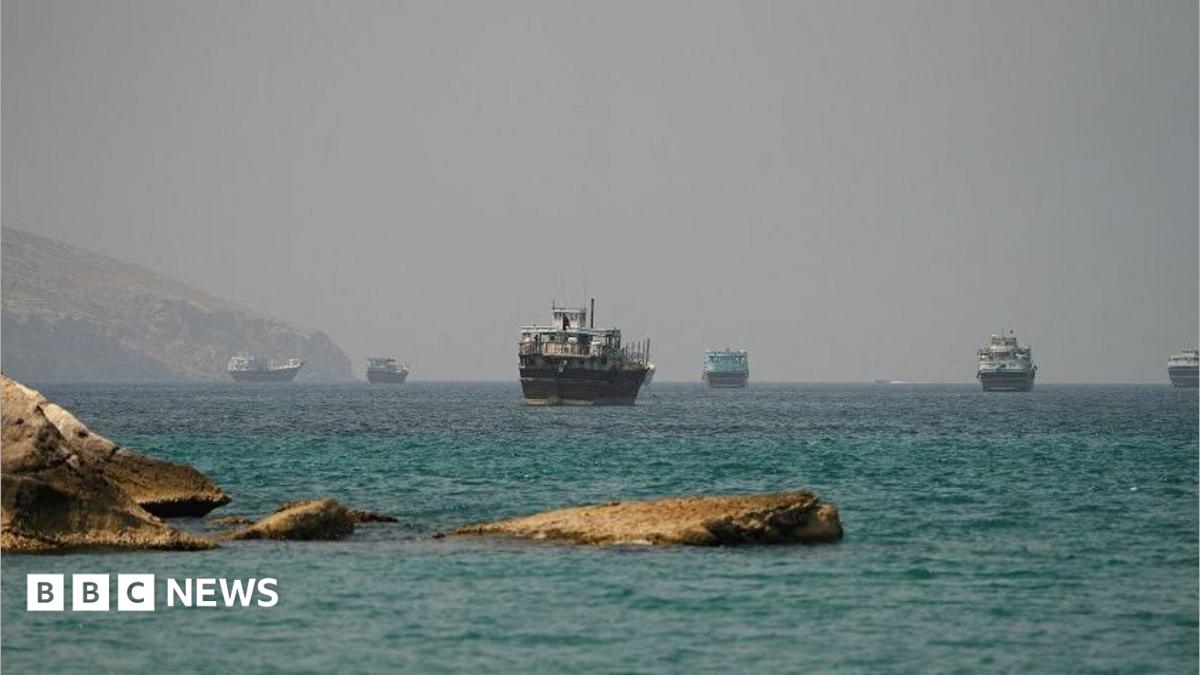
Iran's foreign minister has put a specific timetable on the table for ending the closure of the Strait of Hormuz, telling reporters that the vital waterway could be reopened within a single week if Washington fulfils conditions already spelled out in a previously signed agreement.
Abbas Araghchi, speaking on the sidelines of the United Nations gathering in New York, said the proposal had been passed to the American side through Qatari intermediaries. He described the terms as nothing new, insisting they were all contained in the memorandum of understanding reached between the two countries in June.
"If the necessary conditions are met, the strait can be reopened, a normal maritime passage restored within seven days," Araghchi told journalists. He did not spell out precisely which steps Tehran expects Washington to take, but stressed that "the actions that the United States should take are not new. They are all already in the MOU."
The memorandum, signed on 18 June, was a 14-point document designed to halt hostilities and restore at least partial shipping through the strait. Among its provisions were a commitment that Iran would never acquire a nuclear weapon, an end to military operations on "all fronts" by both sides and their allies, the lifting of a US naval blockade, sanctions relief, and arrangements for the safe passage of commercial vessels. It also envisaged Iranian talks with Oman over the longer-term management of shipping in the waterway.
That agreement unravelled shortly after it was signed, with both sides returning to strikes. Iran has since targeted vessels it accuses of trying to cross the strait without permission, while the US has hit Iranian sites in the waterway and Iranian tankers off the coast, and has kept a blockade on Iranian ports that has inflicted severe damage on the country's economy.
Araghchi framed the latest Iranian offer as a test of American intentions. "I can tell you if there is seriousness in the US side to come to a deal and reopen the Strait of Hormuz, everything is now prepared," he said, adding that "the choice now rests with the United States."
Washington's initial public posture has been non-committal. A US official told the BBC that positive discussions were under way through mediators, including on nuclear questions, but also suggested there was no urgency on the American side. "We are in a very strong position with control of the Strait of Hormuz, so we are not in a rush," the official said.
That account was complicated by reporting in the Wall Street Journal, which cited US officials as saying President Donald Trump had turned down the proposal. According to that report, Trump was privately doubtful that Iran would satisfy his demands and had told staff he expected a renewed bombing campaign. The White House has not issued a formal response to the Iranian offer.
Iranian President Masoud Pezeshkian, interviewed by CBS News, the BBC's US partner, struck a more optimistic tone. He said the ceasefire process "will begin from the very day they accept it", and recalled the earlier accord. "We had previously reached an agreement based on the MOU that was signed in Pakistan... if the United States agrees to proceed in that way, everything will return to the way it was before," he said.
Pezeshkian also signalled a potential concession on nuclear oversight, saying Iran would now permit United Nations inspectors into the country. He rejected allegations that Tehran is pursuing a nuclear weapon, adding: "If they wish to come in and have inspections, we can reach accords and agreements vis-à-vis that specific topic within the negotiations."
The background to the standoff is a war that began on 28 February, when the United States and Israel launched air strikes on Iran. Tehran retaliated by attacking Israel, American bases in the Gulf and US-aligned Arab Gulf states, and by shutting the Strait of Hormuz. Before the conflict, roughly one-fifth of the world's oil and liquefied natural gas passed through the narrow channel, and its closure has sent energy prices swinging sharply.
The economic fallout has fed directly into American domestic politics. With Congressional elections due in November, Trump faces mounting pressure to find an exit from a conflict that has unsettled global markets. The president has nonetheless claimed success in getting oil flowing through the strait again.
Shipping data suggests the picture is mixed. Kpler, a commodities analytics firm cited by Reuters, recorded a recent ten-day average of about 18 transits per day, with some days falling as low as nine vessels — a fraction of normal traffic.
A second front has opened on the other side of the Arabian peninsula. Yemen's Houthi movement, aligned with Iran, has stepped up attacks aimed at disrupting Saudi oil exports through the Red Sea. This month the group seized large strategic stretches of the Red Sea coastline in a rapid offensive, including the port of Mokha, which sits near the Bab al-Mandab Strait, another critical chokepoint for world shipping. US media has reported that Saudi Crown Prince Mohammed bin Salman has requested military assistance in response.
Taken together, the two waterways represent a twin threat to global energy supply. Any diplomatic breakthrough over Hormuz would ease only part of that pressure, leaving the Red Sea corridor vulnerable to a conflict that shows few signs of being contained. For now, the immediate question is whether Washington treats the seven-day formula as a basis for negotiation or, as reported, sets it aside in favour of further military action.









Comments (0)