
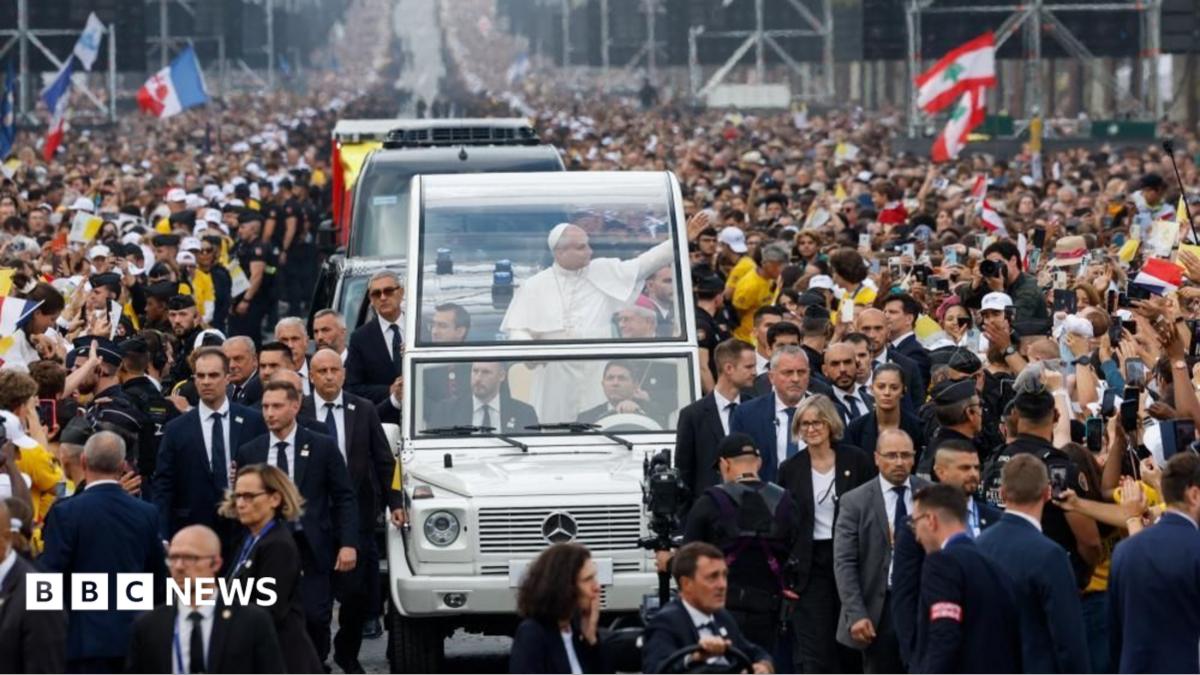
Hundreds of thousands of Roman Catholics and curious onlookers filled the heart of Paris on Saturday as Pope Leo XIV celebrated a vast open-air Mass at the Place de la Concorde, turning one of the French capital's most storied squares into a temporary open-air cathedral. Authorities expect more than 500,000 people to take part in the event, making it one of the largest religious gatherings the city has seen in recent memory.
The pontiff began his procession down the Champs-Élysées beneath the Arc de Triomphe, travelling in his popemobile as crowds cheered and waved French flags. Chants of "Leo, Leo" echoed along the avenue as the Pope paused at several points to bless babies handed up to him from the crowd. Television footage showed the 71-year-old smiling and raising his arm to acknowledge the faithful lining both sides of the broad boulevard.
Organisers erected a specially constructed altar on the Place de la Concorde for the ceremony, which forms the centrepiece of the Pope's four-day state visit to France. The location is symbolically charged: the square was the site of executions during the French Revolution and sits at the juncture of the Champs-Élysées and the Tuileries Gardens, a space normally associated with traffic, tourism and national ceremony rather than religious worship.
The scale of the turnout has surprised even seasoned Vatican observers. Church officials say the crowd reflects a renewed interest in spirituality among the French and other Europeans, a trend they argue has been quietly building for years despite declining Mass attendance in much of Western Europe. Sunday's schedule underlines that expectation: roughly 150,000 people have registered to attend a Mass at the Pyrenean sanctuary of Lourdes, one of Catholicism's most visited pilgrimage sites.
The Pope's itinerary has deliberately mixed devotion with diplomacy and social outreach. Earlier on Saturday, he visited the Maison Bakhita, a centre run by an association supporting refugees and migrants, where he met people seeking asylum and praised the organisation for inviting "us to see those who are invisible". During the encounter, he said it was "possible to encounter one another and to live together in dignity and peace", and he emphasised what he called the fundamental role of women in building what he described as a civilisation of love.
Those remarks carry particular weight in France, where immigration and asylum policy have become flashpoints in the country's polarised politics. By choosing to begin his public day at a refugee support centre rather than a government building, the Pope signalled that his visit is intended as a pastoral mission rather than a purely diplomatic one, according to analysts of Vatican affairs.
The political dimension of the trip has nonetheless been impossible to ignore. French President Emmanuel Macron held an hour of talks with the pontiff on Friday at the Élysée Palace, but he will not attend any of the Pope's Masses during the visit, a decision presented as a way of respecting France's strict constitutional separation of church and state. The principle, known in French as laïcité, has shaped the country's public life since a landmark 1905 law, and presidents have traditionally kept a careful distance from religious ceremonies.
In Macron's place, First Lady Brigitte Macron and Prime Minister Sébastien Lecornu were expected at the Champs-Élysées Mass. Their presence, alongside other senior figures, illustrates the delicate balance French leaders must strike between acknowledging the country's Catholic heritage and avoiding any appearance of state endorsement of religion.
The event has also become an unofficial stop on the campaign trail ahead of next year's presidential election. Marine Le Pen of the hard-right National Rally and the conservative Bruno Retailleau were both photographed at the Place de la Concorde before the ceremony began. Centrist contenders Edouard Philippe, the mayor of Le Havre and a former prime minister, and Gabriel Attal were also due to attend, while another former prime minister, François Fillon, was seen in the square. The clustering of presidential hopefuls around a papal Mass underscores how significant the Catholic vote and the broader question of religion's place in French society have become in the country's politics.
At the Élysée Palace on Friday, the Pope used his opening address to Church and state officials to issue a striking warning about artificial intelligence. He cautioned against "losing our humanity amid a paradise of machines", a phrase that quickly circulated among commentators. The remarks placed Leo within a growing international debate over how rapidly advancing AI systems should be governed, and they echoed concerns raised by religious leaders, technologists and regulators about the ethical boundaries of automation.
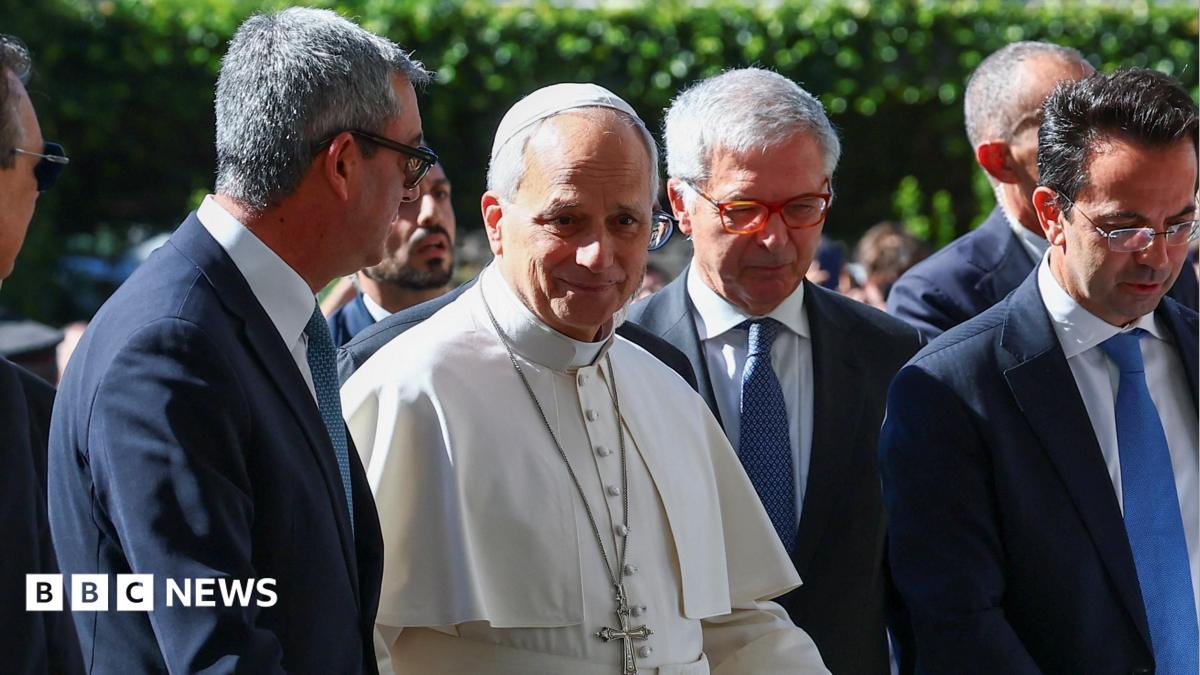
The Pope's personal story has added a further layer of resonance to the visit. Born in Chicago in 1955 as Robert Prevost, he carries a French name and a direct ancestral link to the country: his paternal grandmother was born in Le Havre, in Normandy, in 1894. When she later married in the United States, she and her Italian husband adopted the surname Prevost, which had been her mother's maiden name. That family history has been widely noted in French media coverage of the trip.
The visit continues on Monday in Metz, in north-eastern France, where the Pope will pay tribute to Robert Schuman, the French statesman and fervent Catholic regarded as a founding father of the European Union. Schuman, who lived from 1886 to 1963, is today a candidate for beatification, the first formal step towards sainthood in the Catholic Church. A papal homage to a figure synonymous with European integration is likely to be read as a quiet affirmation of the EU project at a time when nationalist movements across the continent are pressing for a looser, more fragmented union.
For the Vatican, the Paris and Lourdes events represent a significant test of the Pope's ability to translate public enthusiasm into lasting engagement. Similar mass gatherings in recent years have drawn enormous crowds but have not always produced sustained increases in regular church attendance. Church officials in France say they hope the four-day visit will encourage those who have drifted away to reconsider their relationship with the faith, particularly younger Europeans who have shown rising interest in religious questions even as institutional affiliation declines.
Whatever the longer-term effect, Saturday's scenes in central Paris offered a vivid counterpoint to the secular image France often presents to the world. From the Arc de Triomphe to the Place de la Concorde, the avenues of the capital were transformed into a place of pilgrimage, with screens and scaffolding erected for the hundreds of thousands who could not get close to the altar. The image of a Pope moving slowly through the city's most famous streets, blessing children and greeting the crowds, is likely to define how this visit is remembered.





Comments (0)