
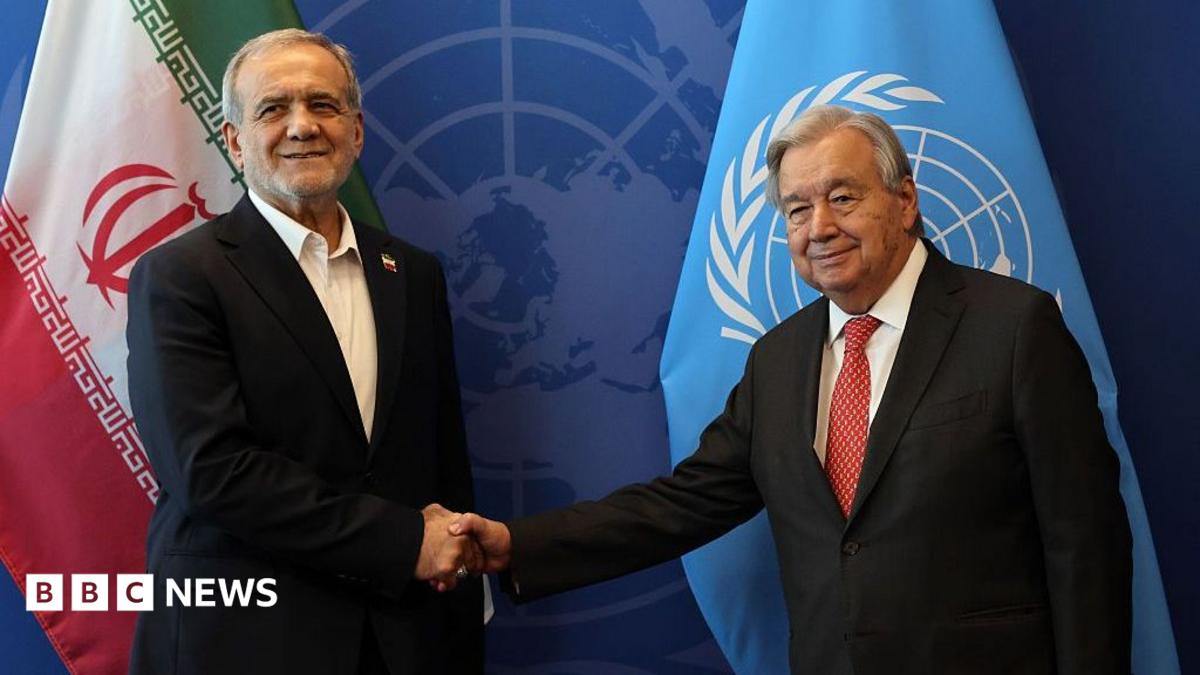
The United States government has approved entry visas for senior Iranian officials, permitting a core diplomatic delegation to travel to New York for the upcoming United Nations General Assembly. The decision comes even as direct military conflict between Washington and Tehran continues to escalate, stretching into its seventh month without an immediate resolution in sight.
Among the high-ranking officials permitted to travel are Iranian President Masoud Pezeshkian and Foreign Minister Abbas Araghchi. Their attendance will place them in the same diplomatic corridors as top Western officials, marking a rare in-person convergence of leadership from the warring nations since hostilities broke out earlier this year.
A spokesperson for the US Department of State confirmed the visa approvals on Thursday, clarifying that the move was made strictly in accordance with Washington's legal commitments as the host nation of the United Nations headquarters. The spokesperson highlighted that the permitted Iranian contingent is notably smaller than the delegation that traveled to New York last year.
Strict conditions and operational limitations will govern the Iranian delegation throughout their stay on American soil. Officials in Washington confirmed that the visiting diplomats will face severe travel restrictions limiting their movements within New York, as well as strict bans prohibiting the acquisition of certain American consumer products and luxury goods.
These measures follow established precedent from prior summits. During the previous General Assembly, Iranian delegates were prohibited from shopping at bulk wholesale retail chains such as Costco and were mandated to seek prior authorization from US authorities before purchasing luxury items, including jewelry, high-end motor vehicles, and alcohol.
The diplomatic gathering takes place as the 81st session of the UN General Assembly is officially underway. The high-profile General Debate, considered the marquee segment of the annual international summit, is scheduled to open on Tuesday, drawing heads of state and government ministers from around the world.
The debate schedule will feature several prominent world leaders addressing the assembly during the opening day. Tuesday's roster includes speeches from US President Donald Trump, United Kingdom Prime Minister Andy Burnham, and French President Emmanuel Macron, each addressing a global landscape dominated by intensifying security crises.
The Iranian delegation is slated to address the assembly the following day. Speeches scheduled for Wednesday will feature Iranian leadership alongside addresses delivered by the leaders of Ukraine and Syria, setting the stage for sharply contrasting narratives regarding regional stability and sovereignty.
The backdrop to this year's assembly is defined by the ongoing war, which commenced on February 28 following joint military strikes launched by the United States and Israel against targets inside Iran. What began as targeted operations has transformed into a protracted campaign that is now passing the half-year mark.
In retaliation for the initial strikes, Iranian armed forces have conducted repeated attacks targeting US military installations, regional allied states across the Gulf, and Israeli territory. The ensuing exchanges have produced widespread physical destruction and intensified security precautions across the Middle East.
The wider regional and global consequences of the war have been severe. Beyond spreading into neighbouring territories, the protracted hostilities have disrupted international commerce and driven up global energy prices, fueling economic strain worldwide and raising fears of broader regional instability.
Domestically, the conflict has generated significant political friction for the American administration. Public and political pressure has continued to build on the White House to pursue a diplomatic framework capable of halting the fighting and preventing further escalation across the region.
The ongoing military operations have also drawn growing international scrutiny. United Nations experts have raised serious concerns regarding potential violations of international law during the conflict, pointing to evidence and grounds suggesting that US strikes may have resulted in war crimes during operations against Iranian targets.
While the Iranian delegation was granted entry under host country terms, the United States adopted a contrasting stance toward Palestinian officials. Washington denied visas to Palestinian President Mahmoud Abbas and the accompanying Palestinian delegation, preventing their participation at the summit.
The decision marks the second consecutive year that the White House has blocked the Palestinian leadership from attending the General Assembly in New York. Administration officials justified the denial by citing the US position of not recognizing the legitimacy of the Palestinian delegation, underscoring the starkly selective application of diplomatic access during this year's proceedings.





(0)