
Throughout modern history, September 13 has repeatedly served as a backdrop for pivotal moments that altered the course of warfare, statecraft, culture, and civil rights. Spanning more than two centuries, the date encompasses defining occurrences ranging from dramatic military confrontations and political breakthroughs to natural disasters and the tragic loss of cultural icons. Together, these events reflect the complex evolution of global society and the enduring resilience of the human spirit in times of crisis.
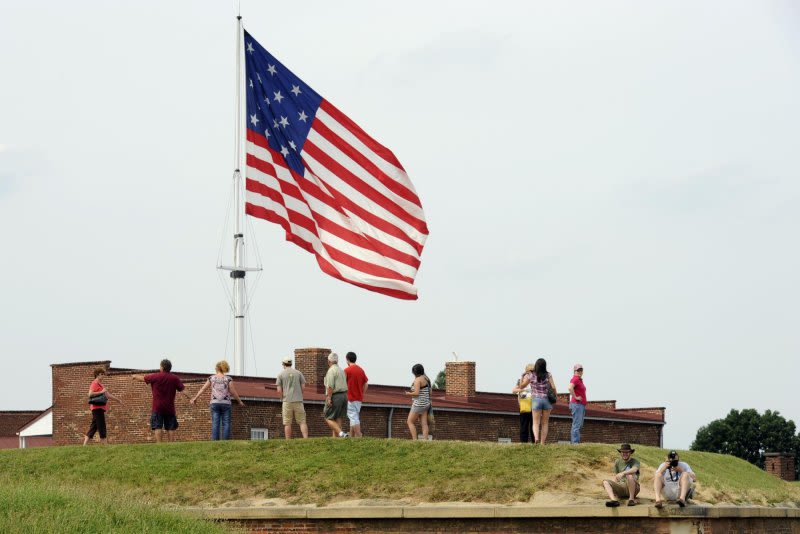
The date holds foundational significance in American history due to the events of 1814, when the War of 1812 reached a critical juncture in Maryland. Amid an intense military confrontation, British naval forces launched a sustained bombardment against Fort McHenry in Baltimore. As British artillery lit up the night sky across the harbor on September 13 and 14, an American lawyer named Francis Scott Key observed the ongoing assault from a nearby vantage point, watching anxiously to see if the fort's defenses would hold against the onslaught.
Moved by the sight of the American flag still waving above the fortress after hours of relentless shelling, Key penned the verses that would soon become famous as "The Star-Spangled Banner." His composition captured the relief and patriotic fervor of a young republic defending its sovereignty, eventually transforming into the official national anthem of the United States. Today, Fort McHenry remains a cherished historic site commemorating the determination of the defenders and the origins of the nation's most recognizable patriotic hymn.
Over a century later, on September 13, 1940, the horrors of global conflict struck at the heart of the British monarchy during the height of the German Blitz on London. German bombs slammed into Buckingham Palace, completely demolishing the royal chapel situated within the compound. The attack was not an isolated incident, as the sovereign's London residence was targeted a total of nine times throughout the course of World War II, illustrating the indiscriminate nature of the aerial offensive.
The destruction of the royal chapel served to galvanize the British public, demonstrating that even the highest seats of power were not insulated from the perils of the war. Ten days following the destructive strike on the palace, King George VI addressed his subjects directly, forcefully condemning the profound wickedness against which the Allied nations were fighting. His public remarks reinforced national unity during one of the most perilous periods in modern British history.
Eight years later, on September 13, 1948, American political history reached an unprecedented milestone with the general election in Maine. Republican lawmaker Margaret Chase Smith won her race for the U.S. Senate, solidifying her place as a pioneer for women in American governance. Her victory shattered a longstanding barrier in national politics, establishing her as the first woman to successfully serve in both chambers of the United States Congress after previously representing her home state in the House of Representatives.
Smith’s achievement paved the way for generations of female legislators, proving that women could successfully navigate competitive national campaigns and attain influential roles in federal lawmaking. Her tenure in the Capitol set a vital precedent for future legislative leaders, establishing that leadership at the highest levels of government was attainable regardless of gender during an era when female representation in Washington remained exceptionally rare.
The darker realities of institutional unrest came to a bloody head on September 13, 1971, when New York state authorities executed an armed operation to retake the Attica Correctional Facility. The state prison had descended into a chaotic riot and hostage crisis, prompting law enforcement and tactical units to storm the grounds in an effort to re-establish administrative control over the facility.
The assault on Attica culminated in immense loss of life, resulting in the deaths of 43 individuals, including both inmates and hostage correctional personnel. The deadly culmination of the siege triggered widespread public debate regarding the treatment of incarcerated individuals, the dynamics of institutional oversight, and the use of lethal state force during civil emergencies, leaving an indelible mark on the history of the American justice system.
Diplomatic history took a momentous turn on September 13, 1993, when international leaders gathered on the South Lawn of the White House to address one of the modern world's most intractable conflicts. In an extraordinary public ceremony, Israeli Prime Minister Yitzhak Rabin and Palestine Liberation Organization Chairman Yasser Arafat officially endorsed a declaration of principles outlining a framework for Palestinian self-rule. The signing represented a historic step toward mutual recognition and structured negotiations in the pursuit of Middle East peace.
On the cultural front, September 13, 1996, marked the tragic conclusion of one of the most celebrated and influential careers in contemporary music. Acclaimed hip-hop artist Tupac Shakur died in Los Angeles at the age of 25, six days after sustaining critical gunshot wounds during an ambush on September 7. His untimely passing sent shockwaves throughout the global music community, cutting short the career of an exceptionally gifted lyricist whose artistic impact continues to influence popular culture decades later.
Five years later, on September 13, 2001, the United States took its initial steps toward operational recovery following the catastrophic September 11 terrorist attacks in New York City and Washington, D.C. Federal regulators permitted commercial airlines to resume domestic flights for the first time since the national airspace was abruptly grounded. Travelers and aviation personnel returned to airports operating under unprecedented, heightened security directives designed to overhaul passenger screening and safeguard the national transit infrastructure.
On September 13, 2007, global human rights jurisprudence advanced significantly when the United Nations General Assembly formally approved the Declaration on the Rights of Indigenous Peoples. Although non-binding and passed over the objections of a dissenting United States, the historic measure outlawed discrimination against Indigenous communities and delineated comprehensive protections for their distinct cultural heritage, linguistic traditions, educational access, health resources, and territorial self-determination.
One year later, the power of natural forces dominated the news on September 13, 2008, as Hurricane Ike made a devastating landfall along the upper Texas Gulf Coast. The massive storm system hammered Galveston and Houston with sustained winds reaching 110 mph alongside catastrophic storm surges and torrential rainfall. The hurricane paralyzed regional infrastructure, triggering widespread inland flooding, leaving millions of residents without electrical power, and prompting approximately one million individuals to evacuate their homes.
The human cost of Hurricane Ike proved staggering across the western hemisphere. Post-storm assessments by emergency officials confirmed that the destructive weather system was responsible for more than 100 fatalities within the United States and claimed approximately 75 lives in the island nation of Haiti. The catastrophe necessitated extensive multi-agency recovery efforts and reinforced the critical importance of emergency preparedness in the face of increasingly severe coastal weather events.
Viewed collectively, the diverse historical threads of September 13 offer a panoramic view of human struggle, resilience, and transformation. From Key’s nocturnal vigil at a besieged fortress in 1814 to complex diplomatic accords and groundbreaking political firsts, the date reflects the defining challenges and milestones that continue to shape the trajectory of modern world history.


(0)