
Two mass shootings occurring just hours apart in South Africa have claimed the lives of 28 people, marking the latest eruption of gun violence in a nation already grappling with one of the world's highest murder rates.
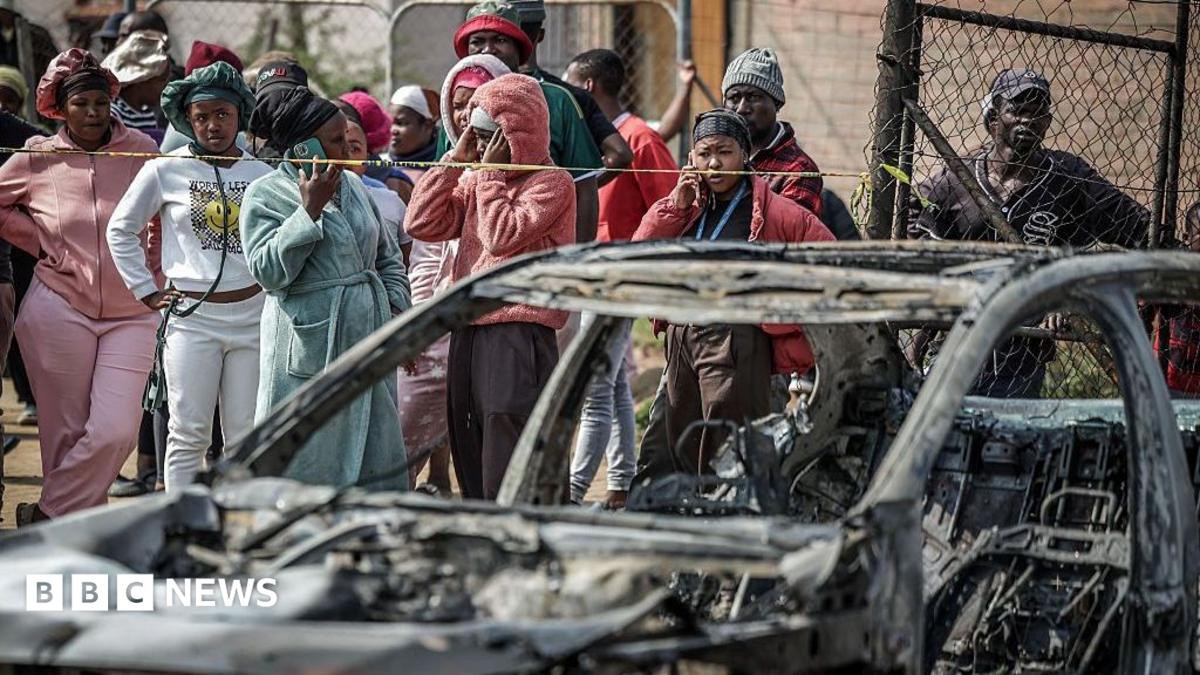
The first attack unfolded on Saturday evening when eight gunmen descended on a bar situated close to Johannesburg, South Africa's largest city. According to police accounts, the assailants opened fire on patrons gathered outside the establishment before moving inside to continue their assault. As they fled the scene, the attackers set two vehicles alight, leaving behind a trail of destruction captured in images shared by emergency responders.
Eighteen people lost their lives in the Johannesburg shooting, while an additional 14 victims sustained injuries and were rushed to nearby medical facilities. Authorities confirmed that only four of the deceased had been formally identified by the time investigations began, underscoring the chaotic aftermath of the assault.
Gauteng Police Commissioner Lieutenant General Tommy Mthombeni provided early details about the victims, noting that individuals from Ethiopia and Lesotho were among those caught in the gunfire, though he emphasized that the overwhelming majority of those killed and wounded were South African nationals. His remarks highlighted the diverse communities that frequent such establishments in the region.
Regarding the possible motivation, Mthombeni stated that investigators were working with the theory that robbery was the primary driver, given that personal belongings were taken from victims during the attack. However, he was careful to add that authorities could not exclude the possibility that the violence stemmed from territorial disputes among illegal mining operations active in the area.
The connection to illegal mining reflects a broader crisis in South Africa, where unauthorized excavation in abandoned shafts and dump sites remains a persistent and deadly problem. Authorities say these operations are typically run by organized crime syndicates that recruit undocumented migrants, leading to frequent fatalities from unsafe conditions and violent confrontations between rival groups competing for control of lucrative sites.
Earlier comments from deputy provincial police commissioner Major General Fred Kekana suggested the Johannesburg attack might have been retaliation for an incident last month that left one person dead and another wounded. He indicated that investigators possessed clear images and, in some instances, names of suspects connected to the shooting, raising hopes that arrests could follow.
The second shooting erupted in the early hours of Sunday morning, this time outside an entertainment venue in a township near Cape Town, situated roughly 1,400 kilometers from the Johannesburg crime scene. Five victims died immediately at the location, while another five succumbed to their injuries after being transported to hospital. A further 11 people were wounded in the violence.
By Sunday morning, police had not announced any arrests in connection with either attack, leaving communities in both regions anxious for answers and justice. The absence of suspects in custody compounded fears that the perpetrators might evade accountability, a concern that has grown as similar incidents have accumulated in recent months.
The dual shootings arrived only days after another mass killing in the city of Durban, where gunmen stormed a house in the KwaMakhutha township and killed 11 people. That attack, along with the weekend bloodshed, has intensified a sense of unease across South Africa about the frequency and ferocity of such incidents.
Illegal firearms are widespread throughout South Africa, and gun violence has plagued the country for decades. Official figures point to approximately 60 murders occurring daily across the nation of 62 million people, a statistic that places South Africa among the most violent societies in the world outside of active conflict zones.
Despite this long-standing challenge, a recent surge in mass shootings has prompted fears that the situation is deteriorating further. Analysts note that much of the violence is tied to turf wars between gangs involved in drug trafficking and illegal mining, criminal enterprises that have proliferated in economically marginalized communities where legitimate employment opportunities remain scarce.
President Cyril Ramaphosa addressed the issue earlier this year, describing organized crime as "the most immediate threat to our democracy, our society and our economic development." His comments signaled recognition at the highest levels of government that criminal networks have grown powerful enough to destabilize entire regions and undermine public confidence in state institutions.
In response, the government deployed military personnel alongside police in areas recording the highest murder rates, hoping to reduce armed violence through increased security presence. The effectiveness of that strategy remains uncertain, as the weekend shootings demonstrate that deadly attacks continue despite heightened enforcement efforts.
The violence also intersects with other alarming trends. On Saturday, authorities confirmed that a tenth woman's body had been discovered in Ekurhuleni, east of Johannesburg. Local police acknowledged they could not rule out the possibility of a serial killer operating in the area, citing similarities between the deaths that warranted further investigation.
Together, these developments paint a troubling picture of a nation struggling to contain multiple forms of violent crime simultaneously. From mass shootings linked to organized criminal activity to the possible emergence of a serial predator, South African law enforcement agencies face mounting pressure to deliver results and restore a sense of safety in communities that have endured years of insecurity.
As investigations into the Johannesburg and Cape Town shootings proceed, questions remain about whether the attackers will be brought to justice and whether the government's current strategies can stem the tide of violence. For now, families across two provinces are mourning the loss of 28 lives cut short in a single weekend, while a country watches and waits for signs that its leaders can deliver on promises to confront the crisis.




(0)